








Donald Trump announced that the US Navy will escort oil tankers through the Strait of Hormuz, a vital route blocked by Iran in response to the conflict in the Middle East. This measure aims to guarantee the global flow of energy in the face of escalating tensions.
The Strait of Hormuz, through which passes nearly 20% of the world’s oil, was closed on Monday by Iran’s Revolutionary Guard Corps (IRGC). The high commander Ebrahim Jabbari warned that any ship attempting to pass would be attacked, preventing oil exports. This action responds to US and Israeli bombings on February 28, which killed the supreme leader Ali Khamenei and high-ranking Iranian officials.
Trump’s response to the blockade of the Strait of Hormuz
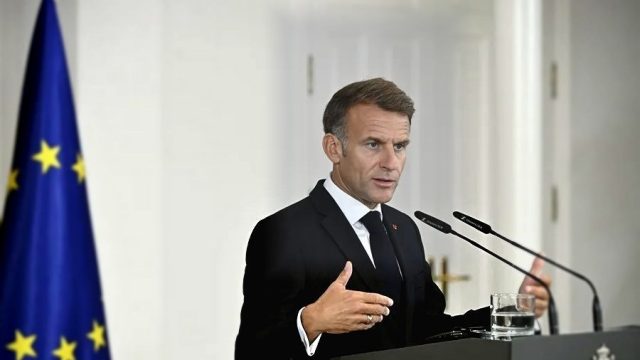
In Truth Social, Trump wrote: “If necessary, the US Navy will begin escorting oil tankers through the Strait of Hormuz as soon as possible”. He ordered the Development Finance Corporation (DFC) to offer political risk insurance at reasonable prices to shipping companies, covering especially energy trade in the Persian Gulf. “It will be available to all companies”, he emphasized.
Impact of the closure of the Strait of Hormuz
The blockade has driven up energy prices, affecting costs for energy companies and shipping companies. Historically, the Strait of Hormuz is Iran’s “nuclear weapon” due to its control over 21 million barrels of crude oil per day. In 2019, similar tensions raised Brent by 10% in days; today, analysts predict greater jumps if the closure persists.
Context of the conflict affecting the Strait of Hormuz
- US and Israel attacked Iranian installations, eliminating declared nuclear threats.
- Iran responded with ballistic missiles against Israel, US bases in the region, and British sites in Cyprus.
- The Revolutionary Guard is preparing its “most devastating offensive operation”.
Energy experts note that alternative routes such as the East-West Saudi oil pipeline cover only 5% of the volume of the Strait of Hormuz, exacerbating the crisis. Trump insists on protecting maritime trade to stabilize global markets.
This escalation highlights the fragility of the oil supply. The Strait of Hormuz remains a critical point, with the US ready to intervene and ensure its passage. We monitor developments in this focus of global economic instability.