
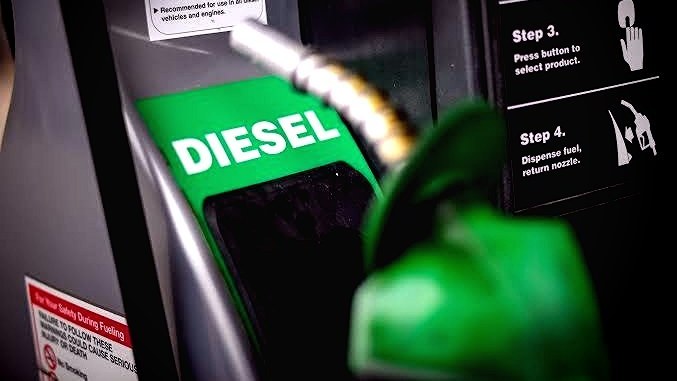
The group of seven developed countries (United States, Canada, France, United Kingdom, Germany, Italy and Japan) announced that, through the International Energy Agency (IEA), it will put 100 million barrels of diesel and other reserves on the market to contain the high demand and rising prices. The decision was made on Friday and will take effect immediately, with a four-month release period that includes a significant distribution of diesel in the first 20 days. The statement, released by the office of French President Emmanuel Macron, emphasized that the measure will not involve any prohibition on diesel exports between G7 members and that the operations aim to lower the price of fuels.
Motivations and political context
The announcement comes at a time of political pressure on United States President Donald Trump, who is seeking to reduce high diesel prices before the November midterm elections. Trump had considered banning diesel exports, a measure that would have affected Europe, where imports constitute a significant percentage of the supply. With the release agreement, Trump has changed his stance and stated on the social media platform Truth that the process will begin immediately, highlighting the speed of the G7’s response.
Immediate impact on oil prices
Following the publication of the decision, oil prices fell significantly. The Brent barrel, a reference in Europe, was below $100, with a drop of over 3%. The West Texas barrel, a reference in the United States, also lost weight, ceding 3.4% and falling below $90.
Historic coordination through the IEA
The IEA had previously coordinated, in March, a plan to release 400 million barrels after the outbreak of the war with Iran. The new measure of 100 million barrels represents a step forward in international cooperation to avoid market energy volatility.
Consequences for the global economy
Analysts point out that the release of reserves can contain pressure on consumers and industry, especially at a time when inflation remains a global challenge. If the measure is maintained during the agreed period, a moderate stabilization of prices and a reduction in the risk of sudden increases that affect key sectors such as transportation and manufacturing are expected.
Future perspective and risks
Although the release of reserves is a market tool, its effect will depend on continuous demand and the dynamics of crude oil prices. Additionally, geopolitical tensions, regional conflicts, and internal policies of producing countries could limit the effectiveness of the measure. Therefore, the G7 maintains close monitoring to adjust releases in accordance with market evolution.
Credits: deultimominuto.com
Note generated automatically from the sources cited in the text. Found an error? Email us at [email protected] and we'll fix it.