







The Central Sugar Cane Consortium Barahona (CAC) confirms that drip irrigation is the key behind a 40% increase in sugar cane production, while reducing more than 30% water consumption. This technology, implemented since 2014, has allowed optimizing the water resource in more than 1700 hectares of planted cane in the southern region of the country.
José Antonio García, administrative manager of CAC, explains that the combination of drip irrigation and fertirrigation has raised productivity near 40% in tons per hectare, with a efficiency superior to 85%. This data significantly surpasses traditional gravity irrigation systems, which lose a large part of the water by evaporation and dispersion.
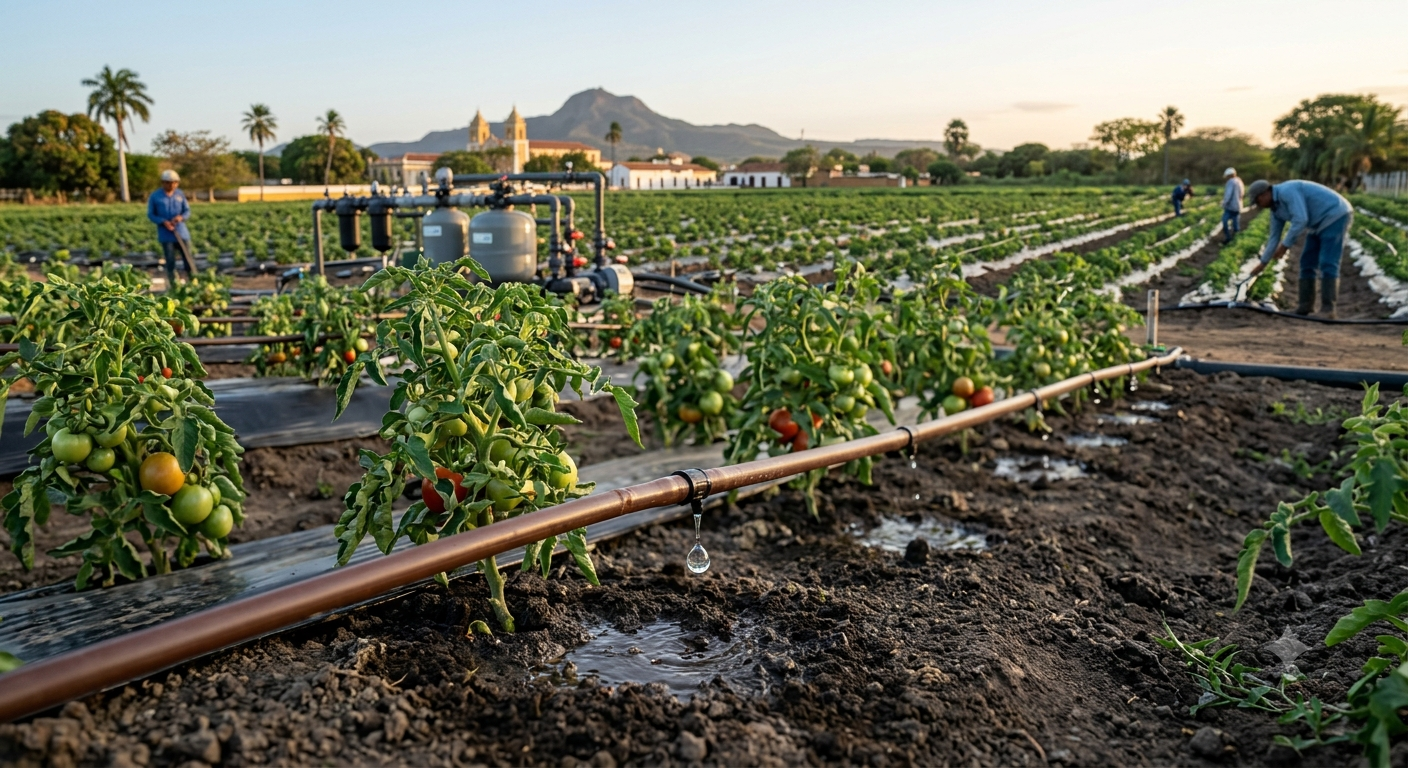
Drip irrigation brings water directly to the plant root, avoiding waste and applying only what the crop needs. According to García, this has generated improvements in soil conditions, reducing salinity in intervened areas and stabilizing groundwater levels.
Environmental and economic benefits of technified irrigation
The Progetto Aguacatico, with more than 860 hectares reactivated, shows a 25% increase in productivity and a reduction of 2 million cubic meters of water per year. Drip irrigation also allows reducing water consumption per ton of cane until 50%, a crucial achievement in regions like Enriquillo, where water is limited.
- 30% reduction in water use compared to gravity irrigation
- Efficiency of application superior to 85%
- Improvement in nutrient absorption through fertirrigation
- Reduction of operational costs and labor
Advanced monitoring and applied technology
CAC has more than 270 observation wells, automatic weather stations and control points distributed in its area of operation. This system allows measuring flows, groundwater levels, water quality and climatic conditions, optimizing irrigation programming through an automated system “made in house”.
Drip irrigation is not only a technical advantage, but a strategic necessity to face the water challenge in Dominican agriculture. As García said: “It’s not just about watering, but doing it better; with more control, with more strategy and with tools that allow us to take advantage of the water resource without wasting it”.
In conclusion, drip irrigation has transformed sugar production in CAC, ensuring a more sustainable and efficient future for the sugar industry in the Dominican Republic.