









The Central Nacional de Detallistas Unidos (CNDU) warned that the retail sector will end the year 2025 on the brink of a massive bankruptcy due to high operating costs, unfair competition, and lack of effective regulations. According to its president, Ricardo Rosario, despite being leaders in food distribution, retailers operate in very precarious and fragmented conditions in the face of the advance of large chains and supermarkets.
Inequality before large chains and high operating costs
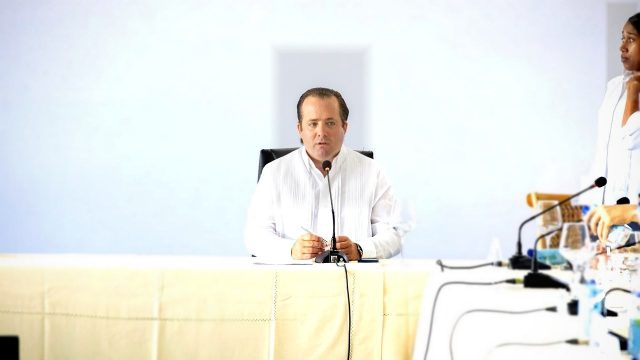
During an informative breakfast for its members, Rosario pointed out that large surfaces apply economies of scale that allow them to reduce costs, competing unfairly with small businesses. These latter ones face operating costs that represent between 19% and 23% of their sales, depending on the location.
Strategies for the sustainability of retail trade
Among the most significant expenses are the payment of rents, electricity, transportation, salaries, fuels, arbitraries, and above all, high interest rates for financing. Beyond those costs, retailers suffer constant price increases and services, citizen insecurity, lack of adequate fiscal and labor regulation, as well as deficiencies in social security, housing, and pension programs.
Impact of the Supérate program and exclusion of the sector
A government measure that aggravates the situation is the transfer of the social program Supérate to large businesses. Originally designed to benefit more than five thousand corner stores and small stores, the distribution now favors supermarkets that concentrate the delivery of food, marginalizing retailers. A single establishment can manage up to five cash registers to serve beneficiaries, significantly reducing the participation of smaller retailers.
Strategies for the sustainability of retail trade
Conscious of the panorama, the CNDU coordinates awareness activities with experts such as José Luis Ravelo and Rafael Fernández, aimed at strengthening the capabilities of corner stores and medium-sized supermarkets to maintain their competitiveness. The proposals focus on five main axes:
- Reduction of operating costs
- Price stability
- Formalization of the sector
- Creation of new jobs
- Exclusive participation of retailers in the Aliméntate program of Supérate
Financing and strategic distribution
To reduce operating costs, Ricardo Rosario proposes facilitated financing by the Banco Agrícola and Bandex to build five regional centers for the distribution of climate-controlled food. These would supply around 50,000 retail businesses, guaranteeing price stability through direct purchases from national producers and importers, establishing official levels for retailers and final consumers.
Simplification of fiscal and labor formalization
In fiscal matters, a proposal is made to implement the National Monotributo Registry (RNM) through the General Directorate of Internal Taxes. This would facilitate tax payments and allow cooperatives to act as agents of retention of taxes and contributions to the Treasury of Social Security, promoting formalization that would generate jobs with better labor and salary conditions.
The discussion about the critical situation of retailers reveals a structural imbalance in Dominican retail trade. The accelerated advance of large chains and the exclusion of social programs designed for small businesses put the survival of thousands of retailers at risk. The effective implementation of the CNDU’s proposals could be key to preventing retailers from ending 2025 in bankruptcy.
In the end, the retail sector is forecast to end 2025 with severe financial problems if measures are not taken to reduce operating costs, guarantee competitive equality, and ensure their participation in state social programs.