







Relations with the United States has returned to the center of the regional business agenda following an agreement by private entities in Central America, Panama, and the Dominican Republic to resume joint coordination on trade, investment, and economic integration.
The organizations that make up the Federation of Private Entities of Central America, Panama, and the Dominican Republic (FEDEPRICAP) decided to promote more direct monitoring of relations with the United States, at a time when the region is competing to attract capital, strengthen supply chains, and take advantage of nearshoring.
The meeting was organized by the National Council of Private Enterprise (CONEP), which holds the Pro Tempore Presidency of FEDEPRICAP and served as the venue for the Ordinary Assembly of Presidents of the organization. The meeting brought together representatives from Guatemala, El Salvador, Honduras, Panama, and the Dominican Republic.
The CONEP message
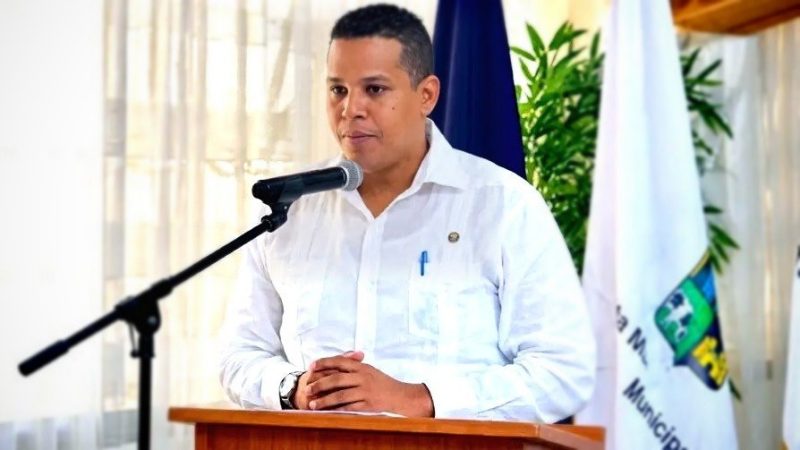
The president of CONEP and FEDEPRICAP, Celso Juan Marranzini, maintained that the federation must recover the dynamism that distinguished it in order to respond in a coordinated manner to regional challenges. In his speech, he defended a space for dialogue to review relations with the United States, trade, legal certainty, education, artificial intelligence, and technological transformation.
Marranzini also warned about the impact of populist narratives on trust, institutions, and economic growth, while highlighting the need to strengthen democracy and freedom of enterprise.
“We need a space where we can exchange experiences, identify common positions, and follow up on economic integration, trade, investment facilitation, and the evolution of our relationship with the United States,” Marranzini expressed.
The United States remains key to the region
In economic terms, relations with the United States are decisive for Central America and the Dominican Republic due to the weight of the US market in exports, investment, and employment. Globally, Washington maintains strategic trade and investment ties with multiple regions, and its role remains central in the competition for new value chains.
The regional context also favors closer coordination. Nearshoring, digitalization, and the reconfiguration of international trade are pushing countries to present common positions to gain competitiveness against other emerging economies.
Relations with the United States, investment, and employment
FEDEPRICAP pointed out that its responsibility is not limited to representing productive sectors, but also contributing to a more integrated and prosperous region. The entity brings together business organizations representing hundreds of thousands of companies and millions of jobs, according to the approach presented at the meeting.
Panama, Nicaragua, and business coordination
During the assembly, the participation of the business representation from Panama was highlighted, seen as an important step in the revitalization of the federation. There was also an expression of solidarity with the private sector of Nicaragua, in view of restrictions that have affected freedom of enterprise and the functioning of its organizations.
The meeting was attended by leaders such as César Dargam, Carlos Arias Bouscaryrol, José Luis Saca, Anabel Gallardo, and Elisa Suárez, among other business representatives from the region.
For the private sector, coordination on relations with the United States is not only a diplomatic agenda: it is also a tool to protect investments, ensure clear rules, and sustain the flow of trade that fuels jobs and productive activity throughout the region.