





Born on December 21, 1881 in La Vega, Dominican Republic, Zoilo Hermógenes was a renowned Dominican civil engineer and aviator, without leaving aside being a prolific engineer, by the construction of buildings such as the first theater of La Vega.
His parents are María Dolores Peña and Don Zoilo García, being this, his father, governor of La Vega for a time, general of the Dominican forces and recognized entrepreneur, exporter of cocoa and tobacco, among other merits known by many.
Zoilo Hermógenes is remembered and passed to Dominican history for the design and manufacture of the first Dominican aircraft between 1911 and 1912, and not only that, but also flying it.

Zoilo Hermógenes: Dominican civil engineer and aviator
Zoilo Hermógenes García Peña, or known as only Zoilo Hermógenes, was a reference in Dominican history. His title as civil engineer positioned him as a focus point for various purposes in the Dominican Republic. As we have already mentioned, Zoilo Hermógenes built various buildings, being the most known the theater of La Vega. But it is important to mention, that the focus point of the same was without a doubt, the creation of his airplane, called El Poliplano, a heavy airplane that was born from an inspiration.

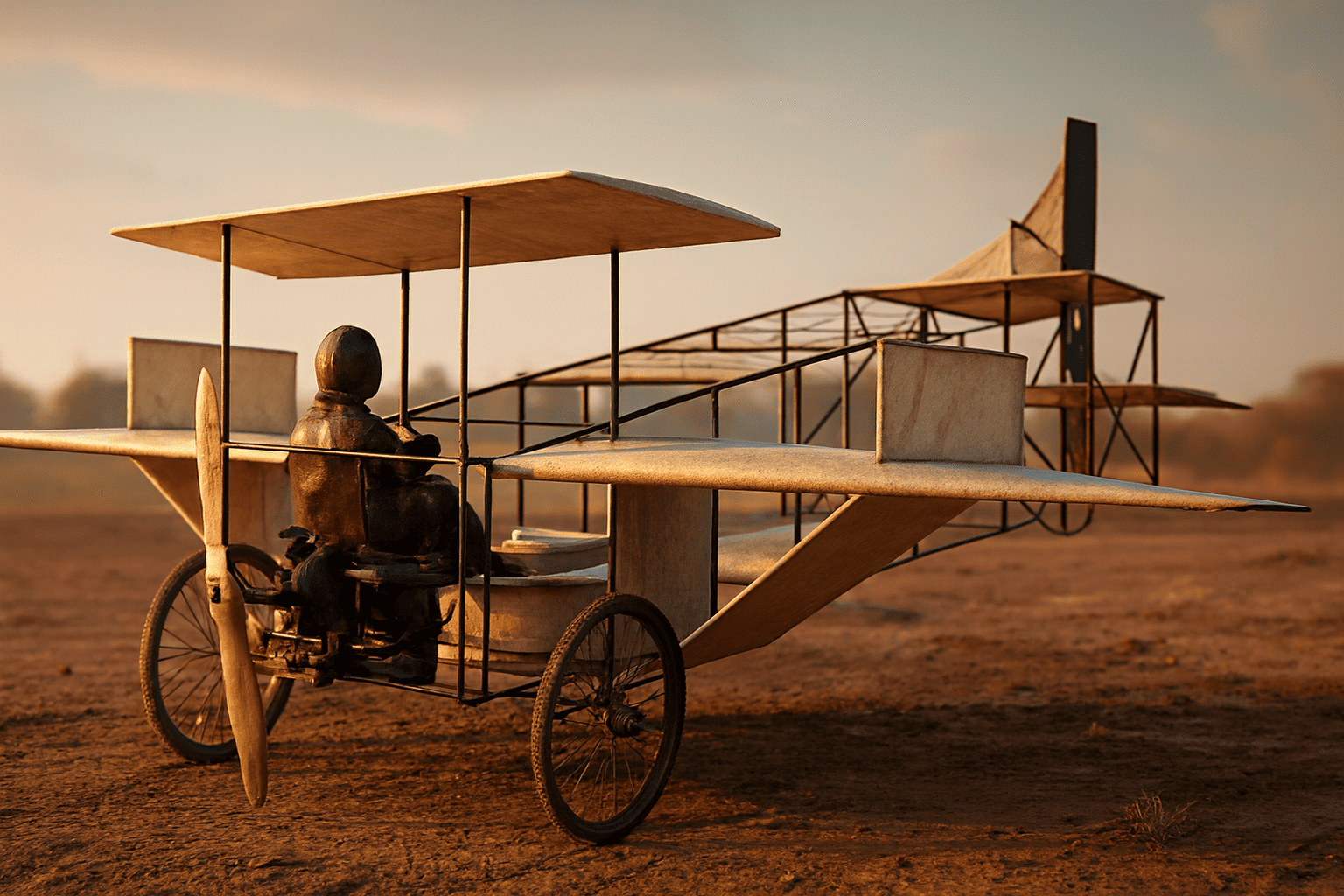
The Poliplano
Given the history that between 1906 and 1911, he designed and carried out the creation of his airplane, which was idealized taking as reference the original Wright Flyer, in the 14bis of Alberto Santos Dumont, and Voisin and Bleriot as its plans.
The name “Poliplano”, which means “Multiple Wings” since the design of the same consisted of 3 wings.
Since this was a project that left the bar high and directed the country towards the creation of these vessels, the government became interested, and in this way the same and with the participation of the Dominican government began with this new goal, which achieved the clearing of the landing strip of Sabana de Pontón, La Vega, on January 17, 1911.
On February 4, the construction of the airplane began, with the parts and equipment of the old Bleriot airplanes. Later, in July of the same year (1911), Zoilo Hermógenes began to take flying lessons with instructor James Lester Weeks, and at the same time, hired Weeks as instructor of aviation of the Dominican army.
Despite existing in the process various problems, such as for example problems with the design, persuasions, changes of name, and suspensions, it was until February 20, 1912, that the Poliplano was completed, under the name of: García Polyplane, Roberts 6-cylinder engine and 75 horsepower with Gibson propeller.

Flight attempts – La Vega
An irrefutable fact is that the first flights of Zoilo Hermógenes’ Poliplano were a failure, these were in the Nassau Boulevard airfield, and the pilot engineer of flight Fred Schneider, stated that the error came directly from its design. Where, later, was the same Zoilo Hermógenes disappointed, ordered its immediate disassembly for its transfer to Dominican Republic.
Once in the landing strip of Sabana del Pontón in La Vega, with the knowledge that Zoilo Hermógenes already had, he reassembled it, corrected the design errors, and took the airplane to perform several flights on Dominican soil and in the air.

For history, citing in a local newspaper the Progreso de Santiago, within an article by Rafael Sánchez Gil, expressed:
[. . . ] I myself have touched and seen the apparatus lift to great heights. . . The most perfect balance that I have seen the apparatus maintain in the air was in the moments when Mr. García left it to fall, abandoned to its weight, to show the slowness with which, in a given case and without the slightest danger, a descent is made. It could be done, when for some reason the motor or any other part of the apparatus would deprive it of its initial impulse [. . . ]
After all this, it was discarded that the creation of this airplane was a financial loss, but with the passage of time, the airplane left in the landing strip of Sabana de Pontón, only disintegrated and remained in history.
The determination and focus of Zoilo Hermógenes managed to transcend in time, carrying out not only the idealization of an airplane, but also the impact it had on Dominican engineering. Being Dominican, I demonstrate that having a dream, is to be able to achieve it, and that beyond being a visionary, he passed into Dominican history as an Orgullo Nuestro, pride of our land.