









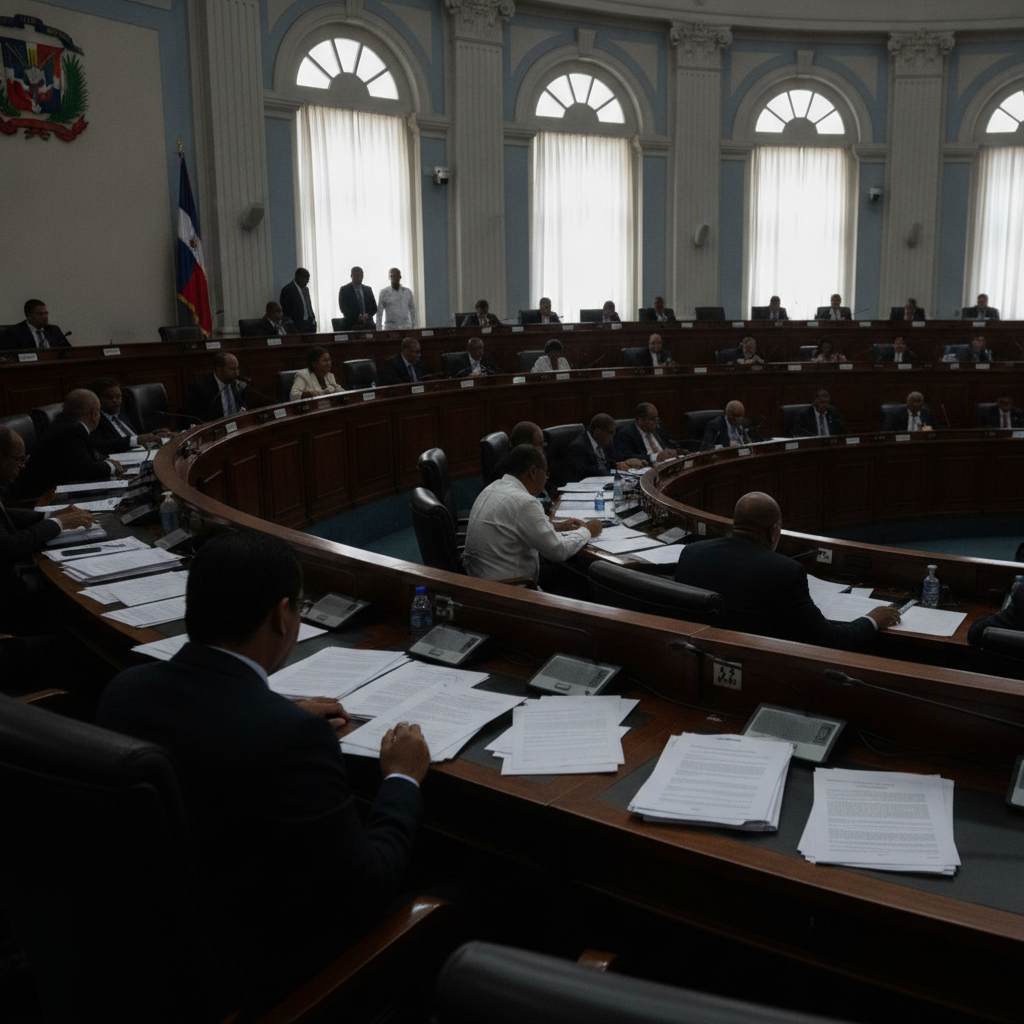
Freedom of Expression returned to the center of the legislative debate in the Senate, after three proposals by Senator Omar Fernández were rejected within the study of the new Penal Code. The discussion focused on two fronts: the limits of public discourse and penalties for firing into the air that end in injuries or deaths.
A majority of 21 senators voted against the modifications submitted by the legislator from the National District, representative of the Force of the People. One of the proposals sought to change article 123 on cyberbullying, while another aimed to eliminate paragraphs I and III of article 211, linked to acts considered not defamatory or injurious.
Fernández argued that this wording could open up space for prior censorship, by conditioning the exercise of freedom of expression to requirements not foreseen by the Constitution. The senator defended that opinions on public interest matters should not depend on implicit permissions, and that conflicts over damage should be resolved in the courts, not before publication or criticism.
“Opinions and criticisms on matters of public interest should not depend on implicit authorizations,” the legislator stated during his intervention.
Freedom of Expression and Penalties for Firing into the Air
Proposal for Harsher Penalties
The third modification proposed article 161 to create a regime of proportional penalties to the damage caused by firing into the air. Fernández requested to differentiate between non-permanent, permanent injuries, and cases with a fatal outcome, with the goal of responding with greater rigor to a practice that continues to leave innocent victims.
The senator insisted that his position was not against the project in general. On the contrary, he supported the approval of a new Penal Code and recalled that the existing legislation responds to a reality very different from the current crime situation.
A New Penal Code with Pending Adjustments
During the debate, Fernández defended that the country needs modern legal tools to face crimes such as sicariato, pyramid and real estate scams, identity theft, the use of chemical substances to attack people, child abandonment, cyberbullying, and the accumulation of penalties. In his opinion, these advances do not prevent correcting articles that may affect fundamental rights such as freedom of expression.
The case once again puts the Congress before a classic tension in penal law: expanding the State’s capacity to punish serious crimes without weakening constitutional guarantees. In this line, the Senate’s vote marks that, at least for now, the legislative majority preferred to maintain intact the wording observed by Fernández.
Freedom of Expression and the Debate on the Penal Code
The rejection does not close the political discussion. On the contrary, it leaves it open in a legislative piece that still concentrates objections in sectors that demand greater technical precision, especially when a norm can affect freedom of expression, public safety, and the scope of penal responsibility.
Fernández summarized his position with a phrase that left clear the tone of the debate: “This is not a debate between those who support or reject the Code. It is a debate about how to deliver the country the best possible Code”.
The vote confirms that freedom of expression will continue to be one of the most sensitive points of the new Penal Code, along with the regulation of violent behaviors that the legislator considers urgent to punish with greater severity.