






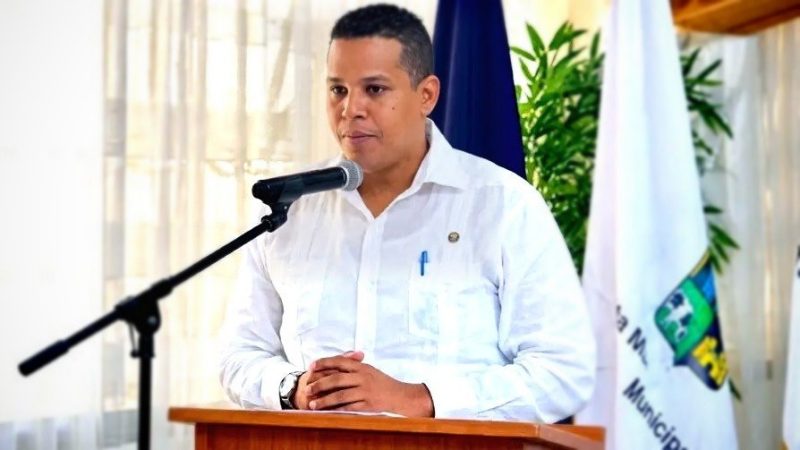

César Fernández questions the PRM over the reduction of its internal registry and opened a new front regarding the vetting of militants before the Central Electoral Board (Junta Central Electoral). The Fuerza del Pueblo leader cast doubt on the fact that more than 1.5 million names have disappeared without political consequences.
Fernández recalled that the PRM reported 3,092,289 affiliates for its 2024 primaries, but later submitted a list of 1,551,727 militants to the JCE. The difference amounts to about half of the previous registry and, for the leader, not only reveals a technical cleanup, but also potential duplications, unauthorized registrations, or affiliations that failed verification.
This debate is significant. In the Dominican Republic, Law 33-18 obligates political parties to maintain an updated registry of affiliates and to respect clear rules on affiliation and disaffiliation. The regulations also prohibit a citizen from appearing simultaneously in more than one political organization.
César Fernández questions the PRM over the “proof of life”
For Fernández, the so-called “proof of life” presented by the ruling party looks more like an admission of prior disorder than a simple administrative update. His argument is straightforward: if the registry was reduced by so much, then an inflated registry or one without sufficient controls may have existed for years.
“Where is the million and a half militants that disappeared from the registry?”, is the political question that has been raised.
This point also touches a sensitive nerve: many of those excluded participated in recent campaigns, including the 2024 one. This fuels doubts as to whether these people were still linked to the party or if they were erased without a clear process.
The JCE, the law, and internal control
Birth of the JCE has insisted on reviewing party registries when they are used for closed primaries, precisely to avoid duplicated or non-consensual affiliations. This control gains more weight because the PRM will choose its 2028 presidential candidacy through a closed registry, where only registered members will vote.
Political effect of the cut in the PRM registry
A smaller registry can strengthen internal structures with greater organizational control and disadvantage figures with strong polling support, but less territorial dominance. In this scenario, the name of David Collado appears, cited by Fernández as a contender with good public rating, although with less organic control within the party.
César Fernández questions the PRM because the real size of its registry is no longer just an internal figure: it also impacts the power map for 2028. The underlying question remains open: how many of those militants will remain active and how many will end up seeking another political ballot.