






Road safety returned to the center of the national debate with a high-level meeting led by INTRANT, in which the Dominican Republic brought together local authorities and international organizations for the first time to coordinate actions against traffic accidents. The meeting sought to turn road safety into a sustained policy, with institutional follow-up and common goals.
The meeting was held at the MIREX Convention Center and featured the participation of Vice Minister Rubén Silié, representing Chancellor Roberto Álvarez, as well as Jean Todt, the UN Secretary-General’s Special Envoy for Road Safety. Representatives from the United Nations, PAHO/WHO, government ministers, and mobility specialists also attended.
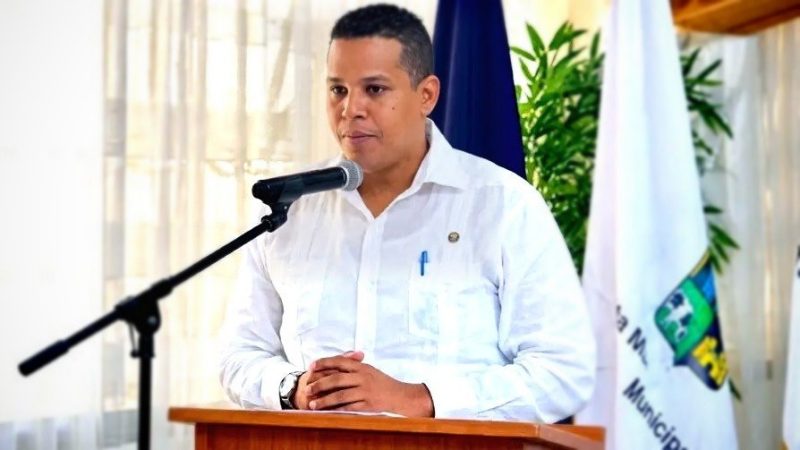
Milton Morrison, executive director of INTRANT, maintained that road safety requires permanent state commitment and coordinated work among institutions. His message aligned with the approach of the National Pact for Road Safety, which promotes measures on audits, education, safer vehicles, and a point-based license system.
road safety: the weight of evidence
Official data supports the urgency. The 2023 National Road Safety Report from the INTRANT observatory indicates that alcohol and failure to comply with basic rules, such as helmet use, remain among the leading causes of serious accidents. In addition, the ONE infographic for 2024 places the national rate at 20.02 deaths per 100,000 inhabitants.
In this context, road safety does not depend on a single entity. Jean Todt called for strengthening cooperation between the government, the private sector, and civil society to reduce deaths and injuries. Rubén Silié, meanwhile, defended multilateralism as a tool to build safer, more inclusive, and sustainable mobility.
road safety: measures already underway
INTRANT also presented progress on the 2025-2030 National Strategic Road Safety Plan. These include permanent working tables, institutional focal points, more than 55,000 breathalyzer tests, 25 prioritized critical points, and the first speed table-type reducer installed on the Malecón in Santo Domingo.
- Five Local Road Safety Tables have been created in different provinces.
- 14 institutions signed an agreement to improve data sharing.
- More than 1,000 drivers were certified in soft skills for driving.
- The Safe School Environments program is moving forward towards 287 educational centers.
Road safety was thus framed as a state agenda, featuring international cooperation, control, education, and data. In a country where motorcycles account for a large share of the tragedy on the road, the challenge is no longer diagnosing the problem, but sustaining decisions that produce measurable changes on the street. The next phase of road safety will depend on the 2025-2030 Plan maintaining coordination, enforcement, and institutional continuity.