
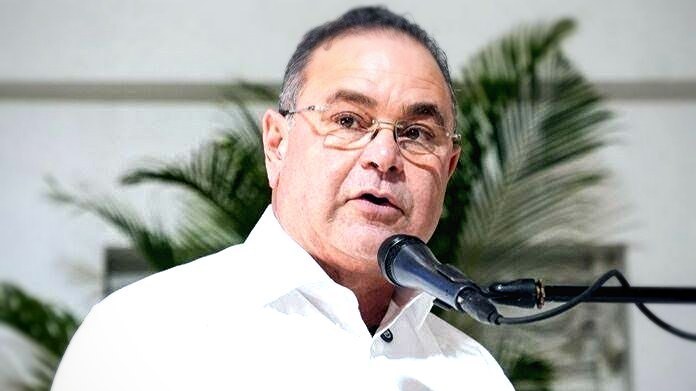





The communicator Manuel Cruz dissects the recent movement of Miguel Ángel Jazmín, known as “Muñeco”, who left the Partido de la Liberación Dominicana (PLD) to join the Fuerza del Pueblo. According to Cruz, this step represents a political error for the leader, despite benefiting the party of Leonel Fernández in the province of Samaná.
Political error for abandoning a privileged position
“Muñeco” was the most important political figure in the PLD in Samaná, with a leadership that pointed him as a natural candidate for senator. In the past elections, he obtained a solid 42 % of the votes, even in the face of the crisis of the PLD at the national level. Cruz argues that confusing a short-term tactic with a long-term vision leads to this political error.
In Samaná, the political landscape is competitive. Historically, the province has seen alternations between the PLD and the PRM, with local figures like “Muñeco” consolidating loyal bases since the 2010s. His electoral performance highlights his roots, but the leap ignores previous tensions over senatorial candidacies in the PLD.
Strength for the Fuerza del Pueblo, challenge for “Muñeco”
Internal competition as a new obstacle
Upon arriving at the Fuerza del Pueblo, “Muñeco” will have to dispute spaces with former adversaries. Cruz emphasizes: “He will have to fight for his space just like the others, because in politics, privileges are not permanent”. This could repeat frictions from past negotiations, where local candidacies generated friction.
- Benefit for FP: Gains a key figure with proven voting power in Samaná.
- Risk for “Muñeco”: Loss of advantage in a party where he was already a reference.
- Electoral context: In 2024, FP grew in the northeastern Dominican Republic, adding disaffected leaders from the PLD.
Future perspectives in Samaná
The analysis of Manuel Cruz highlights that, although the Fuerza del Pueblo strengthens, the challenge for “Muñeco” will be to remain relevant. Statistics from the JCE confirm his 42% in recent local contests, a notable achievement. Local experts agree that this political error could dilute his influence if he does not navigate the internal dynamics well.
This movement reflects the Dominican Republic’s post-2020 political volatility, with party migrations reconfiguring key provinces like Samaná. Manuel Cruz sees in this political error a lesson: internal stability weighs more than opportunistic alliances. The province observes how this bet evolves on the electoral board.