






Essential biography
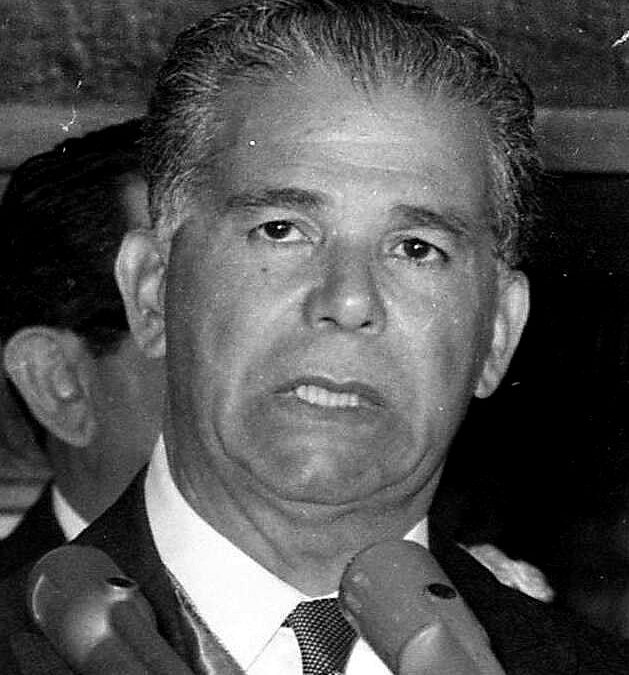
Joaquín Antonio Balaguer Ricardo was born in Bisonó, Santiago, on September 1, 1906, and died in Santo Domingo on July 14, 2002. He was the son of a lawyer and a teacher, and he studied law before starting his political career. This legal training gave him a solid foundation to understand the legal and political mechanisms that he would later dominate.
After holding several legislative positions, Balaguer occupied the presidency in three periods (1960-1962, 1966-1978, and 1986-1996), leaving a deep mark on Dominican history. Each of these periods was marked by political and social decisions that impacted the lives of Dominicans.
Balaguer’s political career developed in a context of great change and turmoil in the Dominican Republic. His ability to navigate these complex times and his vision for the country’s future made him a central figure in Dominican politics for decades.
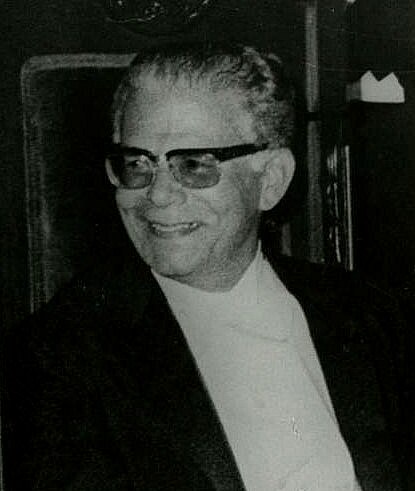
A pen behind the podium
Beyond politics, Balaguer cultivated writing; Wikipedia describes him as “essayist, writer”. His columns appeared in newspapers of the time, but many of his manuscripts remained in private archives. This aspect of his personality shows a man with a deep passion for written expression and a desire to leave a legacy beyond his political career.
A set of speech notes found in the National Archive reveals that he wrote over 120 articles on colonial history, many of which were never published. These writings demonstrate his interest in the history of his country and his desire to contribute to the intellectual debate on national identity.
Balaguer’s writing on colonial history not only reflects his interest in his country’s past but also his commitment to education and culture. By addressing historical topics, he sought to raise awareness among the population about the importance of understanding their roots and legacy.
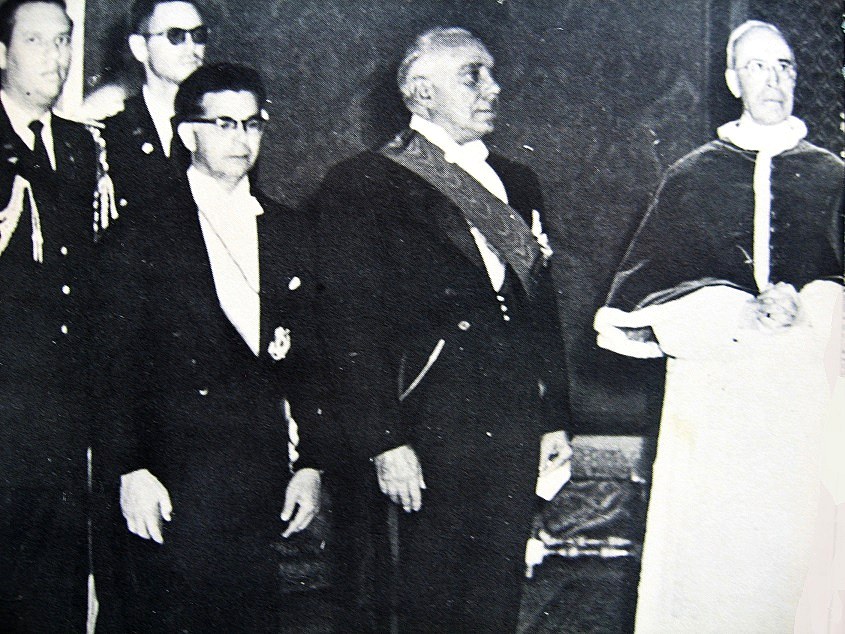
School of thought and intellectual circles
Balaguer was linked to the so-called “Santiago School”, a group of intellectuals who promoted the reinterpretation of national identity. In meeting minutes, preserved in the National Library, appear names such as Manuel Arturo Peña and Rafael Filiberto Bonnelly, fellow debaters. This group of thinkers sought to redefine Dominican identity and its place in the world.
The documents show that Balaguer promoted the creation of the magazine “History and Nation” in 1972, funded with resources from the Ministry of Education, although the publication had a short life. Balaguer’s initiative to create this magazine reflects his commitment to the dissemination of historical knowledge and the promotion of intellectual debates on national identity.
The “Santiago School” and projects like “History and Nation” were efforts to foster a national dialogue on identity and the country’s future. Balaguer, by joining these efforts, demonstrated his interest in building a national narrative that reflected the complexity and richness of the Dominican experience.
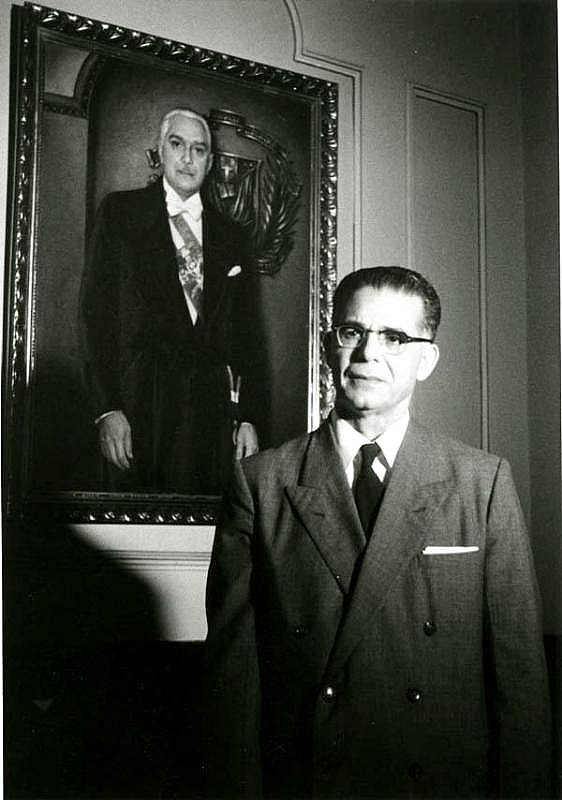
Letters and international contacts
A digitized archive of the CIA (1966) mentions that Balaguer, along with “many thousand other” people, signed letters addressed to Latin American press, defending his anti-communist stance. This reference confirms his active participation in external propaganda campaigns. This anti-communist stance aligned with the international politics of the time, especially during the Cold War.
Correspondence found in the Center for Democracy Studies indicates that Balaguer exchanged notes with Peruvian writer Mario Vargas Llosa in 1988, discussing censorship in Latin America. This exchange of ideas with regional intellectual figures shows Balaguer’s interest in cultural and political debates that transcended national borders.
Balaguer’s participation in international debates and his correspondence with figures like Mario Vargas Llosa highlight his commitment to freedom of expression and his concern about the challenges facing the region in terms of censorship and repression.
Everyday details and little-known anecdotes
In a 1975 act, Balaguer noted the purchase of an IBM 1620 computer for his office, one of the first machines in a Dominican presidential office. This detail reveals Balaguer’s willingness to modernize public administration and adopt new technologies to improve government efficiency.
A record of expenses shows that he allocated RD$ 5,000,000 for the restoration of the National Theater in 1982, under the internal nickname “Balaguer Project”. The restoration of this iconic theater reflects Balaguer’s interest in preserving the country’s cultural heritage and promoting the arts.
The investment in the National Theater’s restoration and the acquisition of advanced technology for his office demonstrate Balaguer’s vision for the development and modernization of the Dominican Republic. These efforts to improve the country’s cultural and technological infrastructure contributed to his legacy as a visionary leader.
Legacy and current impact
The recently digitized archives allow historians to reevaluate Balaguer’s cultural influence, beyond his political figure. His writings on Dominican identity continue to be cited in contemporary studies. The accessibility of these archives opens up new possibilities for understanding the complexity of his thought and its impact on Dominican society.
The discovery of his letters and notes opens a new window to comprehend how he combined executive power with intellectual production, an aspect that most readers were unaware of. This combination of politics and writing makes him a unique figure in Dominican history, someone who sought to influence not only through politics but also through written word.
The reevaluation of Balaguer’s legacy offers an opportunity to reflect on the intersection of politics, culture, and national identity. His commitment to writing and intellectual debate serves as a reminder of the importance of education and culture in shaping a society.
References
With AI and editorial review.