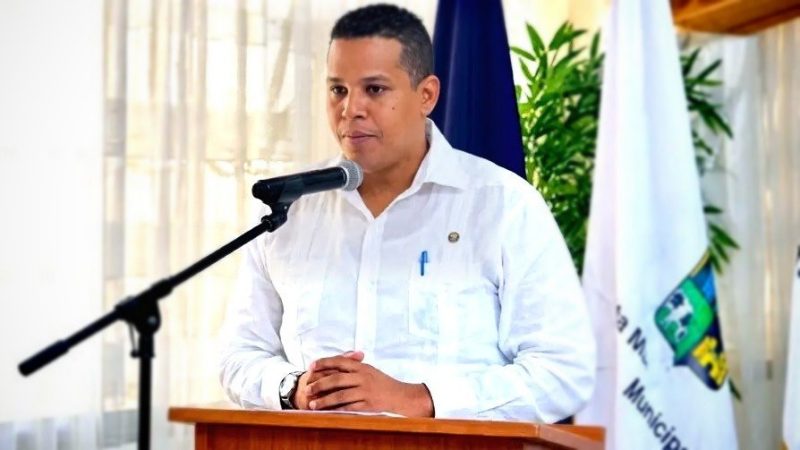

Hipólito Mejía has once again put distance from any idea of returning to power and launched a direct criticism against Leonel Fernández, stating that his political era has ended and the country must open up space for new generations.
In an interview, Hipólito Mejía responded firmly when asked if he would accept returning to the Presidency, even for a day. His response was brief and forceful: he does not aspire to return as president.
The statement puts Hipólito Mejía back in the center of the debate on generational relief within Dominican politics. Although he remains an influential voice, the former president insisted that he does not contemplate a new candidacy or a return to the Palacio Nacional.
Hipólito Mejía has maintained on different occasions a discourse of defense of institutionalism and support for the formation of new leaderships, a position that he has also reiterated in recent party scenarios.
Hipólito Mejía and his clash with Leonel Fernández
The former governor took advantage of the interview to mark distance from Leonel Fernández. According to him, he does not share the idea of perpetuating himself in the political scene or clinging to power as if it were personal property.
“My era has passed. I am not Leonel Fernández, who thinks he is the owner of the Palace”, expressed Hipólito Mejía.
The comparison rekindles a known political rivalry between two of the most influential figures of the last 25 years in the Dominican Republic. Hipólito Mejía governed between 2000 and 2004, while Leonel Fernández has occupied the Presidency in three distinct periods.
The message of generational relief
Beyond the verbal clash, Hipólito Mejía insisted that Dominican politics needs to open up space for young leaders. In his proposal, the goal is not only to cede space, but to allow new cadres to form and grow with their own experience.
A recurring debate in Dominican politics
The message of Hipólito Mejía connects with a constant discussion in the country: the difficulty of renewal in traditional parties. In that context, the former president presents himself as a figure who, at least in discourse, accepts the weight of political time and steps away from any expectation of return.
His position also contrasts with that of other leaders who remain active in the first line of public debate. For Hipólito Mejía, the priority now is to support the formation of new generations and not to insist on a return to power.
With those declarations, Hipólito Mejía reinforced his message of definitive retirement, questioned Leonel Fernández again, and made it clear that, for him, the cycle of veterans must cede space to political renewal.