

Venezuela and US entered a new phase of official contacts with the start of an exploratory process to restore embassies and reactivate their diplomatic relations, broken since 2019 after a surge in political tensions and sanctions.
Venezuela and US open an exploratory channel
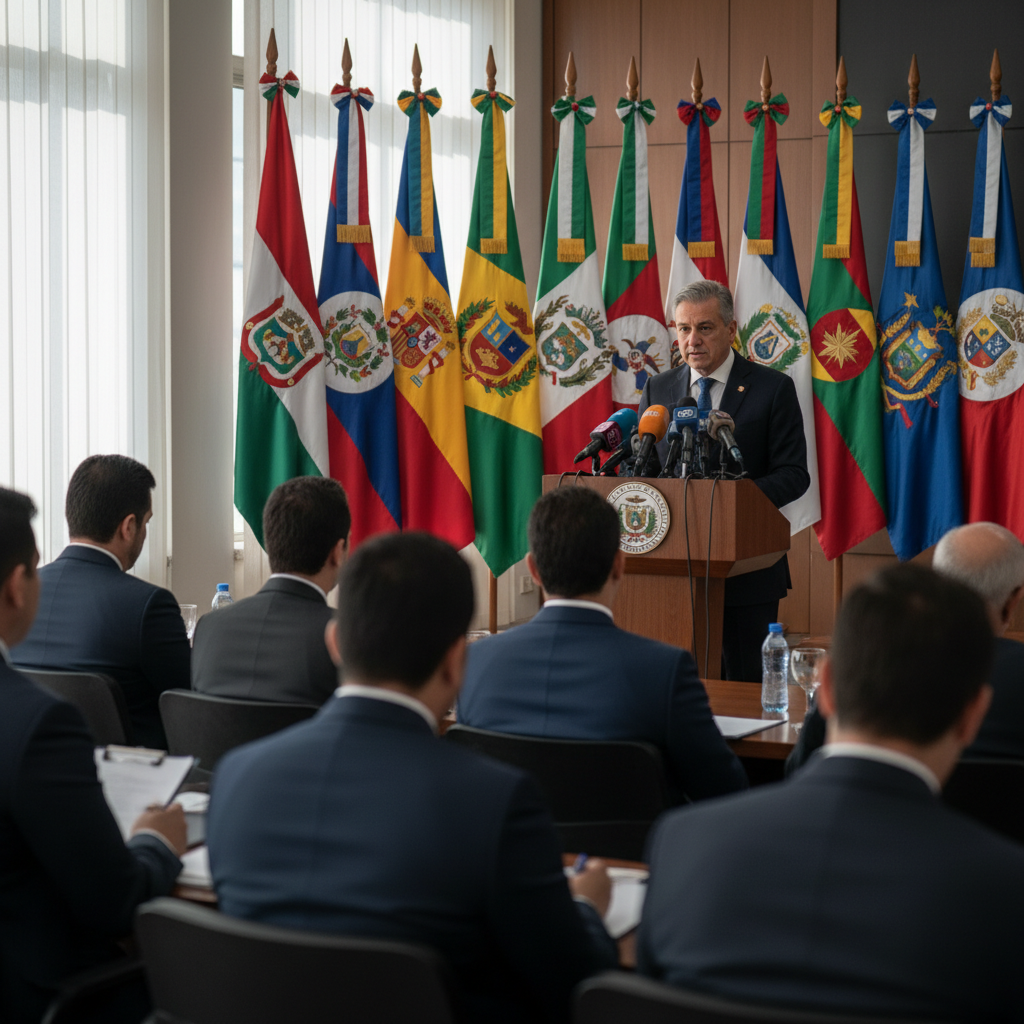
The interim government headed by Delcy Rodríguez announced that it has decided to initiate a “diplomatic exploratory process” with United States, aimed at restoring diplomatic missions in both countries, according to a statement from the Chancellor Yván Gil. This movement places Venezuela and US back on a formal dialogue table after years of limited contact and indirect negotiations.
Gil emphasized that Caracas will opt for the diplomatic path to respond to what it considers an aggression against its territory and population, insisting that this is the “legitimate way for the defense of sovereignty, the restoration of International Law and the preservation of peace”. The statement marks a shift from the confrontational discourse that dominated the stage of greatest conflict between Venezuela and US.
US delegation in Caracas and evaluation of the embassy
The Department of State confirmed the sending to Caracas of a delegation of diplomats and security personnel from the External Office of the United States for Venezuela (VAU, in English), headed by the chargé d’affaires John T. McNamara. According to US officials, the mission aims to conduct an initial evaluation for a possible gradual resumption of embassy operations.
Venezuelan authorities also confirmed the arrival of the delegation and announced that they will send a representation to Washington, in a reciprocal gesture that points to rebuilding institutional communication channels between Venezuela and US. This exchange of missions would be the first concrete step towards normalization after the withdrawal of ambassadors and diplomatic personnel in 2019.
Break in 2019 and context of maximum tension
The relations between Venezuela and US were formally suspended in 2019, after Washington disavowed the mandate of Nicolás Maduro and supported the opposition in a legitimacy crisis that led to financial and oil sanctions. Since then, contact has been reduced to punctual negotiations, mainly on energy, migration and detainee issues.
In the statement, Caracas reiterated that it has been “victim of a criminal, illegitimate and illegal aggression”, which would have left more than a hundred civilians and military personnel dead in the framework of actions linked to the political and security conflict. The authorities maintain this denunciation before international organizations while promoting the new approach.
Regional impact of the approach between Venezuela and US
Analysts consulted by international media point out that a gradual restoration of links between Venezuela and US could have direct effects on three fronts: the Venezuelan migration crisis, the energy market and regional political stability. An open diplomatic channel would facilitate coordination on returns, refugee protection and visa agreements.
In the economic sphere, an improvement in the relationship between Venezuela and US could influence the sanctions regime on the Venezuelan oil industry, key to the country’s Caribbean recovery and hemispheric energy security. Latin American governments have pressed in recent years for both parties to lower tensions and retake the institutional path.
Next steps in restoring relations
The process recently initiated does not imply immediate normalization, but it opens a roadmap. Diplomats consulted emphasize that the reopening of embassies will be gradual and will be conditioned by security guarantees, respect for international conventions and progress in internal political issues. For Venezuela and US, the challenge will be to reconcile their public positions with the practical need to cooperate on security, migration and economy.
With the exchange of delegations and the explicit recognition of the diplomatic path as the central mechanism, Venezuela and US send a signal of de-escalation after years of open conflict and place themselves in a scenario of prolonged negotiation, in which each step will be closely watched by regional governments and multilateral organizations.