









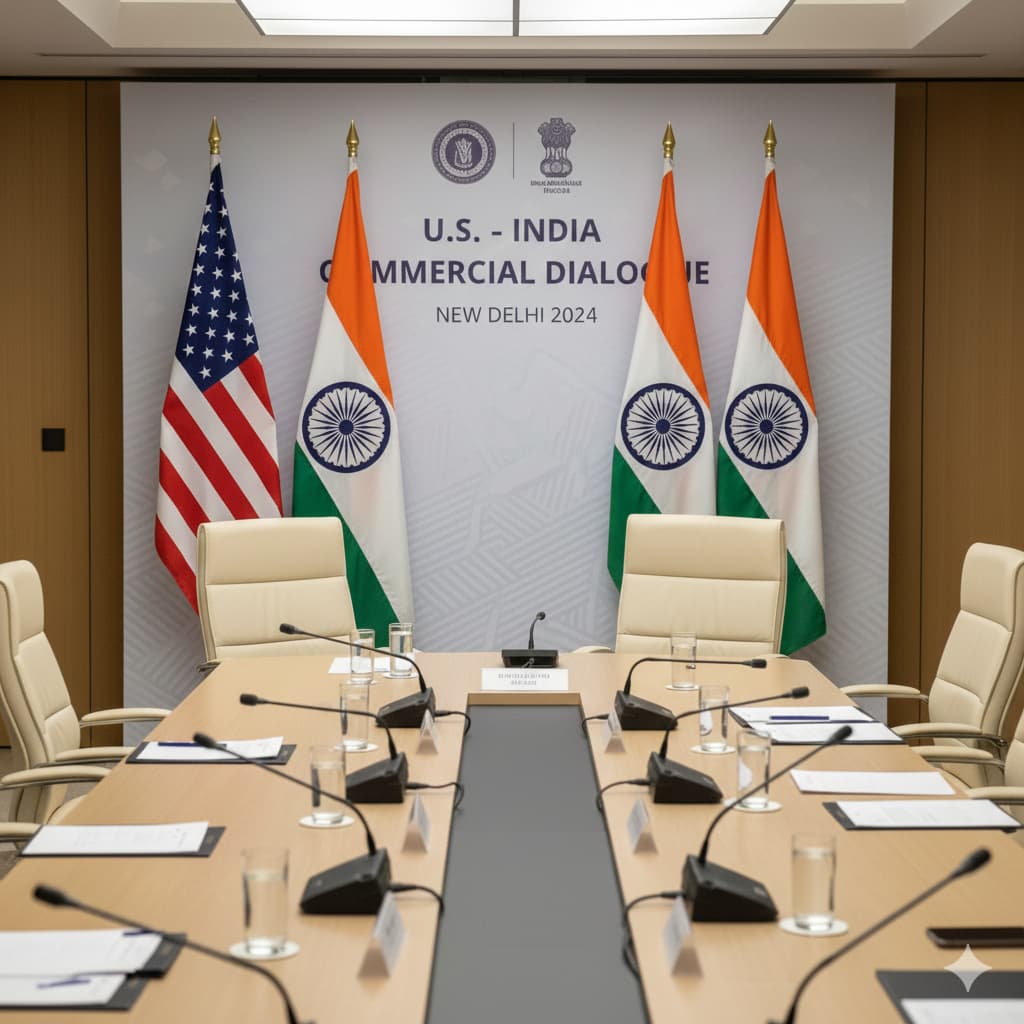
U.S. and India resume the commercial dialogue and agree on the entry of New Delhi to Pax Silica, a strategic alliance for semiconductors. The announcement was made by the new U.S. ambassador Sergio Gor in New Delhi, presenting his credentials to President Droupadi Murmu.
Resume negotiations after blockade
Commercial talks between U.S. and India will resume tomorrow, overcoming the 2025 stalemate. Gor confirmed that both nations are actively negotiating, with a scheduled call immediately. The main goal is a Free Trade Agreement (FTA), a bilateral target since the return of Donald Trump to the White House almost a year ago.
Tensions over tariffs and Russian oil
The advance was halted in August last year, when Washington imposed 50% tariffs on Indian imports as a reprisal for massive Russian oil purchases by India. This measure cooled relations that seemed headed for a quick pact. Experts point out that the FTA faces obstacles, and it won’t be an easy task to close it given the complexity of mutual interests.
Pax Silica: shield against China in semiconductors
Pax Silica, launched in December by the Trump administration, will incorporate India as a full member in February. The initiative groups Japan, South Korea, Australia, Singapore, the UK, and Israel to reduce dependence on China in semiconductor and critical mineral supply chains for AI. The EU and Canada act as observers.
Indian mineral wealth and Chinese dominance
China controls 70% of global rare earth extraction, essential for semiconductors, batteries, and electronics. India contributes value with rich deposits of monazite, ilmenite, rutile, leucoxene, and circon on its southwestern coast, one of the world’s largest concentrations. This adherence to Pax Silica strengthens New Delhi’s strategic position.
- Full members of Pax Silica: Japan, South Korea, Australia, Singapore, the UK, Israel, and India (from February).
- Observers: EU and Canada.
- Focus: Semiconductors and minerals for AI, countering China’s 70% in rare earths.
The entry into Pax Silica and the commercial dialogue mark a positive turn in the U.S.-India relationship, with potential to reconfigure global supplies. Diplomatic sources highlight that these moves respond to growing geopolitical tensions, prioritizing security in critical technology.