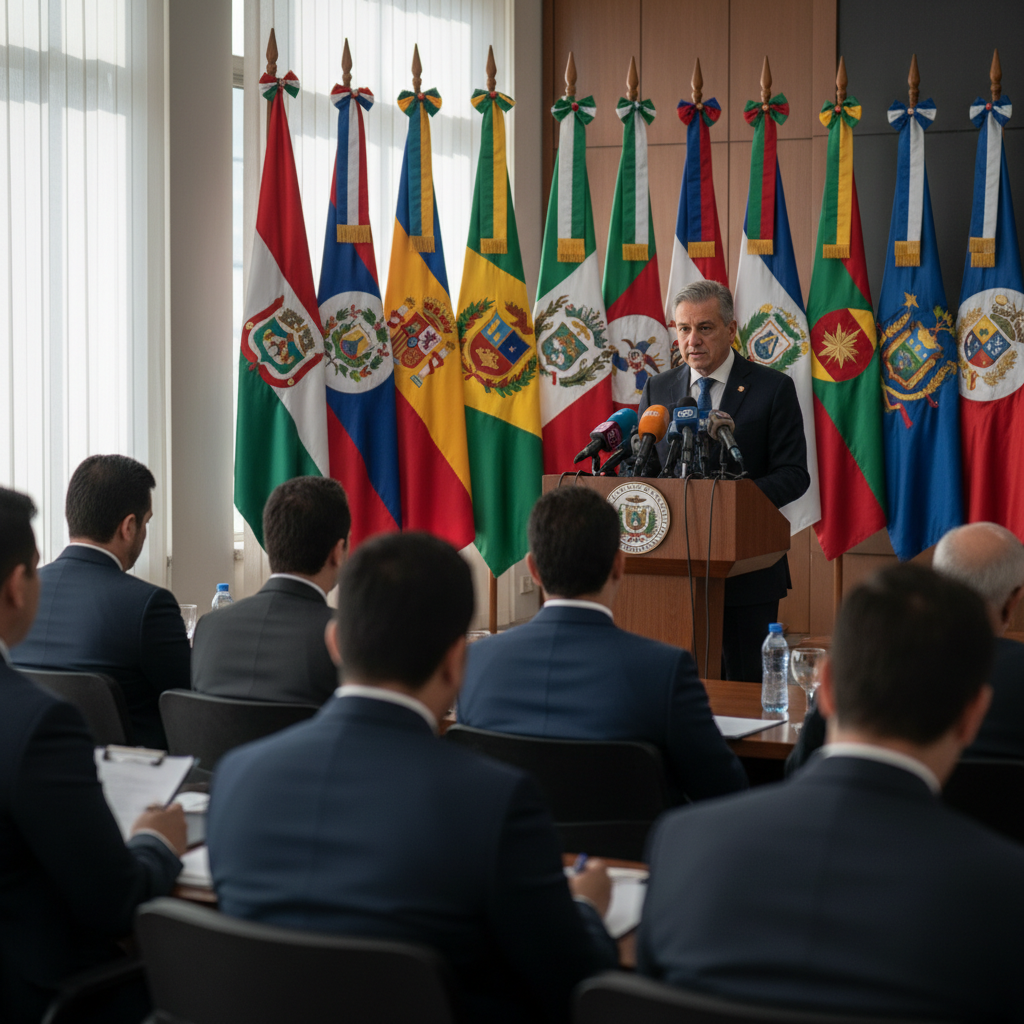










Thailand and Cambodia have signed a new ceasefire agreement aimed at ending weeks of intense armed clashes along their shared border. The announcement was made on Saturday from Bangkok, with the pact taking effect at noon local time. This step comes following escalations of tension due to longstanding territorial claims, especially in areas such as Preah Vihear, a temple disputed for decades.
Key details of the agreement between Thailand and Cambodia
The pact not only halts gunfire, but also prohibits military mobilizations and demands mutual respect for military airspaces. Thailand and Cambodia commit to 16 de-escalation measures, reviving previous pacts. Thailand, which carried out the latest airstrikes that same Saturday according to Cambodian sources, agrees to repatriate 18 imprisoned soldiers after 72 hours of total calm. Defense Ministers Tea Seiha for Cambodia and Nattaphon Narkphanit for Thailand signed the document at a border post after three days of negotiations in the General Border Committee.
Historical context of tensions between Thailand and Cambodia
The role of international mediators
This is not the first attempt. Last July, a similar ceasefire ended five days of clashes, brokered by Malaysia and backed by pressure from President Donald Trump, who threatened to cut trade privileges. A summit in Malaysia in October formalized details, with Trump present. However, cross-border propaganda and violence persisted, erupting in December with bombings and skirmishes that caused officially unspecified casualties.
Historically, Thailand and Cambodia dispute 800 kilometers of border, with rulings by the International Court of Justice in 1962 and 2013 favoring Cambodia in key areas, but without resolving nationalist tensions. Experts like Thitinan Pongsudhirak from Chulalongkorn University point out that these fragile pacts depend on internal political will.
Regional implications
- Demobilization reduces escalation risks in the South China Sea.
- Repatriated prisoners symbolize mutual good faith.
- ASEAN urges monitoring to prevent relapses.
This agreement between Thailand and Cambodia offers hope, but history shows fragility in the face of territorial disputes. Both governments prioritize economic stability in a volatile 2025. Thailand and Cambodia reiterate their commitment to border peace, monitored by the international community.