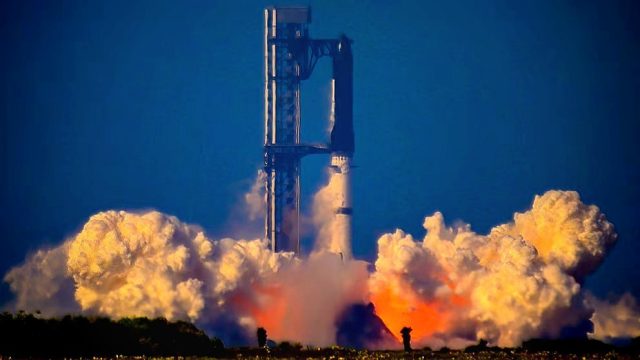









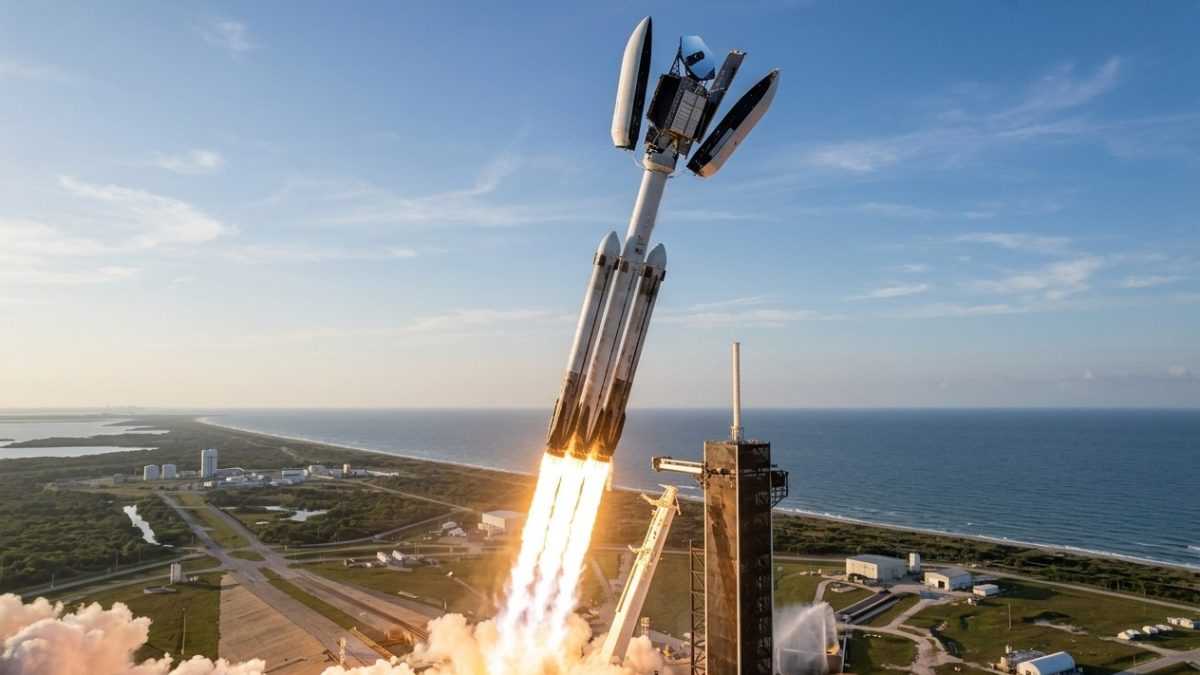
NASA has given the green light to the mission of the Nancy Grace Roman Space Telescope, the largest panoramic telescope ever built, which will launch aboard a SpaceX Falcon Heavy next Sunday at 7:26 a.m. eastern time (11:26 GMT). The launch will take place from the Kennedy Space Center, in Cape Canaveral (Florida), and advances nine months the originally scheduled date. On August 30, the rocket will take Roman to the gravitationally stable zone known as L2, the Lagrange point between the Earth and the Sun.
The telescope, named after NASA’s chief astronomer Nancy Grace Roman, will be able to observe an area of the sky 50 times larger than the one covered by the Hubble in three decades. Its field of view, 100 times wider than that of the 1990 space observer, will allow it to record more than 2,000 galaxies and detect up to half of the stars in the Milky Way in just one month. These capabilities are designed to advance the study of dark energy, exoplanets, and infrared astrophysics.
With a coronagraph that eliminates the brightness of stars, Roman will be able to photograph planets near their host stars. In its first five years, the mission will focus on the galactic center, revising the region every 12.5 minutes. Once this stage is completed, the objectives will be updated based on the discoveries.
The amount of information it will generate is enormous: the telescope produces 11 terabytes of data daily, equivalent to 350 movies in 4K Ultra HD resolution every 24 hours. To reach its final destination, the observatory will take approximately 100 days.
The launch also involves the first flight of a telescope designed for refueling at the L2 point, although NASA still does not have the necessary infrastructure for the service of these observatories in orbit.
Source credits: deultimominuto.com
Note generated automatically from the sources cited in the text. Found an error? Email us at [email protected] and we'll fix it.