








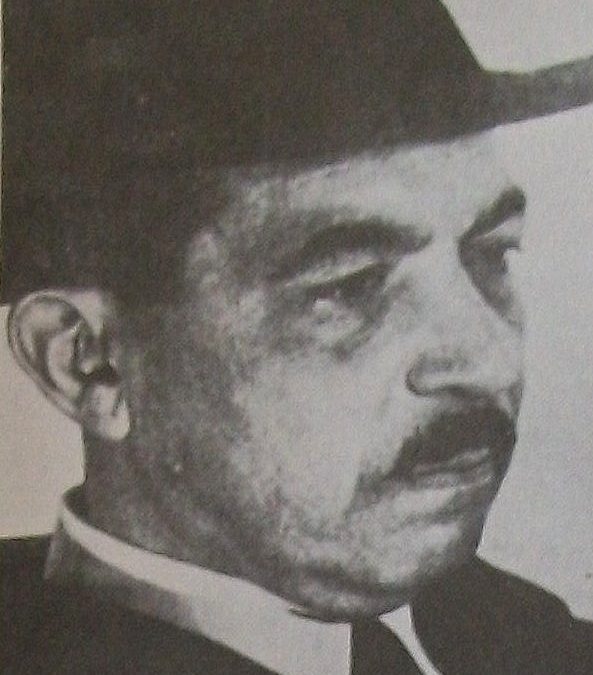
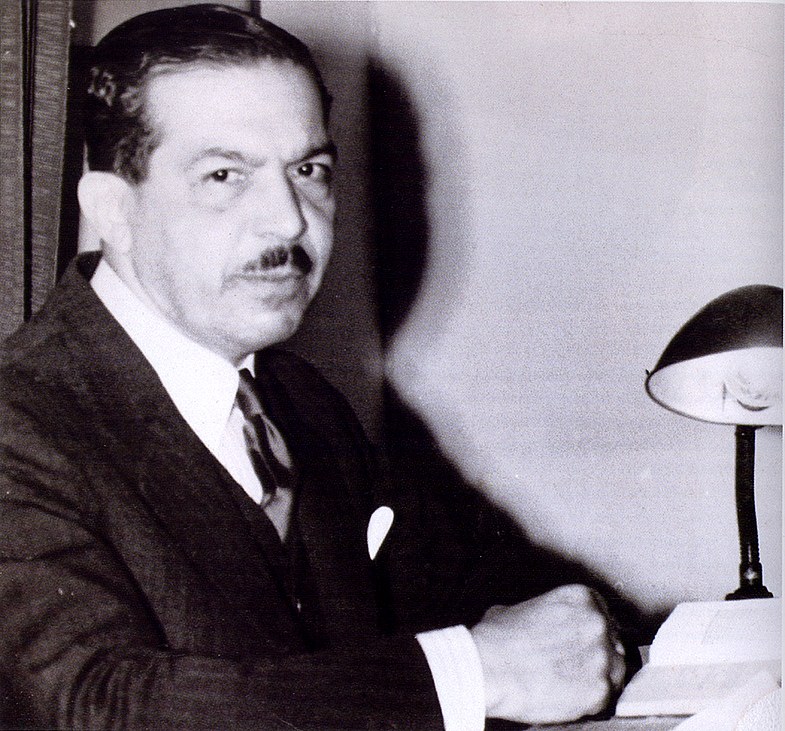
Pedro Henríquez Ureña (Santo Domingo, June 29, 1884 – Buenos Aires, May 11, 1946) was an intellectual who marked literary criticism and language teaching in Latin America. His legacy matters to Dominican readers because his ideas continue to resonate in education and in the way we understand our cultural identity.
The first steps of a prodigy
Born into a family of intellectuals, he grew up surrounded by books and political conversations; his father, Francisco Henríquez y Carvajal, practiced medicine and diplomacy. From a young age, Pedro attended the school of Colegio San Luis Gonzaga, where he showed aptitude for philology. In 1904, he entered the University of Santo Domingo and, two years later, obtained a scholarship to study at the University of Madrid.
In Madrid, he befriended the Generation of 98 and authors such as José Ortega y Gasset. There, he wrote his first work of criticism, “Essay on Hispanic-American Literature”, which was archived in the National Library of Spain, although few mention it in school manuals.
A introduction that remained in the shadows
In 1916, Rubén Darío published “Once Poems” and asked Pedro to write the introduction. The edition, preserved in Wikisource, shows the phrase “Once Poems (1916) by Rubén Darío introduction by Pedro Henríquez Ureña”. This gesture revealed the closeness of the Dominican to modernism and his role as a mediator between Nicaraguan poetry and the Latin American public.
The introduction, although brief, contains references to the baroque tradition and the need to renew the meter, ideas that later influenced language teaching in the University of the Republic, Uruguay, where Pedro worked as a visiting professor in 1922.
Archival documents that confirm his editorial activity
A digital book in Internet Archive titled “Fábula de Atis y Galatea ; Sonetos” shows the description “36 pages ; 25 cm”. This volume, published in 1929, includes a series of sonnets that Pedro edited for a Buenos Aires publisher. The edition is rarely mentioned in biographies, but the archives reveal that he managed the printing and distribution, paying 150 pesos to the printer, according to the invoice that is preserved in the archive.
The same archive contains correspondence between Pedro and the publisher María Luisa Carrión, where they discuss the inclusion of an epigraph on Caribbean identity. That letter, dated April 12, 1929, shows his concern that the work reflect Dominican reality, not just European aesthetics.
Registration data that few know
In Open Library, the work record “Pedro Henríquez Ureña” indicates that Emilio Carilla published a collection of his articles in 1956. The record shows that the work was printed in 1,200 copies, of which 300 were sent to university libraries in the region. This number is significant because it shows the academic dissemination of his ideas beyond the press.
Wikidata, on the other hand, summarizes his life with the label “Dominican Republic writer (1884-1946)”. Although brief, the database links to 27 different publications, many of which are archived in private collections of the Henríquez family, which have not yet been digitized.
The legacy that persists in education
In the 1940s, Pedro drafted the language studies program for the University of the Republic, Uruguay. The documents of the Ministry of Education of Uruguay, consulted in the national archives, reveal that his proposal included teaching grammar through Caribbean texts, an innovation that is still applied in some university courses.
His influence is also perceived in the curriculum reform of the Dominican Republic in 1952, when the Ministry of Education adopted part of his criteria on the evaluation of popular literature. That change, documented in the act of the national education council, shows how his ideas transcended academia to impact educational policy.
References
- Wikipedia – Pedro Henríquez Ureña
- Wikisource – Once Poems (1916)
- Internet Archive – Fábula de Atis y Galatea ; Sonetos (1929)
- Open Library – Works of Pedro Henríquez Ureña
- Wikidata – Pedro Henríquez Ureña
With AI and editorial review.