





Miami (USA).- SpaceX, the company founded by billionaire Elon Musk, commemorates this week the fifth anniversary of its first commercial crewed flight in collaboration with the NASA, a milestone that marked the rebirth of space launches from US soil, ending the dependence on Russian spacecraft.
On May 30, 2020, in the midst of the COVID-19 pandemic, the Demo-2 mission launched from Florida, carrying NASA astronauts Bob Behnken and Doug Hurley to the International Space Station (ISS) aboard a Dragon capsule.
Before that date, the United States paid between $35 and $85 million per seat for at least 60 seats that its astronauts needed to travel on the Soyuz rocket from Roscosmos.
That monopoly, which allowed the Russian agency to raise prices, ended with the historic Demo-2, the first crewed launch from the United States since the retirement in 2011 of the obsolete and expensive Space Shuttle and demonstrated SpaceX’s ability to transport humans to space safely and more affordably.
Since then, SpaceX has carried out more than a dozen crewed missions under the NASA’s Commercial Crew program, transporting not only US astronauts, but also international and civilian astronauts on private flights, such as the Inspiration4 mission in 2021.
Among the four civilians on the Inspiration4, the first fully private orbital flight without professional astronauts, was entrepreneur Jared Isaacman, who has been nominated to lead NASA by the Trump Administration and whose approval is currently pending in the Senate.
Isaacman and his three companions orbited the Earth for three days at an altitude of 590 kilometers, higher than the ISS, which is at 420 kilometers. In addition to the non-astronauts’ incursion, SpaceX’s flights are driving the return of human space activity from other countries.
This is the case of the Axiom company, which plans for this June 8th its fourth mission to the ISS on SpaceX ships and will mark the “return” of India, Poland, and Hungary to crewed space flights, with the first flight sponsored by their respective governments in over 40 years.
Axiom’s first trip in 2022 was the first private mission to the ISS, while the second (2023) had the first private woman astronaut in command (Peggy Whitson) and the inclusion of the first Saudis in the microgravity laboratory.
In 2024, Axiom’s third mission, a company based in Texas, was the first fully crewed with European astronauts (Italy, Turkey, Sweden) led by the Hispanic-American and former NASA astronaut Michael López-Alegría, who has already commanded two of them.
A partnership beyond politics
Since 2014, under the government of Democrat Barack Obama (2009-2017), SpaceX won the contract to develop the Crew Dragon, years before the first presidency of Trump, during which the Demo-2 was launched.
In 2017 Trump accelerated the Artemis program, for the permanent return of humans to the Moon and the arrival at Mars, benefiting the company of Musk and his super Starship rocket, but the NASA has assured that the contracts are by merit and not by the friendship between both.
Since 2020, the NASA-SpaceX association has been key to ensuring continuous access to the ISS for both crew and cargo. The space agency has also highlighted the reliability and affordability of the Falcon 9 rockets and the Dragon capsules, both reusable to reduce the cost of space flights.
With SpaceX, the costs dropped from $450 million per mission to $55 million. In addition, the shuttles required two years of preparation between flights, while the Crew Dragons, only months.
With a design from the 1970s, the shuttles used analog technology and non-reusable systems, while the Falcon 9 rockets recycle 90% of the hardware. Also, the payload capacity increased from 24.5 tons to low Earth orbit to 63.8 tons in the case of the Falcon Heavy of the Starship.
“The Commercial Crew program has restored the ability of the US to launch astronauts and has opened new opportunities for commercial space exploration”, according to NASA.
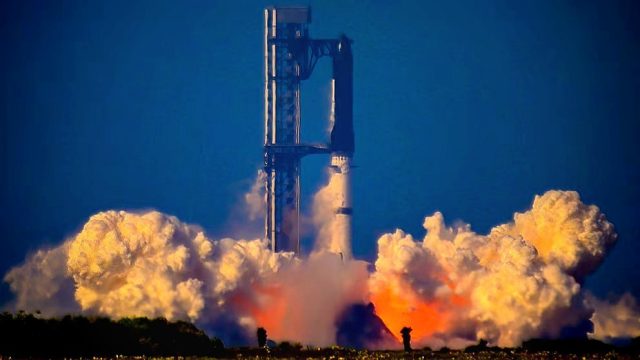
Additionally, with the Starship, the largest and most powerful rocket in the world, which performed its ninth test on Tuesday with mixed results, the company of Musk plans to drive NASA in its missions to the Moon, Mars, and beyond.
credits of the images of this post: Deultimominuto.net