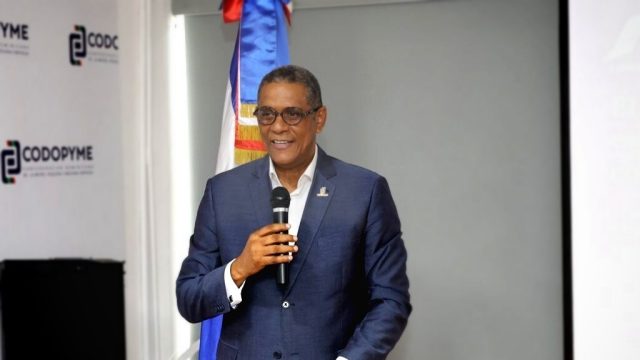



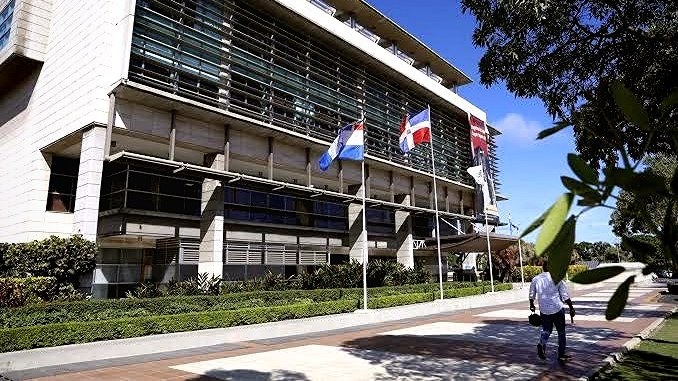


Financial inclusion returned to the center of the debate in the Dominican Republic following the conclusion of the training program by the Superintendency of Banks (SB) for financial intermediation entities. For seven months, the institution worked with sector representatives to strengthen capacities aimed at designing products and services better tailored to realities that have remained off the banking radar for years.
This effort was primarily directed at women leading MSMEs, people with disabilities, older adults, and migrants. Within this group, the priority was to take financial inclusion beyond rhetoric: turning it into a measurable, sustainable, and useful tool to expand access to credit, savings, and other basic services.
Gaps that continue to shape financial inclusion
The SB brought to light one of the most visible gaps in the market: although women account for nearly half of the debtors in the country, they still receive smaller amounts and face less favorable conditions. According to data cited by the institution, the average balance for men reaches RD$99,843, compared to RD$68,003 for women, a difference of RD$31,840.
This contrast confirms that financial inclusion goes beyond simply opening accounts or approving loans. It also requires reviewing how risk is assessed, how income profiles are measured, and what type of support clients receive. For industry analysts, these gaps often reflect barriers to access, limited credit history, and a lower presence of products designed for small business ventures.
financial inclusion for women and MSMEs
One of the program’s focal points was the analysis of women who lead MSMEs, a key segment of the Dominican economy. The training addressed the fact that many of these female entrepreneurs demonstrate good payment behavior, yet still face smaller loans and higher interest rates. In practice, this limits their ability to grow, invest, or formalize their operations.
The SB emphasized that financial inclusion can also open up business opportunities for entities, provided they develop comprehensive solutions that include financial education, follow-up, and products tailored to each client’s actual life cycle.
Other populations on the financial inclusion agenda
The program was not limited to women. It also included content to address the needs of people with disabilities, older adults, and migrants—three segments that typically face additional hurdles to enter or remain within the formal financial system.
The training was supported by the SB School, the Inter-American Development Bank, the International Finance Corporation, and the International Organization for Migration. Together, the participating entities worked on proposals combining financial products with guidance, education, and trust-building mechanisms.
More measurement, less improvisation in financial inclusion
Another key point was the measurement of results. The SB promoted the use of indicators, baselines, targets, and gender-disaggregated tracking to evaluate real progress. This approach aims to ensure that financial inclusion does not rely solely on one-off campaigns, but rather on strategies featuring controls, data, and continuity.
The institution also highlighted the Financial Inclusion Ranking, included in the report “Toward an Inclusive and Sustainable Financial System 2025,” as a tool to measure sector performance.
At the program’s close, participants received certificates, and the SB reiterated that it will continue to support institutions throughout this process. In a market where digitalization is advancing rapidly, financial inclusion is emerging as a true test of how far the Dominican banking system’s reach genuinely extends.