

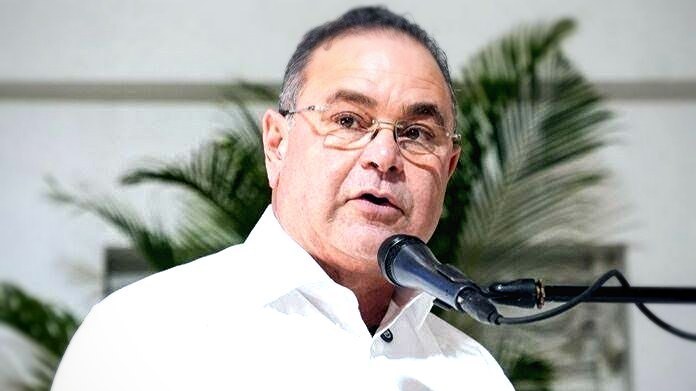



Bolsonaro’s Reduction Condemns Him triggered a political crisis in Brazil that culminated in the expulsion of the ruling deputy Glauber Braga from the Chamber of Deputies. Braga, a member of the Socialism and Liberty Party (PSOL), was forcibly removed after making a protest during a legislative session.
Context of the Legislative Protest
The protest took place during the discussion of a controversial bill that seeks to reduce Bolsonaro’s sentence, who is currently facing a 27-year sentence for attempting a coup against the Brazilian democratic system. This bill has rekindled the strong political division that runs through the country.
Braga starred in a tense scene by sitting in the president’s chair and refusing to leave, manifesting his frontal rejection of what he called “golpist offensive”. Before being physically removed, he declared that his act was a legitimate exercise of political opposition, rejecting amnesty for those he considered coup plotters.
Escalation of the Conflict and Adopted Measures
The protest began at 16:04 hours and escalated during the session when Braga prevented the progress of deliberations, despite not having functions in the executive board. The tension increased until the official television broadcast was interrupted and journalists were removed from the plenary with an internal protocol argument, according to the Chamber’s president, Hugo Motta.
Finally, at 18:08, legislative police officers forcibly removed Braga, in a decision that reveals the depth of the conflict caused by the proposal to reduce Bolsonaro’s sentence, and which has significantly polarized various Brazilian political sectors.
Implications and Historical Context
Bolsonaro’s reduction sentence acquires relevance in a context where the former president Bolsonaro is serving a severe sentence for institutional destabilization attempts, which emerged after the 2022 presidential elections. Bolsonaro was sentenced to 27 years for attempting a coup to invalidate election results.
Experts in constitutional law and political analysts warn that reducing the sentence could have negative effects on the validity of the Brazilian State of Law, as well as influencing the historical tension between powers.
Legislative Controversy and International Repercussions
Braga’s rejection of Bolsonaro’s reduction sentence reflects a sector of society and the Brazilian Congress that defends judicial rigor to avoid impunity in cases associated with threats to democracy. The expulsion of the legislator and restrictive measures in the Chamber have been observed with attention by international organizations defending human rights and experts in democratic governance.
Bolsonaro’s reduction sentence continues to be a topic of broad debate in Brazil and the region, with political impacts that can transcend short and medium-term, altering the institutional dynamics and international perception of the strength of the Brazilian democratic system.