









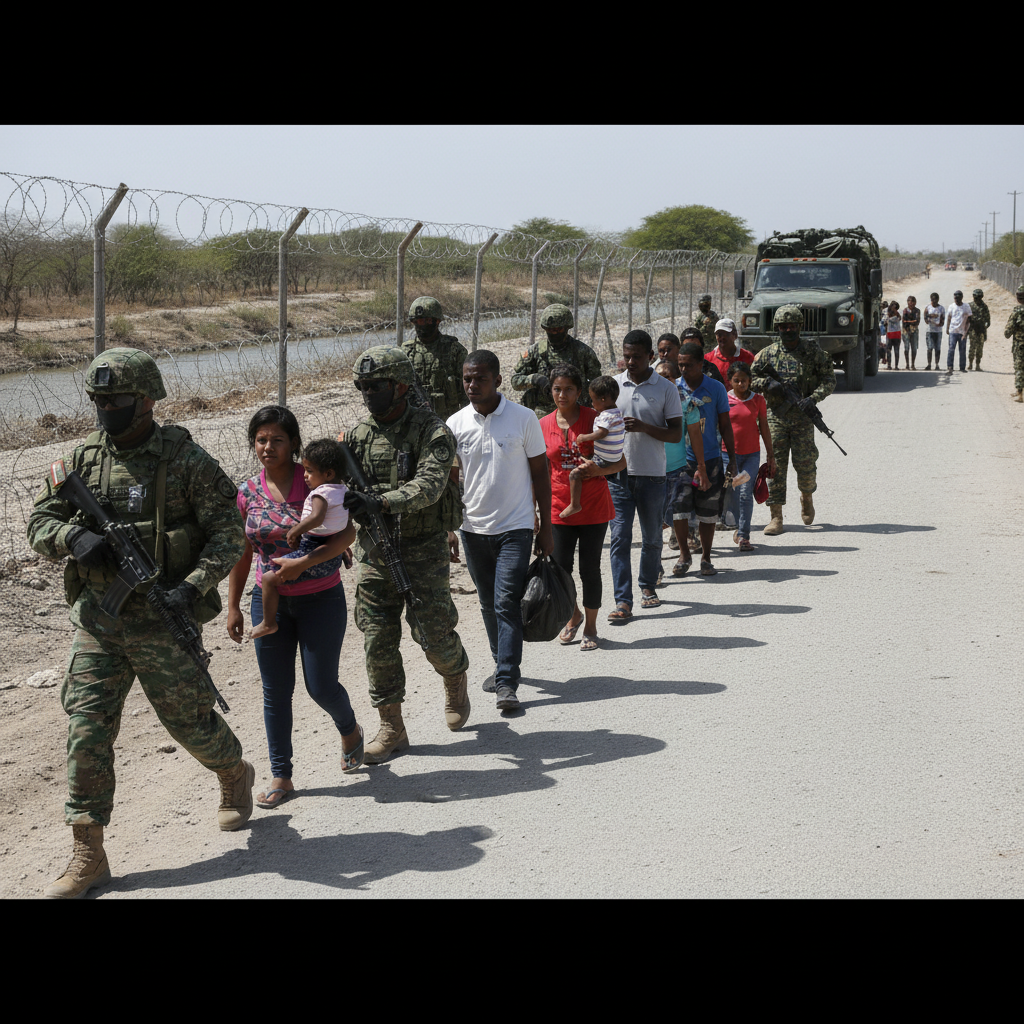
Operations executed by the Army of the Dominican Republic in the northern province resulted in the detention of 129 Haitian citizens who were in irregular migratory status. The actions were carried out in different communities of Valverde as part of the permanent efforts of the State to strengthen control in the country’s borders.
Operations in three sectors of Valverde
The patrol days were concentrated in strategic sectors of the province. The Haitian migrants were captured in Mao, Pueblo Nuevo and Villa Los Almácigos, areas under the operational responsibility of the 4th. Infantry Brigade of the Dominican Army. These sectors have been identified as frequent points of migratory transit in the northern region.
The operation reflects the intensification of controls that have characterized the border actions in recent months. The military brigades deploy systematic patrols to intercept irregular movements of people who try to establish themselves in Dominican territory without complying with the established migratory requirements.
Composition of the detainees and legal procedure
Of the total of Haitian migrants captured, 61 correspond to men and 68 to women. None of the detainees carried documentation that authorized their legal stay in the Dominican Republic. This condition of migratory irregularity was determinant for their immediate capture.
Transfer to migration authorities
The Haitian migrants were initially transferred to the headquarters of the 4th. Infantry Brigade, where they remained under military custody. Later, they were handed over to the General Directorate of Migration to proceed in accordance with the established legal protocols in Dominican legislation.
This remission procedure represents the institutional coordination between military forces and civil authorities responsible for migration management. The General Directorate of Migration assumes the responsibility of the administrative and legal processing of the cases.
Context of continuous border control
The detention of these Haitian migrants is inscribed within a sustained policy of border vigilance that seeks to regulate the migratory flow towards the country. The operations in Valverde form part of broader actions that are executed in border areas of the northern and northwestern Dominican Republic, where historically there have been irregular movements of Haitian citizens.
The authorities maintain that these operations are essential to ensure compliance with migratory regulations and preserve the administrative order of the national territory. The detentions of undocumented Haitian migrants continue to be a constant in the dynamics of border control executed by the Dominican Army in coordination with other state institutions.