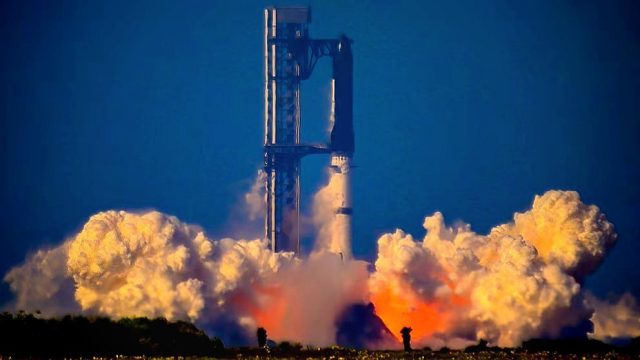










The remains of a SpaceX rocket are on a collision course with the surface of the Moon this Wednesday, according to updated calculations by independent astronomers who have been tracking its trajectory for months. This episode once again puts the management of space debris generated by commercial missions under the microscope.
The object identified as The remains of a rocket corresponds to the upper stage of a vehicle launched in January 2025 from Florida, on a mission designed to test lunar landing modules from two private companies focused on lunar services. After fulfilling its propulsion function, the stage was left without enough fuel to return or be deflected, remaining in a high and chaotic orbit around the Earth and the Moon.
As months have passed, orbital dynamics specialists have refined their models and estimate that the impact will occur around 2:35 local time in Miami, at a speed of several kilometers per second and in an area on the far side of the satellite, where it will not be visible from Earth.
Controlled impact and expected effects on the lunar surface
Although The remains of a rocket were not deliberately directed toward the Moon, astronomers explain that events of this type have happened before with vehicles from space agencies and private companies. The crash will generate a new crater and kick up a cloud of dust and debris, but it poses no risk to the population or to communications on Earth.
Agencies like NASA and experts in lunar exploration emphasize that these collisions offer useful data on soil composition and the behavior of materials upon impact, provided the area and timing are well documented for future observation missions.
Space debris and the responsibility of private missions
The case of The remains of a SpaceX rocket adds to the growing debate regarding the responsibility of private companies in generating debris in orbit. The scientific community insists on the need for stricter protocols to de-orbit upper stages or send them to “graveyard” orbits where they do not interfere with other vehicles.
With the increase in commercial launches, astronomers warn that more objects could end up with unpredictable trajectories, some of them with the Moon as an involuntary destination.
Relevance for the Dominican Republic and the region
For countries like the Dominican Republic, this impact of The remains of a rocket on the Moon serves as a reminder of how space technology influences daily life: from communication systems to navigation systems used daily by businesses and citizens.
Universities and research centers in the region follow events of this type with interest, as they help promote scientific vocations and discussions on the role of Latin America and the Caribbean in the upcoming decade of lunar exploration.
What follows after the rocket’s impact on the Moon
Following the crash of The remains of a rocket against the lunar surface, astronomers will continue to monitor the area through remote observations and by comparing previous images to study the resulting crater. Although this is a one-off episode, this case is expected to drive new regulations and international standards so that future missions better manage their discarded stages and reduce space debris around the Earth and the Moon.