









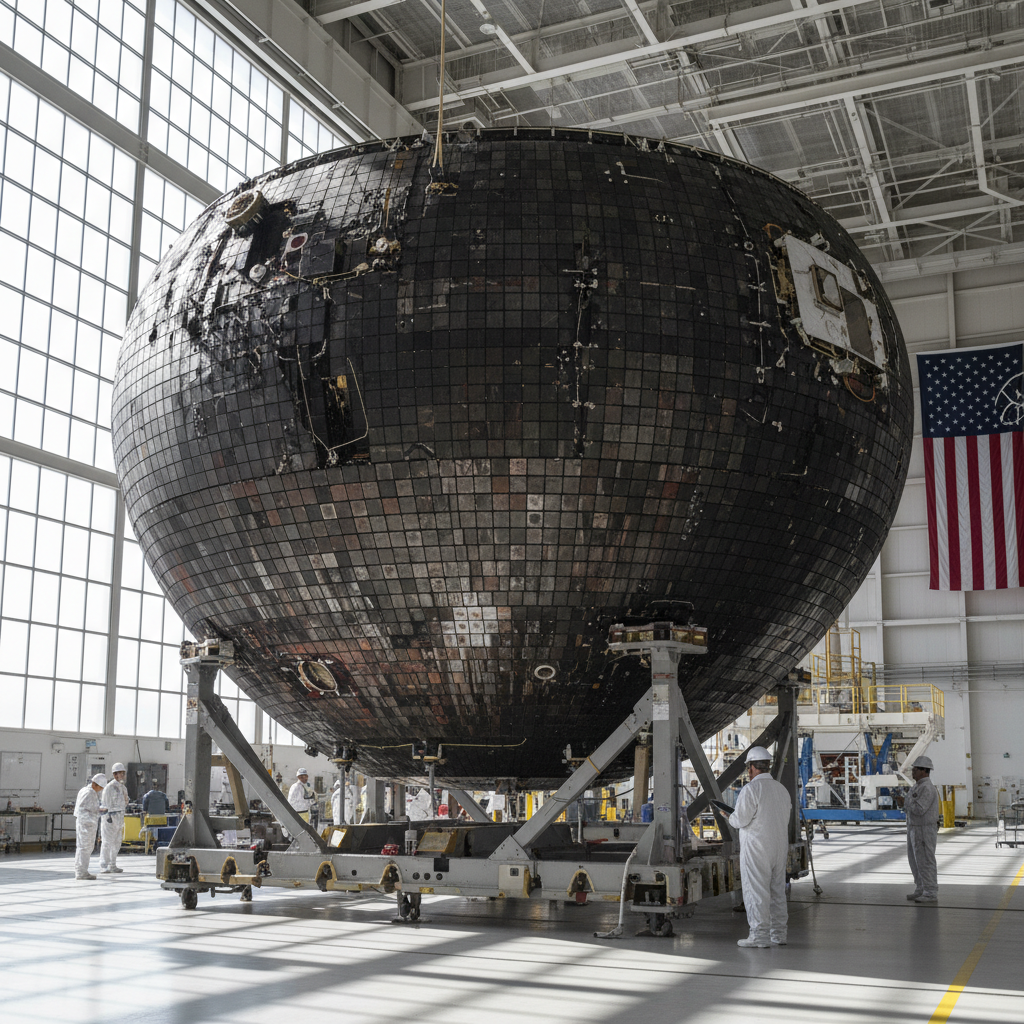
NASA Concentrates Efforts on Examining Orion’s Thermal Shield, Following the Successful Splashdown of Artemis II Mission. This Component Protects the Capsule During Atmospheric Reentry, Withstanding Extreme Temperatures of Up to 2,800 Degrees Celsius. Space Authorities Verify Its Integrity to Ensure Viability in Repeated Flights to the Moon.
Context of Artemis II and the Role of the Thermal Shield
Artemis II, Launched in September 2025, Marked the First Crewed Flight of the Artemis Program Since Apollo 17 in 1972. Four Astronauts Orbited the Moon Without Landing, Testing Key Systems. The Thermal Shield, Made with Avcoat Blocks, Withstood the Splashdown in the Pacific, But Inspections Reveal Minimal Erosion on Exposed Edges.
Importance of Thermal Shield Analysis for Future Missions
This Scrutiny Proves Crucial for Artemis III, Scheduled for 2026, Which Includes Lunar Landing at the South Pole. NASA Engineers, Along with Lockheed Martin Experts, Use Tomography and Ultrasonic Tests to Measure Wear. Preliminary Data Indicate That the Thermal Shield Maintained 99% Integrity, Exceeding Initial Expectations.
Background and Technical Challenges
- Orion’s Thermal Shield Incorporates 11,000 Advanced Ablative Blocks, More Advanced Than Those Used in Apollo Missions.
- During 2022 Tests, a Block Detached in Flight, Accelerating Improvements in Adhesives.
- Expert Opinions, Such as Those of NASA’s Chief Engineer, Charlie Blackwell-Thompson, Highlight That Reusing the Thermal Shield Reduces Costs by 30% for Sustained Missions.
Agency Statistics Show That Thermal Shield Failures Caused 40% of Incidents in Historical Reentries. The Current Review Incorporates Updated Computational Models with Artemis I Data, Which Flew Without Crew in 2022 and Confirmed Basic Resistance of the Thermal Shield.
This Process Not Only Validates the Design for Artemis, But Also Influences Mars Architecture. NASA Plans to Certify the Thermal Shield for Up to Five Uses, Optimizing Lunar Gateway. Meanwhile, Teams in Houston Dissect the Recovered Ship, Measuring Every Millimeter of Ablation.
In the Dominican Republic, Space Enthusiasts Follow These Advances, Inspired by International Collaborations. Orion’s Thermal Shield Represents the Threshold Between Testing and a Permanent Lunar Era, With Expected Results in Months That Will Shape Accessible Cosmos.