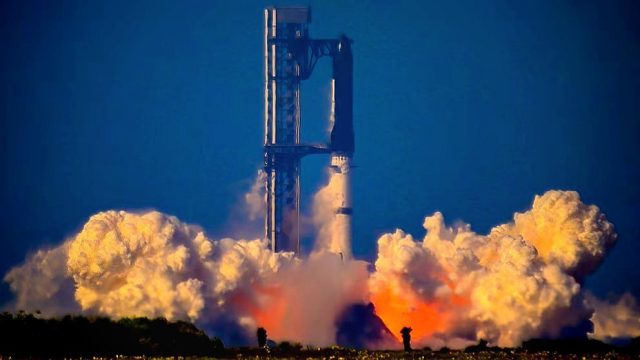










NASA confirms SpaceX impact on the Moon following the unplanned crash of Falcon 9 debris, an episode the agency described as safe and without risk to Earth. NASA confirms SpaceX impact on the Moon as a useful case to analyze orbital dynamics, hardware disposal, and crater formation.
What happened to the SpaceX rocket
The agency explained that the upper stage was part of a launch carried out in 2025 linked to Firefly Aerospace‘s Blue Ghost One module, as part of the Commercial Lunar Payload Services program. According to the official account, the trajectory was deflected by a combination of solar activity and gravitational forces, ultimately resulting in an unintended lunar impact.
SpaceX also confirmed that the vehicle was not intended to crash into the surface, although it did acknowledge that the disposal of upper stages on missions to lunar orbit can be complex. On those flights, nearly all performance is used to place the payload on its route, making controlled deorbiting difficult.
NASA confirms SpaceX impact on the Moon without danger
NASA’s Director of Science and Exploration, Kelsey Evans Young, maintained that the event poses no danger to people or active equipment on the lunar surface. The agency also noted that some operators do choose controlled impacts at the end of their spacecraft’s operational life, because it is a predictable and traceable method.
In other words, NASA confirms SpaceX impact on the Moon not as a critical failure, but as an operational outcome that can occur in high-energy missions. The priority, according to the agency, is to better understand how to track and manage this type of object in the future.
Why NASA sees scientific value in the crash
The Moon acts as a natural laboratory because it lacks an atmosphere and preserves its surface for long periods. This makes it possible to study crater formation more clearly, a key process throughout the solar system.
NASA confirms SpaceX impact on the Moon as an opportunity to observe how the regolith changes and what footprint an object of known size and speed leaves behind. This type of data helps improve impact models and orbital tracking.
What this episode leaves behind
- NASA confirms SpaceX impact on the Moon with no risk to Earth.
- The deviation was attributed to solar activity and gravity.
- The case provides data on lunar craters.
- SpaceX defends controlled disposal when possible.
NASA itself recalled that the Moon has been receiving impacts for billions of years and that the Artemis II astronauts already observed flashes and forming craters during their flyby. Therefore, NASA confirms SpaceX impact on the Moon as part of a natural dynamic, though now with added scientific utility.
In its broader interpretation, NASA confirms SpaceX impact on the Moon as a technical, traceable episode with no consequences for terrestrial safety, but with direct value for the study of the Moon and future commercial missions.