
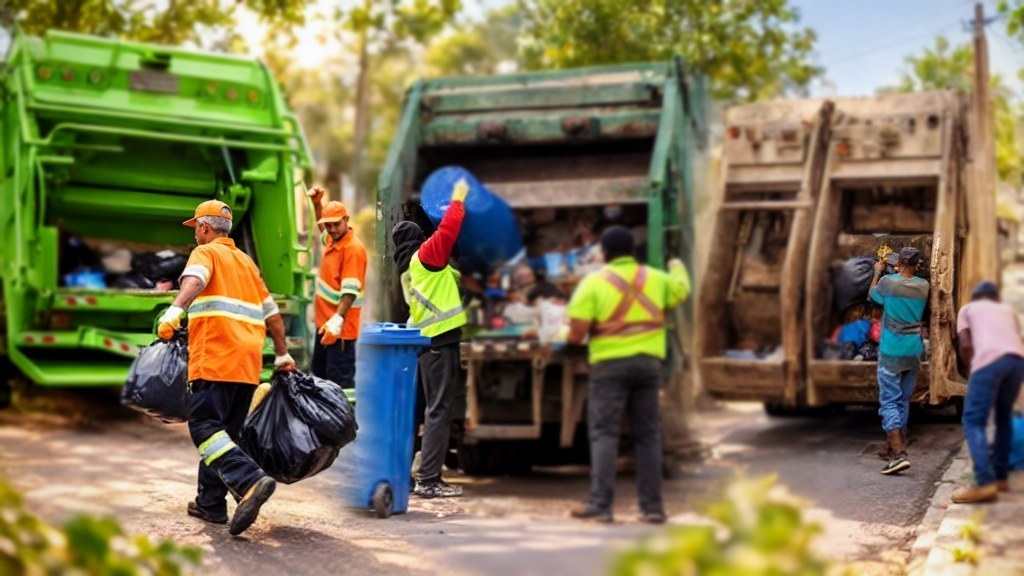
In the Dominican capital, urban cleaning is an essential task that comes with significant hazards. Every day, thousands of garbage bags are placed on the streets, and the workers responsible for their collection are exposed to contaminants, sharp objects, and solar radiation, risks that can trigger respiratory illnesses, infections, and skin injuries.
Working conditions and wages
The payroll records of the municipalities of Greater Santo Domingo reveal that between RD$10.000 and RD$15.000 are the monthly wages received by laborers, janitors, assistants, and cleaning staff. In September 2026, the National District Mayor’s Office (ADN) counted 1.385 employees in the Urban Cleaning Directorate and Teams; the Mayor’s Office of Santo Domingo East (ASDE) recorded 825 positions; the Mayor’s Office of Santo Domingo West (ASDO) 483; and the Mayor’s Office of Santo Domingo North (ASDN) 260, summing a total of 3.953 workers in urban cleaning.
Health risks
The infectious disease specialist Eduardo de la Cruz noted that exposure to substances present in garbage can promote the onset of respiratory infections, including pneumonia, and that waste containing fecal matter can harbor bacteria and parasites that cause infectious diseases.
Sharp objects such as broken glass, needles, and metals present in the waste represent another significant risk. These injuries can serve as entry points for microorganisms, causing infections such as tetanus, caused by the bacterium Clostridium tetani. Additionally, used needles can transmit hepatitis B, hepatitis C, and HIV.
Impact on skin health
Constant contact with waste can also affect workers’ skin health, causing irritations and possible injuries that increase vulnerability to diseases.
Context and consequences
The combination of low wages and health hazards creates a vulnerable situation for these workers, who are essential for urban quality of life. Low income hampers the pursuit of adequate medical care and disease prevention, while continuous exposure to contaminants raises the likelihood of long‑term health problems.
Local authorities should consider measures that ensure a safer work environment, including providing appropriate protective equipment, training on safe waste handling, and reviewing wage scales to reflect the demanding nature of the job.
Source credits: n.com.do
Note generated automatically from the sources cited in the text. Found an error? Email us at [email protected] and we'll fix it.