


SANTO DOMINGO.- The accumulation of solid waste in the streets of the country not only contaminates public spaces and affects health and the environment, but also represents one of the main barriers to mobility for the blind.
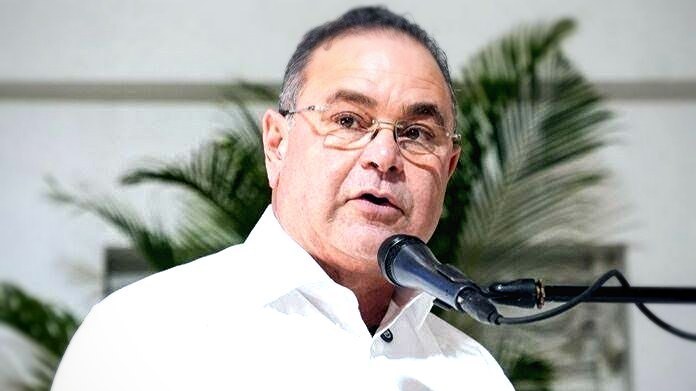
This was stated by Francina Hungría, founder and representative of the Francina Foundation, which assists visually impaired people through the delivery of white canes, workshops, and family accompaniment.
By participating in the Corripio Communications Group, Hungría pointed out that it is not enough to provide tools, but rather it is necessary to condition the environments that represent a barrier for people with some type of disability.
"We have put the magnifying glass on waste management and its impact on equal access for citizens," detailed the defender of the rights of non-sighted people.
The accumulation of solid waste interferes with the mobility of blind people in the country
Meanwhile, José Beltrán, president of the Foundation, indicated that this year the conversation of the entity revolves around the way in which solid waste affects the quality of life of non-sighted people.
"As our cities have efficient waste management, barriers are reduced, health risks decrease, quality of life increases, and we save costs on health, accidents, and other things," expressed.
It is about each person, each citizen, regardless of whether they have or not a disability, being able to access services, goods, and infrastructure without barriers: potable water, health services, but that, if they go out to the street, can move safely," added Beltrán.
When addressing the main limitations that a person with some type of disability has, Francina Hungría stated that, far from what can be thought, the main one is not properly the disability, but the way in which they are perceived in society.
"When I say society, I refer to parents, teachers, tutors, employers, decision-makers," explained.
However, Hungría highlighted the fundamental role that the family plays in the development and autonomy of people with disabilities, in terms of emotional support and professional impulse.
Education
The representatives of the Francina Foundation deploring that the access to education of blind people in the country does not comply, as established by the Constitution.
They revealed that of the approximately 70,000 children and adolescents with some type of blindness in the country, only 483 are enrolled in schools. In the same way, they lamented that only 4% of the people identified as blind have some university degree in the Dominican Republic.
394,000 blind people in RD
Between 12% and 15% of the Dominican population has some type of disability. Of these, 35% has some visual disability, being the second condition with the largest number of people, only surpassed by motor disability. It is estimated that there are 394,000 blind people in the Dominican Republic.