









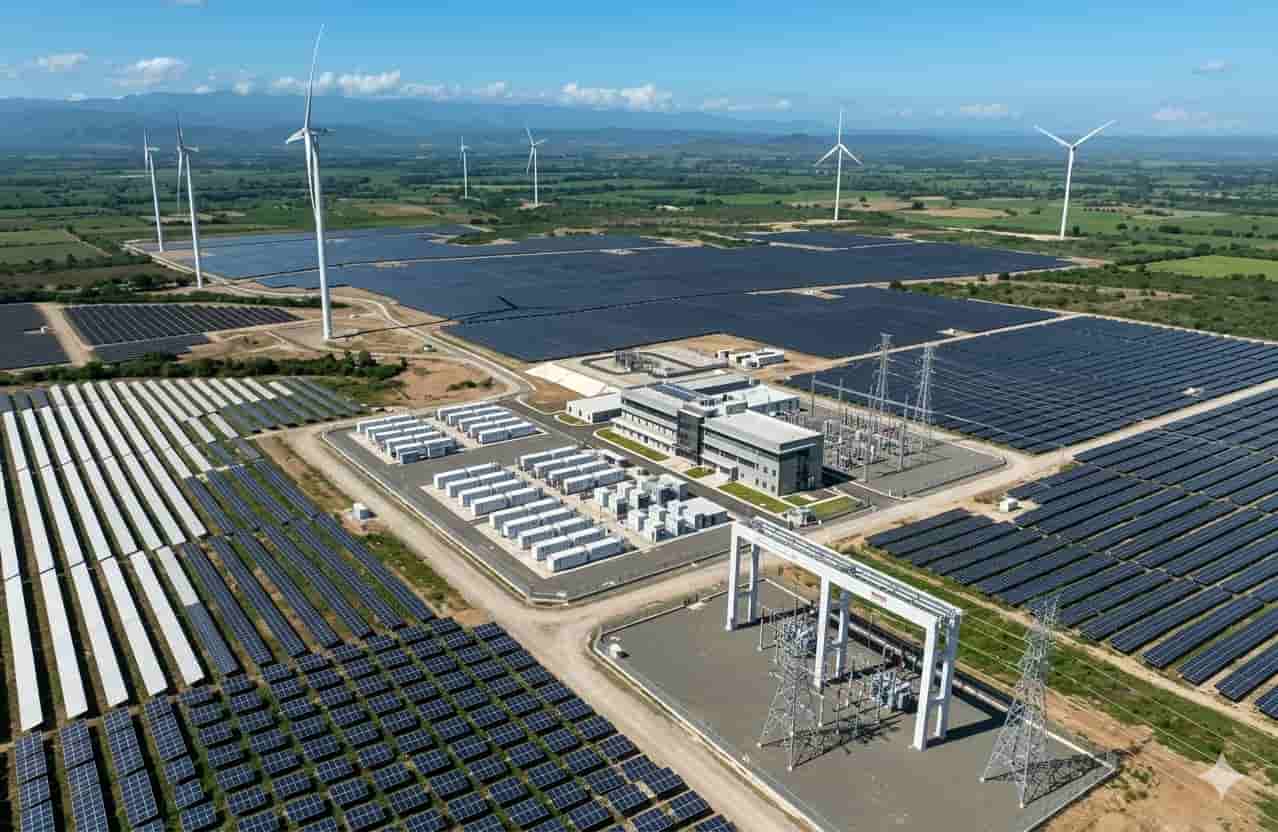
hybrid wind and solar power plant kicked off in Valverde with the inauguration of Esperanza Renovable, a project that integrates wind, solar generation, and storage to feed electricity into the National Interconnected Electric System (SENI).
President Luis Abinader led the event alongside energy sector authorities and executives from EGE Haina, the company that presented the work as the first large-scale initiative in the country capable of combining two renewable sources within the same operational infrastructure.
hybrid wind and solar power plant in Valverde
The facility is comprised of three parks: Esperanza Solar 1, with 90 MW in operation since 2023; Esperanza Solar 2, with 60 MW; and Esperanza Eólico, with 49.5 MW. In total, they add up to 200 MW of renewable capacity and an estimated annual production of 485,000 MWh.
According to data released during the activity, the investment reached 246.5 million dollars. The two solar parks operate with 259,370 bifacial photovoltaic modules distributed across 246 hectares, while the wind farm uses 11 Vestas V163 wind turbines of 4.5 MW each.
What this power plant contributes to the electrical system
Minister of Energy and Mines, Joel Santos, stated that the project represents a significant step in the diversification of the energy matrix. He explained that the combination of sources makes it better possible to take advantage of solar production peaks during the day and wind at different times, backed by batteries to deliver energy when it is needed most.
The Government maintains that more than 25% of the energy entering the SENI already comes from renewable sources. It also indicated that, since August 2020, the installed capacity of non-traditional renewables went from 555 MW to more than 2,000 MW, through 38 projects in operation.
“Esperanza Renovable constitutes a real and strategic diversification of the national electricity matrix,” said the general manager of EGE Haina, José Rodríguez Silvestre.
Storage, employment, and pressure for more supply
One of the most sensitive points of the project is storage. EGE Haina explained that, after winning the country’s first renewable energy tender with storage, it will incorporate a 200 MWh BESS system, designed to store energy and release it during hours of highest demand, especially between 7:00 and 11:00 at night.
That component is key in an electrical system that usually faces nighttime peaks and the need for flexible backup. For the Government, this capacity reduces dependence on more expensive generation and helps stabilize supply. For the company, it represents a step toward a more robust model with lower exposure to interruptions.
Economic and environmental impact of Esperanza Renovable
The construction generated 1,400 direct jobs in the region and, according to the company, will prevent the emission of 275,575 tons of CO₂ per year. EGE Haina added that its installed renewable capacity rises to 576 MW, while its total portfolio reaches 1,380 MW.
- 200 MW of installed renewable capacity
- 485,000 MWh of estimated annual production
- 200 MWh of projected storage
- 1,400 direct jobs during construction
The project is also part of a territorial strategy that seeks to bring generation to the northwest and southwest, along with investments in transmission and distribution. In parallel, the company has a portfolio of more than 600 MW in additional development.
In Valverde, the social investment associated with the project exceeds 34 million pesos since 2022, with actions in health, education, firefighters, community infrastructure, and reforestation. The official goal is to expand energy security and sustain economic growth with a more diversified network. hybrid wind and solar power plant, Esperanza Renovable, and EGE Haina thus stood out as the key names of a work that seeks to change the way electricity is produced and delivered in the Dominican Republic.