










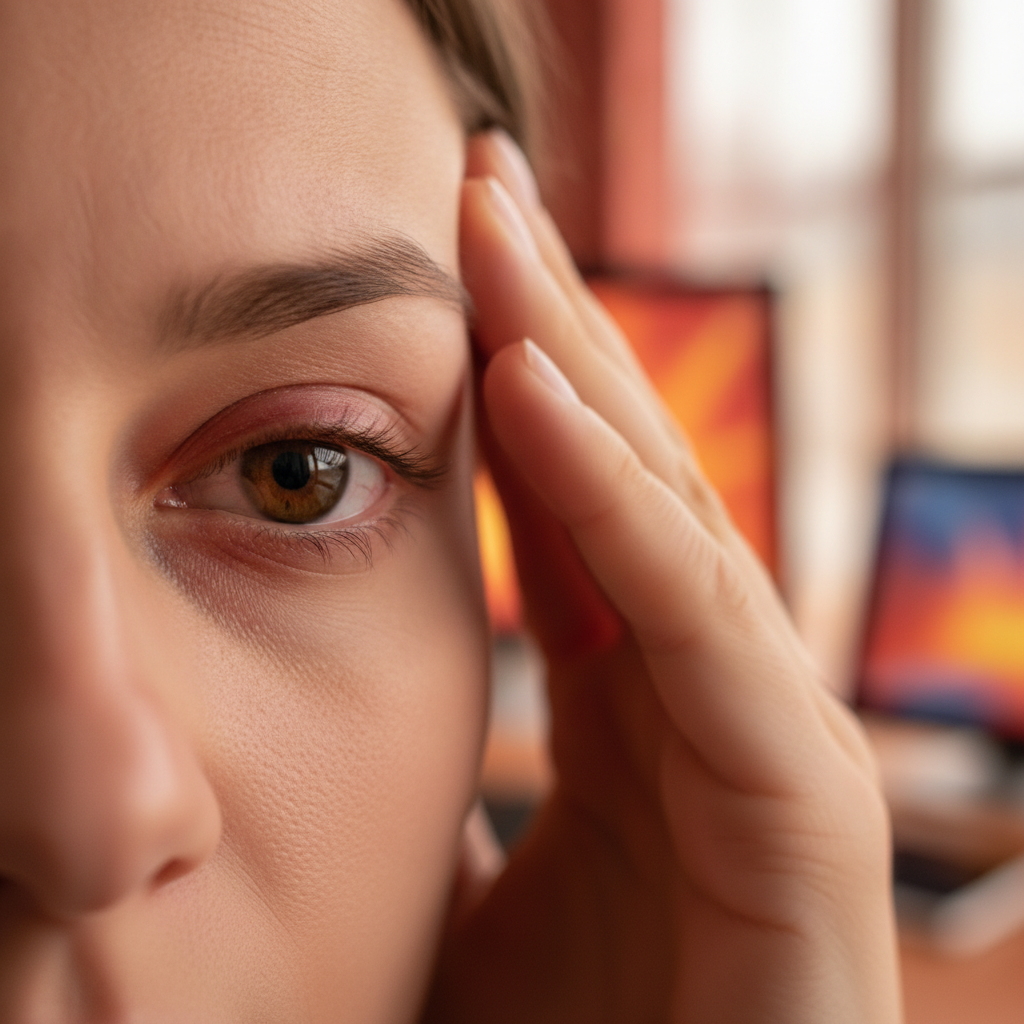
Dry eye: rising temperatures, continuous screen use, and air-conditioned spaces are increasing visual discomfort in the Dominican Republic, according to a warning by ophthalmologist Judith Portorreal. The problem intensifies when the heat accelerates tear evaporation and the dry environment reduces ocular moisture.
The specialist explained that many patients confuse dry eye with allergies, fatigue, or temporary irritation, which delays the consultation. On days of intense heat, the surface of the eye is more exposed and symptoms such as burning, a gritty sensation, redness, and blurred vision appear.
Dry eye and extreme heat
Dry eye is aggravated by a combination of everyday factors that have become common in the country: strong heat, dust in the air, prolonged exposure to screens, and air-conditioned environments. This mixture affects the tear film, which serves to lubricate and protect the ocular surface.
Specialists consulted in international medical publications agree that air conditioning and fans promote tear evaporation, while prolonged exposure to the sun and dry environments worsens symptoms. They also recommend avoiding direct airflow toward the face and using eye lubrication when necessary.
Dry eye: symptoms that should not be ignored
- Persistent burning or itching.
- A sensation of sand or foreign body.
- Red or tired eyes.
- Intermittent blurred vision.
- Discomfort when using screens or contact lenses.
When these signs repeat, dry eye can stop being a mild annoyance and become a chronic problem. MedlinePlus and Mayo Clinic point out that, if symptoms persist, one must seek medical evaluation to rule out complications and define treatment.
Dry eye: what to do to reduce the risk
Portorreal and other ophthalmological sources recommend simple yet effective measures to reduce dry eye: stay hydrated frequently, take visual breaks, increase blinking when working in front of screens, and use artificial tears if the specialist indicates it.
They also suggest directing air conditioning away from the face, wearing sunglasses outdoors, and, in indoor spaces, improving environmental humidity when possible. In people with recurrent symptoms, early consultation helps prevent irritation from progressing.
Dry eye does not always respond to “fatigue”; in many cases, it reflects a real alteration of the tear that requires ophthalmological attention.
Dry eye on the rise due to modern habits
The combination of heat, screens, and air conditioning explains why dry eye appears more frequently in consultation. In a country where summer is felt indoors and outdoors, prevention relies on small but constant changes in the daily routine. If symptoms do not subside, a check-up with an ophthalmologist remains the best way out.


