




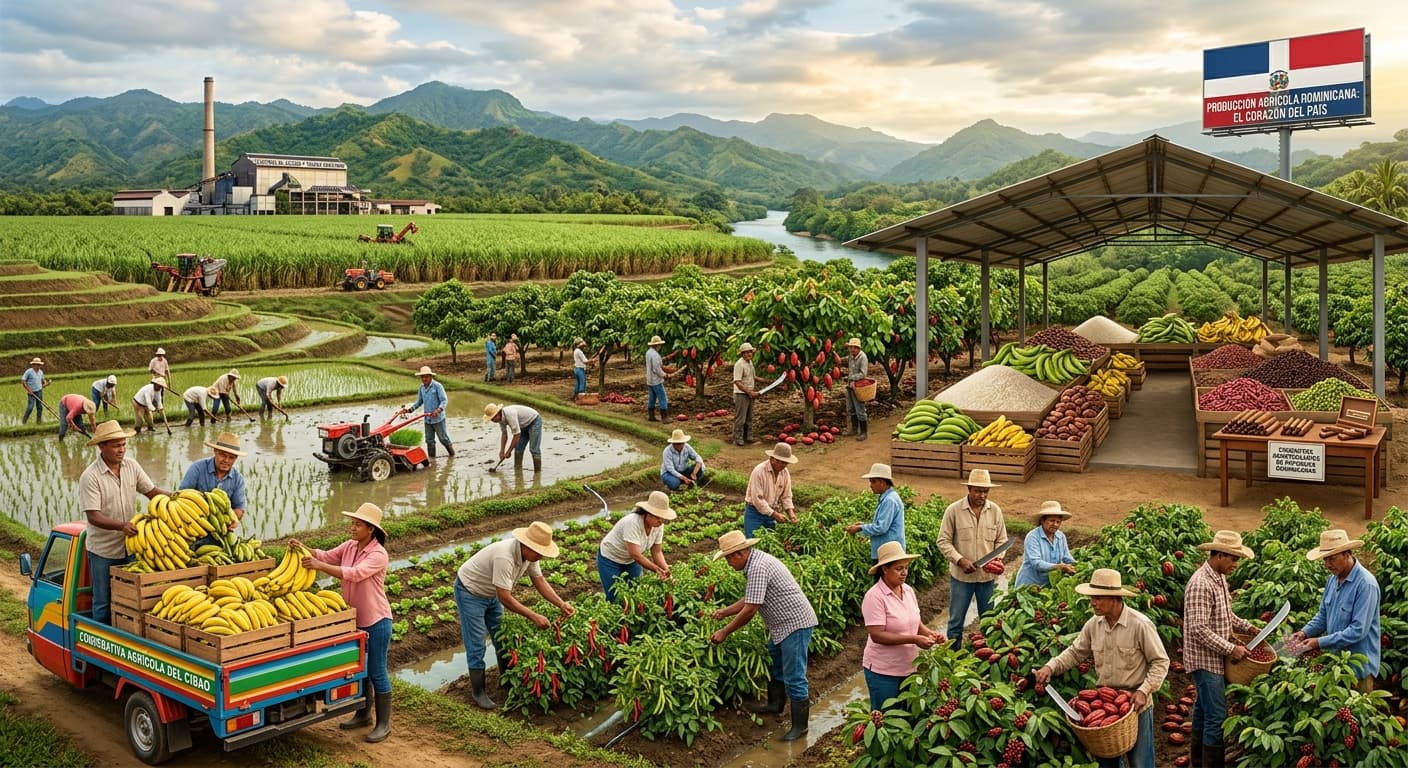
Dominican agricultural production faces growing pressure from local consumption, tourism demand, and sales to Haiti, a neighboring market with high food needs and low domestic production capacity. This intersection of factors makes Dominican agricultural production a central issue for food security and the national economy.
The challenge is massive: the country must feed 10.7 million residents, more than 11.6 million visitors, and at the same time sustain agricultural exports in a territory with approximately 693,681 cultivable hectares, according to the National Statistics Office. In this context, Dominican agricultural production competes not only in volume, but also in efficiency and costs.
Official data show that agricultural activity remains strategic. The sector contributes 5.6% of GDP, generates 8.8% of national employment, and accounts for 11.8% of the country’s exports. Even so, the productive model continues to rely on traditional practices that limit the productivity of Dominican agricultural production.
In 2025, the Government reported that agricultural production reached historical levels in several items, with records in rice, corn, beans, and provisions. This performance confirms that Dominican agricultural production has advanced, but also that demand continues to grow faster than the expansion capacity of cultivable land.
Mechanization and productivity
The response promoted by the Ministry of Agriculture is mechanization. According to official explanation, a farm of about 2,000 tareas can be worked by two people if it has appropriate machinery, instead of 50 or 60 workers under traditional methods. This leap reduces costs and improves the competitiveness of Dominican agricultural production.
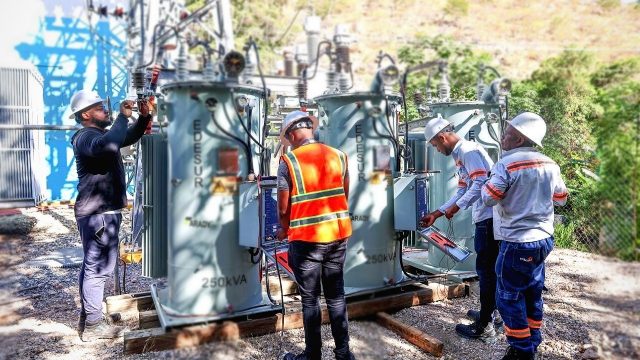
Technification can also lower losses in the use of fertilizers and pesticides. The use of drones, geolocation, and irrigation systems would allow inputs to be applied with greater precision and better cope with droughts, a recurring risk for Dominican agricultural production.
Risks and opportunities
- Greater farm efficiency and lower cost per unit produced.
- More capacity to supply the local market and tourism.
- Lower vulnerability to droughts and input price hikes.
- Better basis to sustain exports to Haiti and other destinations.
The most recent ONE agricultural bulletins also show relevant activity in planting, harvesting, and exports, although with areas still limited compared to total demand. The reading is clear: without sustained investment in technology, water, and infrastructure, Dominican agricultural production will remain subject to structural pressure.
In this scenario, Dominican agricultural production depends less on expanding land and more on producing better in the available space. Dominican agricultural production will have an advantage only if mechanization, irrigation, and technical management cease to be exceptions and become the rule in the Dominican countryside.