

Havana, September 1. The start of the new school year in Cuba is marked by a shortage of teachers, the absence of school uniforms, and the energy instability that persists on the island.
Teacher shortage and partial coverage
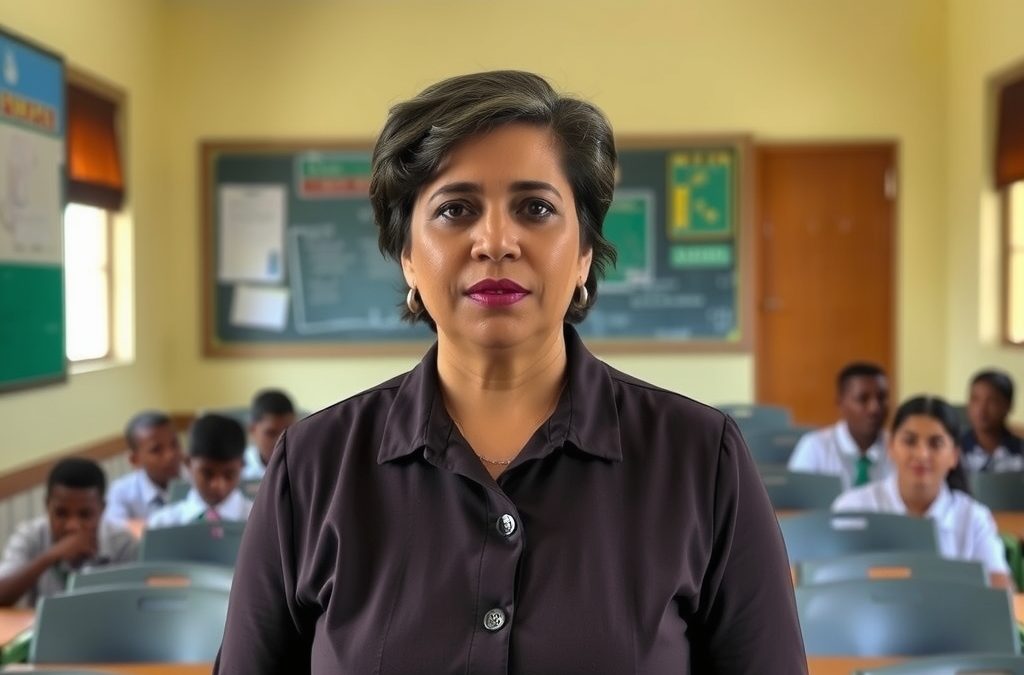
The Minister of Education, Naima Trujillo, explained that the teacher coverage reaches 73%, equivalent to more than 21,000 teachers. The rest of the vacancies will be occupied by professionals from other sectors and university students who will support in the institutions.
The challenge is greater in the capital: Trujillo pointed out that around 3,000 teachers are being brought from the eastern part of the country to reinforce the schools of Havana.
Uniform crisis
If books and notebooks are guaranteed, the Cuban textile industry barely covers 12% of primary school uniforms and slightly less in secondary school.
The minister described the lack of fuel as an obstacle to the transportation of fabrics and the production of school clothing, highlighting that the lack of funding prevents the importation of materials.
Local support and food
Education centers will have the collaboration of local governments and state and private companies that have already contributed to the recovery of buildings and the provision of food.
Critical energy and constant power outages
The school year was advanced in early June after the deep energy crisis triggered by the US oil blockade initiated in January. Seven total power outages were reported in 2026, and approximately twenty hours a day without electricity were reported habitually.
The minister stated that the educational system must adapt to “tremendous difficulties and extraordinary impacts” and that flexible norms have been implemented to protect the continuity of teaching.
Minister’s statement
“This generation will not be at risk of not being educated and we will try to have the best possible conditions”, said Trujillo.
With the first day of classes on September 1, Cuban education faces the task of guaranteeing academic continuity despite the lack of essential human and material resources.
Credits: robertocavada.com