










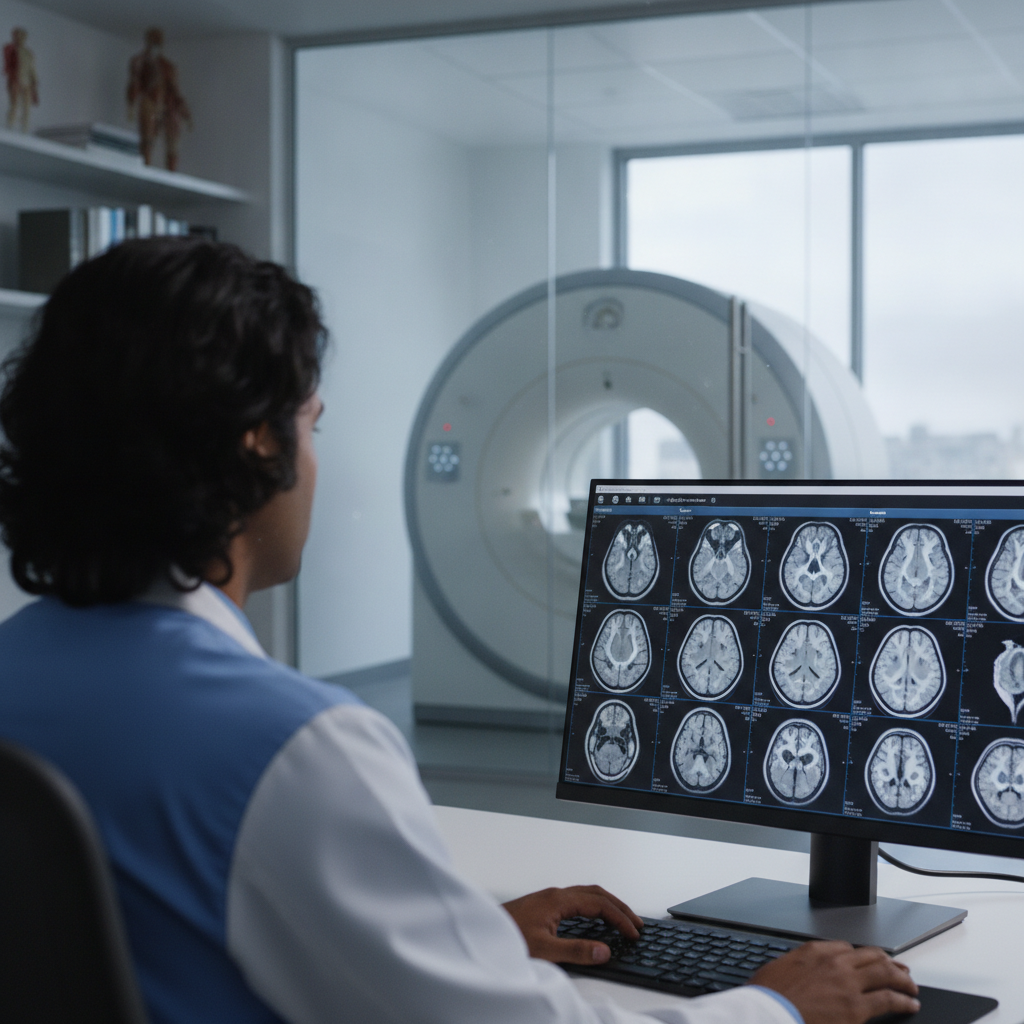
Brain Tumors are not harmless. That’s the main warning from neurooncologist Alejandro Torres Trejo, of Cleveland Clinic, who noted that these lesions can press on delicate areas of the brain and alter essential functions even if they are not cancerous.
The key point, according to medical explanation in the base content, is that the skull does not offer extra space for a mass to grow without consequences. When a tumor increases in size, even at a slow rate, it can compress brain tissue, elevate intracranial pressure, and cause relevant neurological symptoms.
Specialized medical sources agree that the risk depends less on the word “benign” and more on the location, size, and effect on nearby structures. In tumors located near areas that control speech, vision, hearing, or movement, the consequences can be serious.
Brain Tumors and Alarm Symptoms
Among the most frequent signs described by hospital centers and clinical manuals are persistent headaches, seizures, nausea, vomiting, balance problems, changes in hearing, visual disturbances, and muscle weakness. In some cases, confusion, drowsiness, or changes in personality also appear.
“A brain tumor, whether cancerous or not, is always serious, because the skull is rigid and does not allow the tumor to expand.”
That criterion reinforces the central idea of the original note: benign brain tumors may require urgent attention if they compromise vital functions or generate pressure on critical areas.
Brain Tumors: Diagnosis and Treatment
In clinical practice, treatment does not depend solely on whether the tumor is benign or malignant. It is also evaluated whether it grows, causes symptoms, and can be safely removed. In some patients, active surveillance is chosen; in others, surgery, radiation therapy, or both strategies are used.
- If the tumor does not cause symptoms, it can be monitored with periodic images.
- If it compresses critical areas, surgery is usually prioritized.
- If it is not possible to completely remove it, radiation therapy is evaluated to control its growth.
What It Means for the Patient
The course of the disease is usually favorable when the diagnosis is made on time, but the prognosis changes according to the type of lesion and its location. In slow-growing tumors, such as several meningiomas, many people can live years with medical follow-up; however, surveillance is still necessary to avoid neurological complications.
The medical warning is clear: brain tumors, brain tumors, and brain tumors are not synonymous with low risk when they are inside the brain and affect its functioning. In the face of persistent headaches, seizures, or neurological changes, specialized evaluation should not be delayed.


