



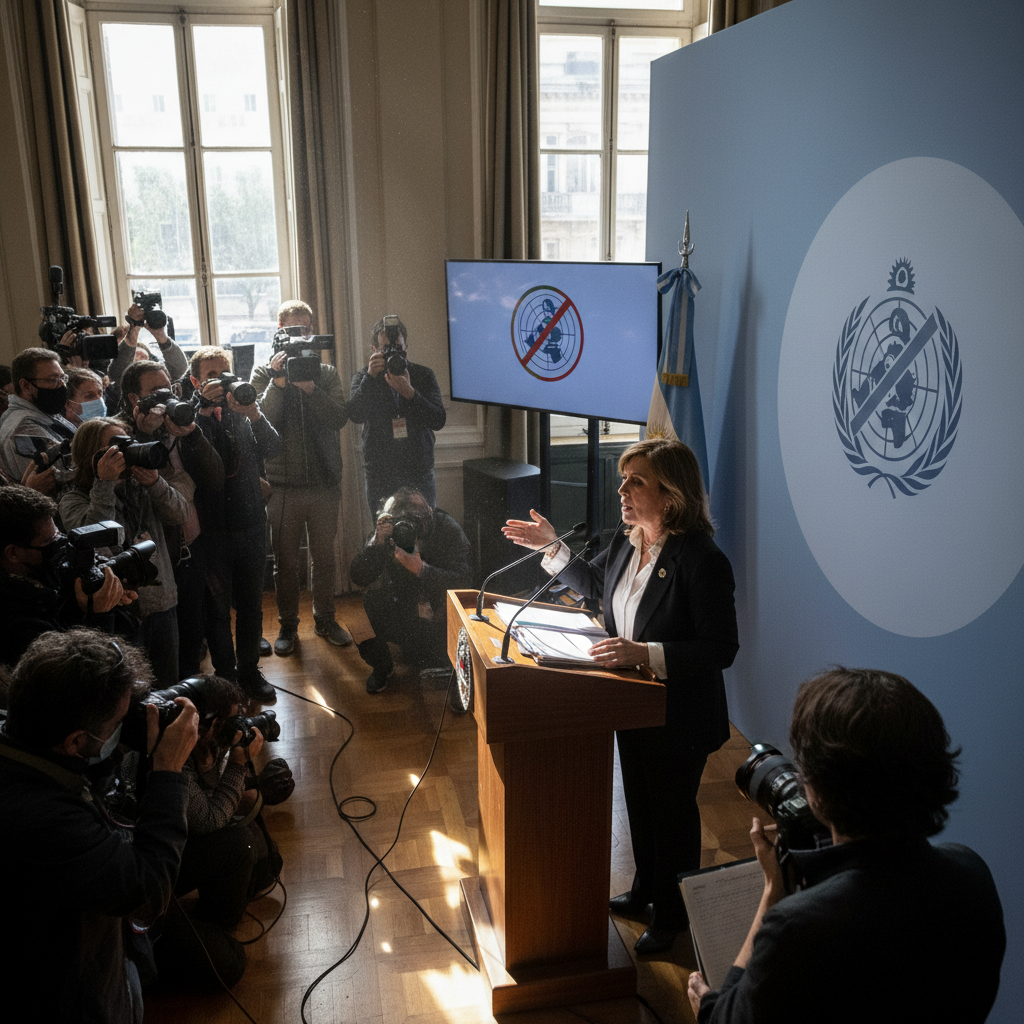
Argentina makes its withdrawal from the WHO official in health policy
Argentine Foreign Minister Pablo Quirno confirmed that Argentina has made effective its withdrawal from the World Health Organization (WHO), a move that redefines its international health policy. The decision materialized today, exactly one year after the formal notification sent to the UN Secretary-General, depositary of the WHO Constitution, on March 17, 2025. This timeframe respects the Vienna Convention on the Law of Treaties.
Official announcement and administrative process
Quirno announced it on his X account: “Today, Argentina‘s withdrawal from the WHO becomes effective.” The Government highlights that the country remains a member of the Pan American Health Organization (PAHO), which ensures continuity in the region. The departure implies leaving WHO programs, funds, and technical forums, but Buenos Aires plans to replace them with bilateral agreements and national epidemiological surveillance systems.
Argentine health policy: disagreements with the WHO
The measure stems from accumulated tensions, especially in pandemic management and drug control. Javier Milei‘s Executive branch criticizes that the WHO does not fully represent Latin American interests. “Our country will continue to promote international health cooperation through bilateral agreements and regional spheres, safeguarding its sovereignty,” Quirno emphasized. This means losing WHO technical assistance, funding, and global epidemiological data.
Historical context and background
The decision was brought forward in May 2025, during the visit of U.S. Health Secretary Robert F. Kennedy Jr., aligned with the Milei strategy of reviewing ties with multilateral organizations. Historically, Argentina was a founder of the WHO in 1948, contributing 0.97% of its budget in 2024 according to data from the organization itself. Now, it prioritizes autonomy in health policy.
Strength in PAHO and pharmaceutical exports
Recently, PAHO, led by Jarbas Barbosa, met with Health Minister Mario Lugones, ANMAT head Luis Fontana, and more than 40 Argentine laboratories. They defined export quotas via the Revolving Fund, expanded to high-cost medicines. This seeks to boost regional sales and automatically recognize ANMAT authorizations in joint purchases, boosting the local industry despite the withdrawal from the WHO.
- Maintains PAHO membership for vaccines and pharmaceuticals.
- Focuses sovereignty on public health decisions.
- Key disagreements: pandemic and drug regulations.
This shift in Argentina‘s health policy positions the country toward selective alliances, preserving autonomy while exploring direct regional cooperation. Health policy is evolving with an emphasis on bilaterality and its own mechanisms.