









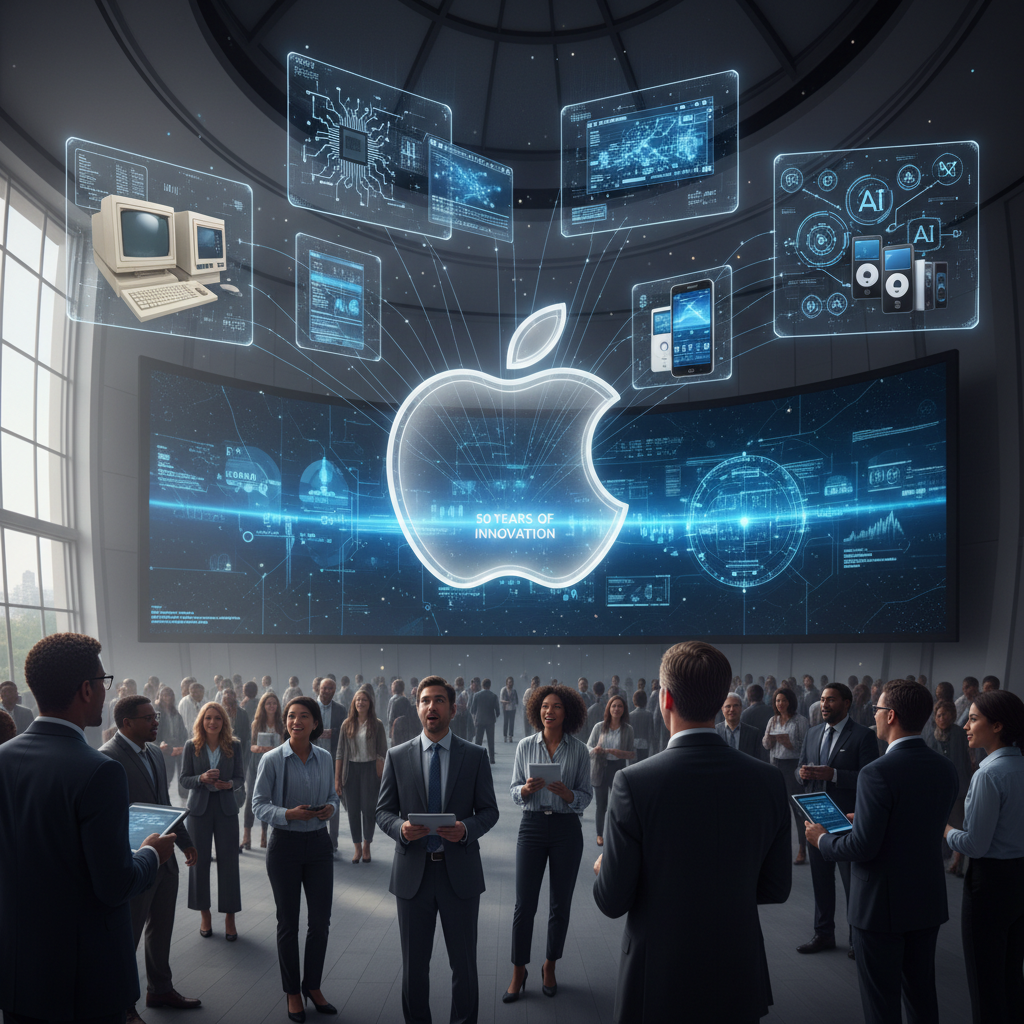
Apple marks half a century of existence this April 1, marking the transition from a modest garage in California to a colossus in the AI race. Founded in 1976 by Steve Jobs, Steve Wozniak and Ronald Wayne, the company sold its first 200 units of the Apple I for $666 each, laying the foundations of the personal revolution.
Origins in Jobs’ garage
It all started in Los Altos, where Jobs and Wozniak hand‑assembled computers. In 1977, the Apple II drove success with color graphics and accessible software, reaching millions in sales. This era defined Apple marks half a century as an innovator, despite crises such as Jobs’ departure in 1985.
From the Macintosh to the AI race
Revolution with iPhone and ecosystem
Jobs’ return in 1997 brought the iMac in 1998, revitalizing the brand. The iPod in 2001, iPhone in 2007 and iPad in 2010 created an ecosystem that generates more than $383 billion in annual revenue, according to recent financial reports. Today, with 2 billion active devices, it dominates the market.
Apple marks half a century now under Tim Cook, with an emphasis on privacy and sustainability. Investments in M-series chips outpace competitors in efficiency, paving the way for Apple Intelligence, its generative AI venture announced in 2024.
Challenges in the AI race
- Fierce competition from Google and OpenAI in language models.
- Antitrust regulations in the U.S. and Europe challenge its App Store.
- Transition to on‑device AI to improve Siri and apps.
Experts such as Bloomberg analysts note that Apple marks half a century with $1.8 trillion in market capitalization, but the AI race demands constant innovation. Its slogan “50 Years of Thinking Different” resonates in New York, where this anniversary is celebrated.
In the Dominican Republic, the impact is seen in the surge of iPhone users, boosting local digital economies. Apple marks half a century not only as a company, but as a catalyst for global technological change.