


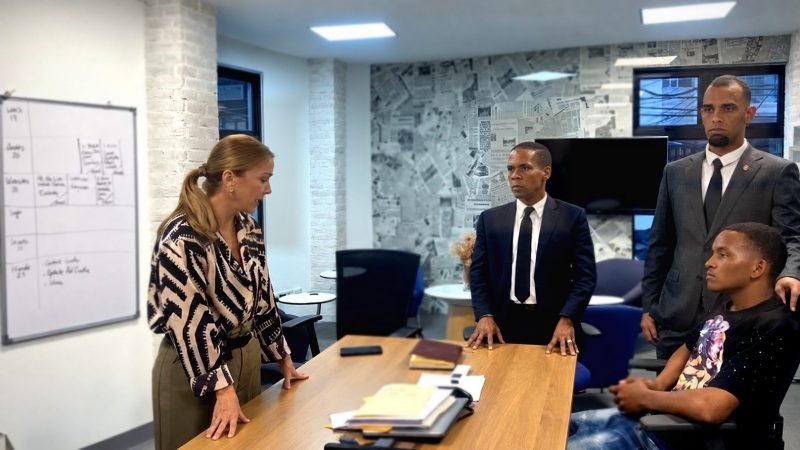
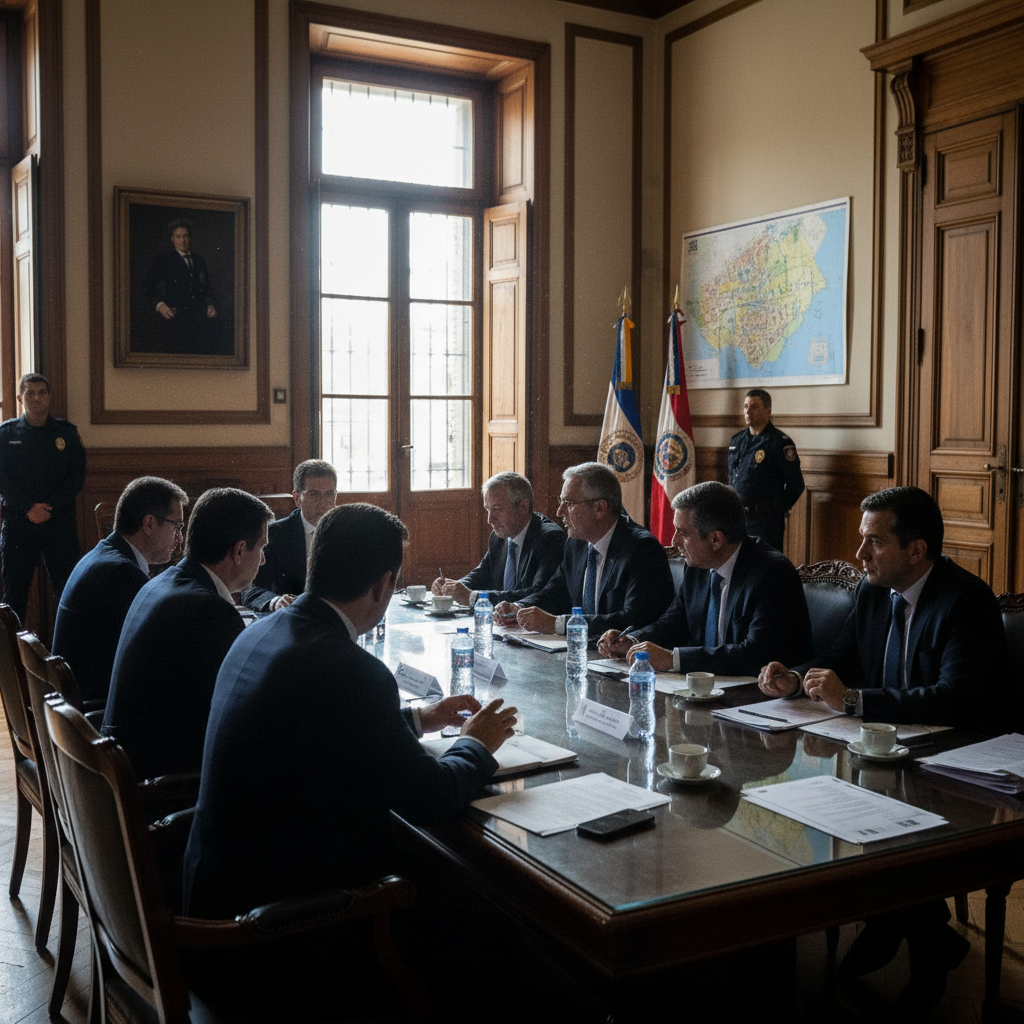
The Citizen Security Plan returned to the center of the official agenda this Monday, when President Luis Abinader led a new follow-up meeting in Santo Domingo to review progress, evaluate results, and define additional measures.
The meeting was held in the Officers’ Club Room of the National Police Palace, where authorities reviewed the tasks executed so far and the provisions that could reinforce crime prevention, territorial control, and institutional response.
The meeting is part of a working dynamic that the Government has maintained during various periods to follow up on the Citizen Security Plan, a strategy involving civil, military, and criminal prosecution institutions. On this occasion, the focus was on adjusting coordination and measuring operational results throughout the country.
Citizen Security Plan: who participated
Alongside Abinader, attendees included the Minister of the Presidency, José Ignacio Paliza; the Minister of Interior and Police, Faride Raful; the Minister of Defense, Lieutenant General Carlos Antonio Fernández Onofre; and the Director General of the National Police, Major General Andrés Modesto Cruz Cruz.
Also participating were the Director of Migration, Vice Admiral Luis Rafael Lee Ballester; the President of the DNCD, Vice Admiral José Manuel Cabrera Ulloa; the Vice Minister of the Presidency for Special Projects and Security Coordination, Roger G. Pujols; and the Executive Commissioner for Police Reform, Luis Ernesto García Hernández.
Commanders from the Air Force, Digesett, Politur, 911, School Police, Prisons, Dinnaf, and the National Drug Council also joined, confirming that the Citizen Security Plan remains a broad-reaching interinstitutional coordination effort.
Prosecutors and territorial control in the Citizen Security Plan
The presence of a commission of prosecutors from different provinces reinforces the judicial component of the Citizen Security Plan. Among them are representatives from San Cristóbal, La Vega, María Trinidad Sánchez, La Altagracia, San Pedro de Macorís, and Duarte, as well as several head prosecutors from Santo Domingo, Santiago, La Romana, Barahona, Peravia, and other jurisdictions.
What this meeting aims to achieve
- evaluate recent results of the Citizen Security Plan
- correct operational flaws in local coordination
- reinforce prevention, surveillance, and rapid response
- align the Police, Defense, Migration, DNCD, and the Public Ministry
In a country where citizen security remains among the main public concerns, these types of meetings serve to measure concrete progress and maintain institutional pressure on hotbeds of violence, criminality, and common crimes.
The Citizen Security Plan does not rely solely on police operations; it also requires criminal prosecution, immigration control, intelligence, orderly traffic, and monitoring of vulnerable areas. Therefore, the working table brought together more than a dozen key institutions.
Expectations are now focused on the measures that emerge from this follow-up and how they will impact the State’s territorial presence, crime prevention, and the population’s perception of security. The Government is betting that the Citizen Security Plan will maintain verifiable results in upcoming operations and coordination decisions.