





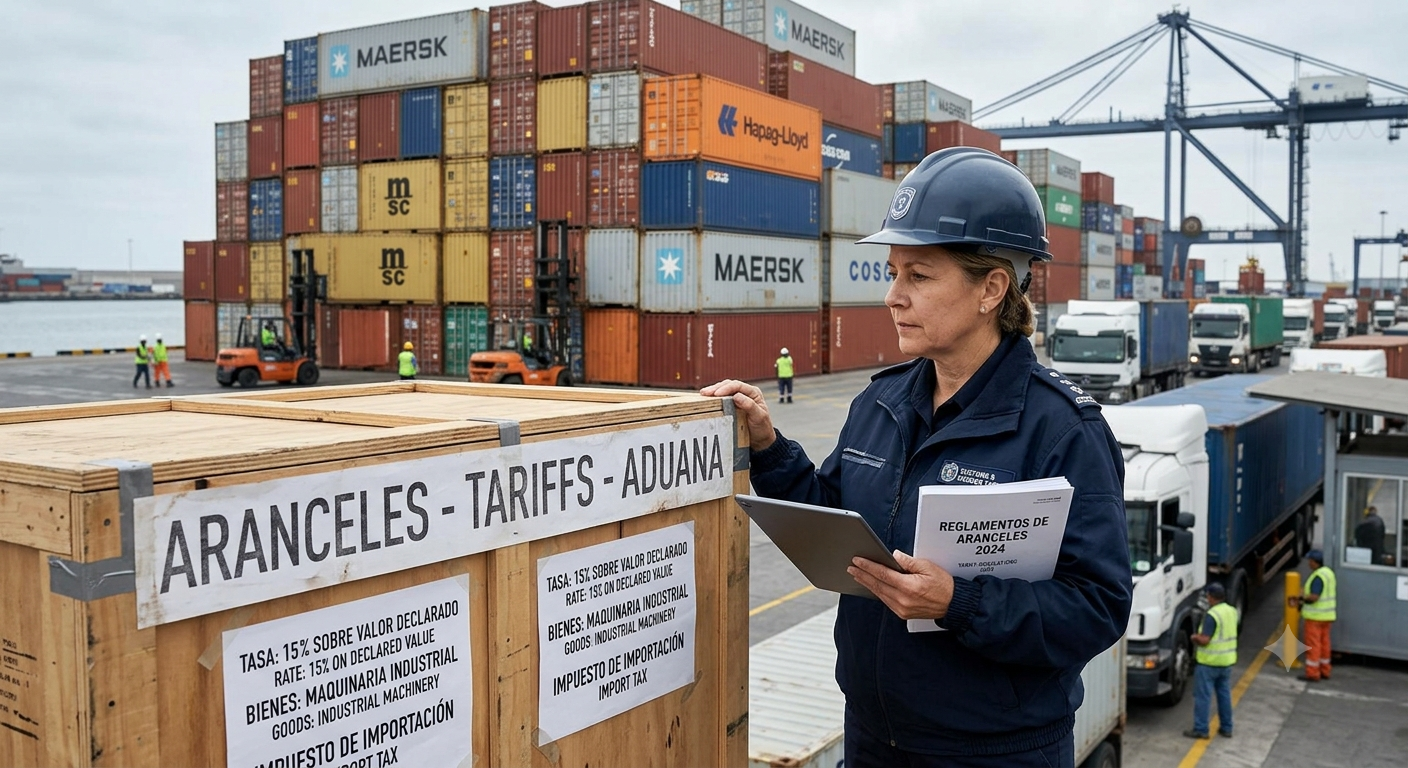
The new U.S. tariff on DR will take effect this Friday, putting immediate pressure on Dominican exports most dependent on the U.S. market. The greatest impact is expected to be concentrated in free zones, especially in electronics, medical devices, tobacco, and apparel—sectors that sustain a decisive part of bilateral trade.
This year’s figures show why the new U.S. tariff on DR is concerning the export industry. Among the main products sent to the United States are circuit breakers at $435 million, cigars and cigarillos at $413 million, and medical instruments and appliances at $408 million.
Apparel such as T-shirts and jerseys also appears at $162 million, electrodiagnostic apparatus at $139 million, jewelry items at $136 million, and unprocessed tobacco at $104 million. This group of items reveals a high exposure of the free zones to the U.S. market, where they compete on price, volume, and logistical speed.
New U.S. tariff on DR: effect on competitiveness
The new U.S. tariff on DR implies a 12.5% surcharge that can reduce margins, make orders more expensive, and push purchases toward other countries with better access conditions. In international trade, such a difference usually immediately affects industries with tight contracts and high sensitivity to final cost.
The risk is not limited to a drop in orders. It also opens the possibility of relocation for companies that export from the Dominican Republic to the United States and operate under rules where every percentage point counts. In that scenario, the new U.S. tariff on DR could alter previously scheduled investment decisions.
New U.S. tariff on DR and Government response
In reaction, the Executive Branch issued Decree 502-26, which establishes a procedure to prevent, identify, and restrict imports linked to forced labor. The provision empowers the General Directorate of Customs to prohibit merchandise when there is a substantiated determination of that origin.
What Customs can do
- Prohibit the import of goods produced through forced labor.
- Apply measures to shipments already loaded or in ports.
- Order re-export, destruction, or another applicable legal measure.
- Maintain an administrative registry of rejected goods.
The coincidence between the Dominican measure and the new U.S. tariff on DR reflects that the issue of forced labor is already impacting the trade agenda. In practice, Washington uses that argument to tighten market access, while Santo Domingo attempts to shield its customs system and demonstrate international compliance.
The blow to Dominican exports does not depend solely on the tariff; it will also depend on how quickly the country responds and whether it manages to sustain the trust of its buyers in the United States.
If the tariff remains, the new U.S. tariff on DR could be felt first in free zone companies and later in employment, investment, and new export contracts. That will be the real test for a sector that lives, to a large extent, on its preferential access to the U.S. market.