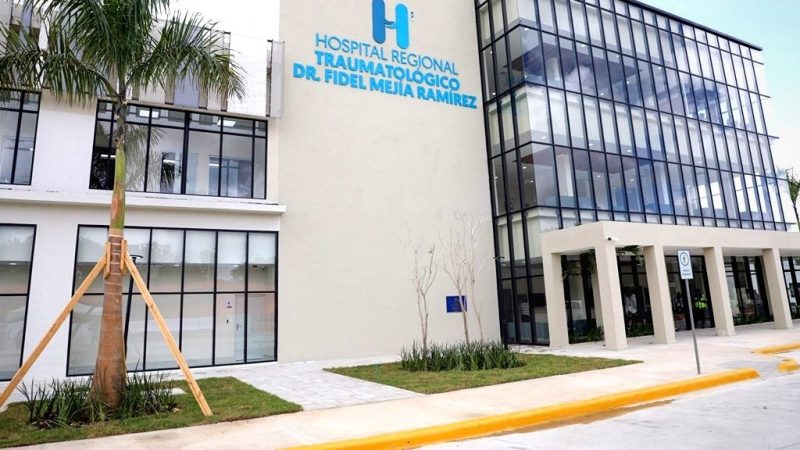








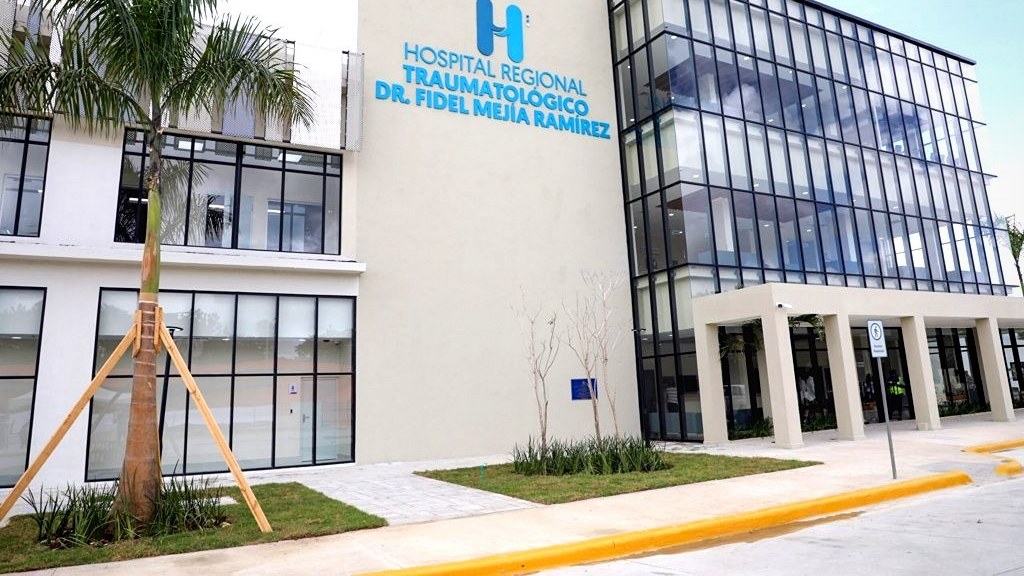
President Luis Abinader and Minister of Housing and Buildings Jean Luis Rodríguez delivered the Dr. Fidel Mejía Ramírez Regional Trauma Hospital in Yaguate, San Cristóbal province, on Sunday. The center, part of Abinader’s vision to strengthen the national network of trauma care, will have 62 beds, 17 Intensive Care Unit (ICU) spaces, and four fully equipped operating rooms.
Technical and High-Complexity Capabilities
Constructed on 14,000 square meters, the hospital incorporates the most modern burn unit in the public system, with seven isolation cubicles, its own ICU, and state-of-the-art physical therapy. In the emergency room, there is a complete operating room, designed to intervene quickly in vital surgical emergencies.
Impact on Regional Care
The installation will allow the decongestion of the Juan Pablo Pina Hospital in San Cristóbal, which attends to 90% of the accidents in the area, and at the same time alleviate the overload of the Gran Santo Domingo Hospital. Victor Atallah, Minister of Public Health, highlighted that the center “reduces the issue of waiting and transfer” and places the trauma network in one of the most important provinces in the country.
Critical Response and Life Time
Minister Rodríguez emphasized that “when an accident occurs, every minute counts,” underscoring the importance of speed in care. The Trauma Shock Unit has 12 attention posts, three specialized cubicles, and an operating room for emergency interventions.
Investment and Social Benefit
With an investment exceeding RD$3,600 million, the project includes civil work and high-tech equipment. In addition to the infrastructure, the initial phase of the housing program delivered 40 apartments in the Villa Esperanza Residential Complex, reinforcing social coverage in the province.
Statements from Authorities
The Director of the National Health Service, Julio César Landrón, described the hospital as “a chance at life for thousands of people who will have a specialized response closer to them when they need it most.”
Long-Term Perspective
This new center consolidates the trauma care capacity in the southern part of the country, reducing pressure on the capital’s hospitals and offering the population a closer access to critical services. The implementation of advanced technologies and continuous staff training ensure the sustainability and quality of the service.
Credits: n.com.do
Note generated automatically from the sources cited in the text. Found an error? Email us at [email protected] and we'll fix it.