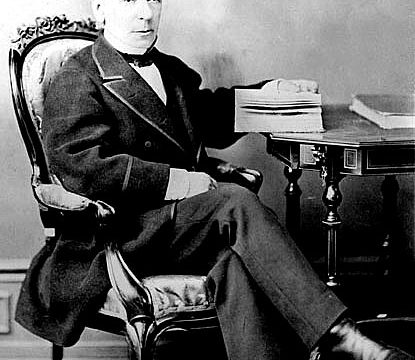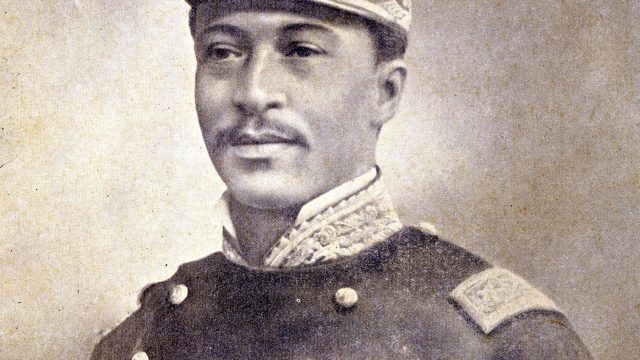


Throughout the political history of the Dominican Republic, few couples have had as much impact as the marriage of Horacio Vásquez and Doña Trina. They both met before Horacio’s rise to power and, “in sickness and in health,” dealt with all kinds of adversities.
Doña Trina de Moya Vásquez was the first woman known as “The First Lady of the Dominican Republic,” defining the role that a president’s wife should have for her people. Many even believe she was the moral compass that guided Horacio Vásquez in moments of doubt.

Horacio Vásquez: The influence of a marriage on politics
There is no record of how Horacio Vásquez and Doña Trina met. It is known that they married in 1888 when Vásquez was still a young politician and military man in Moca. They adopted Trina’s niece, Edilia Antonia “Toñita” de Moya, as their daughter, she being their only offspring, as they never had biological children.
When Horacio Vásquez came to power, his wife became a kind of matriarch for the country. She enjoyed promoting education and children’s rights, raising awareness through various marches.
Doña Trina is even credited with writing “The Hymn to the Mother” which promoted the value of matriarchs in the home. Although at that time there was no great visibility for the feminist movement, Doña Trina was considered an important figure in promoting women’s rights and defending gender equality.
According to texts, Doña Trina was described as a loving woman, devoted to her nation and her husband. To many, she was the most faithful confidante Horacio Vásquez had, helping him many times in his decision-making.

What happened to Horacio Vásquez and Doña Trina?
In 1929, Horacio Vásquez suffered a coup d’état that left him unable to continue as president, and Rafael Trujillo, his second-in-command, would go on to become the new leader of the Dominican Republic.
The couple was exiled and sought refuge in Puerto Rico. There, Doña Trina would take care of her husband until his death in 1936. However, the Dominican woman’s role would not stop there.
In the following years, Doña Trina would take charge of preserving her husband’s legacy, denouncing Rafael Trujillo’s tyrannical behavior to the world, and being a spokesperson for her family until her death in 1941.
The legacy of both remains present to this day, as that of a president who finished laying the foundations of the country, and the First Lady who developed the values of a nation. Even the municipality of Villa Trina in the Espaillat province was named in honor of Doña María de los Ángeles Trinidad de Moya Pérez.