






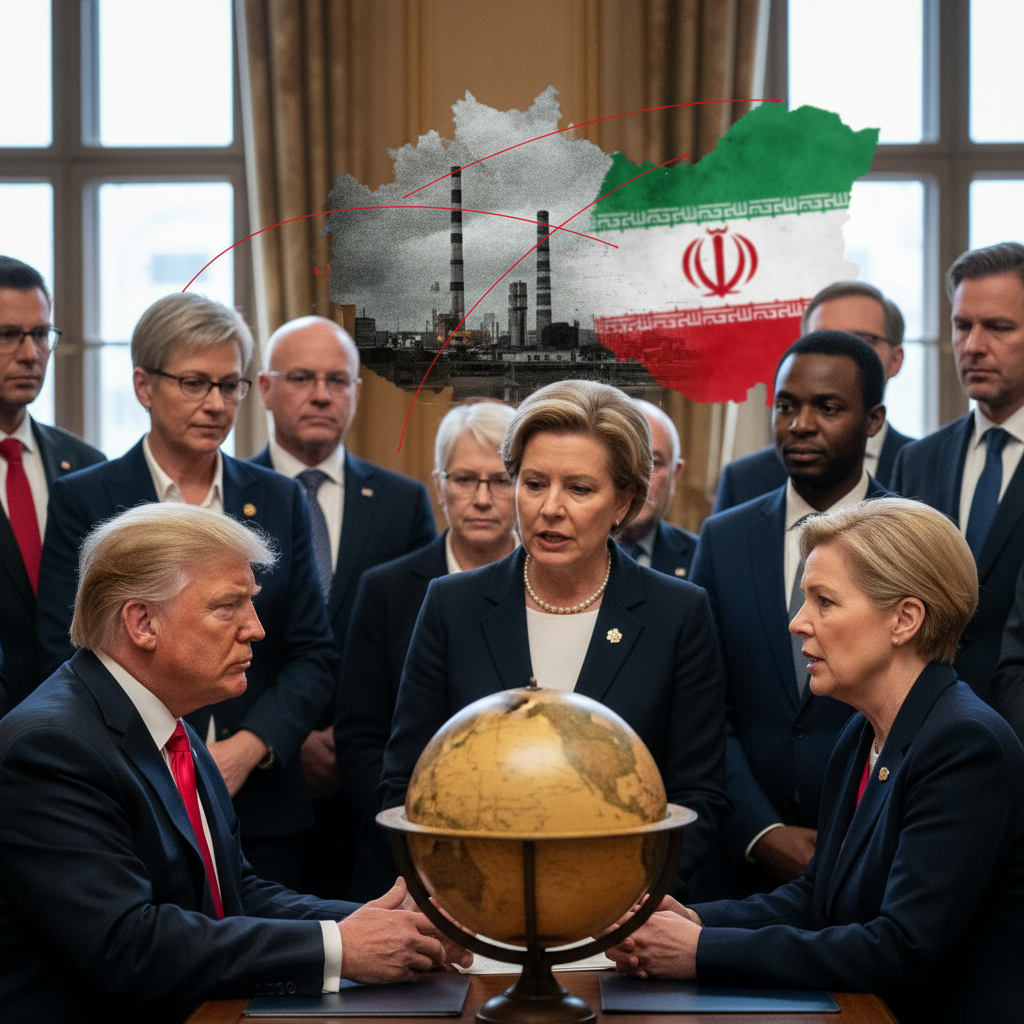
Trump accuses Merz of not backing the United States in the Iran war, and links it directly to Germany’s economic problems. In a statement this Tuesday, the U.S. president expressed his frustration over the stance of German chancellor Friedrich Merz, who allegedly tolerates Iran developing nuclear weapons.
The statement of Trump accuses Merz weakens the Western alliance amid the escalation in the Middle East. According to the leader, Germany’s reluctance to support military actions against Tehran explains why Germany is doing “so badly”. This criticism comes at a time of growing transatlantic frictions, where the Iran war has become a point of contention.
Context of the Iran war and its global impact
The Iran war has intensified since 2025, with Israeli attacks and Iranian responses involving world powers. The United States has led operations to curb Iran’s nuclear program, which, according to Western intelligence, could produce a bomb within months. Germany, for its part, maintains commercial ties with Tehran, exporting machinery worth 2.5 billion euros annually before recent sanctions.
Position of Friedrich Merz and the German economy
Friedrich Merz, leader of the CDU and chancellor since 2025, has advocated diplomacy instead of confrontation in the Iran war. Experts such as the German Institute for Foreign Policy note that his approach aims to preserve key exports. However, Germany faces a recession: GDP fell 0.3% in 2025, unemployment at 6.5%, and post‑Russia energy dependence.
- The U.S. demands full support in the Iran war for unified sanctions.
- Germany prioritizes dialogue, citing risks of regional escalation.
- Trump ties this to German economic weakness.
Analysis: Why Trump accuses Merz now?
The timing coincides with NATO negotiations on military funding. Trump accuses Merz of prioritizing national interests over collective security, echoing past disputes over the Nord Stream pipeline. Opinions from analysts at think tanks such as Brookings indicate that this Iran war could cost Europe €100 billion in commercial disruptions if it drags on.
The Iran war not only divides allies but also exposes economic vulnerabilities. While Trump pushes for unity, Merz defends a pragmatic stance. This clash underscores challenges in the Western alliance amid emerging nuclear threats.