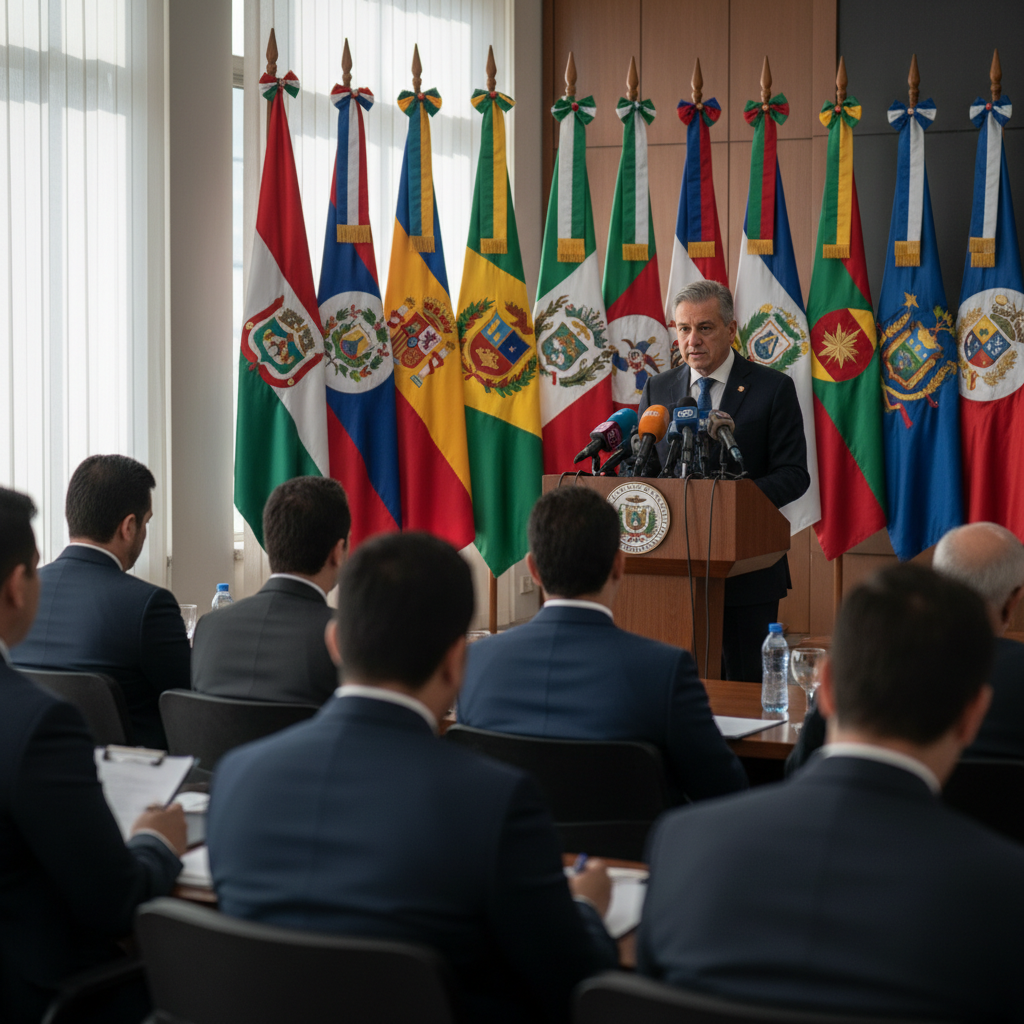





Negotiators from the United States and Iran will meet tomorrow in Pakistan to kick off a diplomatic process aimed at ending the war in the Middle East. This meeting in Islamabad represents a key step amid regional tensions that have escalated in recent weeks, with a temporary two-week ceasefire requested by the Pakistani mediator to prevent military reprisals.
Key Mediators and Delegations
JD Vance, US Vice President, will lead the delegation alongside Steve Witkoff, special envoy to the Middle East, and Jared Kushner, son-in-law of President Donald Trump. On the Iranian side, Mohammad Bagher Ghalibaf, speaker of Parliament, will be accompanied by Foreign Minister Abbas Araghchi. Pakistani Prime Minister Shehbaz Sharif will mediate these talks aimed at negotiating potential peace between Washington and Tehran.
Trump’s Demands to Negotiate Possible Peace
President Trump has outlined five non-negotiable demands that complicate the dialogue. These include ending the Iranian nuclear program, dismantling ballistic missile manufacturing, freeing up transit in the Strait of Hormuz, canceling support for groups such as Hezbollah, the Houthis, and Hamas, and suspending the crackdown on the opposition. Diplomatic sources note that Pakistan arranged a military extension to facilitate these discussions.
Khamenei’s Counterproposals
Mojtaba Khamenei, Iranian religious leader, responds with a more extensive list of conditions: recognition of the right to enrich uranium, guarantee of non-aggression, control of the Strait of Hormuz, an end to the regional war and interventions in Lebanon, withdrawal of US forces, economic reparations, lifting of primary and secondary sanctions, and repeal of IAEA and UN Security Council resolutions. Iran insists on extending the ceasefire to Lebanon, affected by recent attacks.
The process to negotiate potential peace is fragile and uncertain, with red lines from both leaders that could stifle progress. Countries like China and Russia applaud Pakistan’s role, while nations like India, Iraq, and Europe negotiate oil passage through Hormuz, fearing economic disruptions. The US State Department maintains vigilance, and Tehran demands respect for its sovereignty.
This Islamabad Summit could mark a turning point, with six-month implementation deadlines and observers as guarantors. However, experts warn that opposing positions demand mutual concessions to achieve lasting peace in the Middle East.
Ultimately, negotiating potential peace between the US and Iran in Pakistan will define the regional future, balancing security and sovereignty in a weeks-long conflict that threatens global stability.