



Raised on a mottled marble pedestal, the equestrian figure of Máximo Gómez stands defiantly against the Dominican sky. The sculpture, inaugurated in 1974 in Santo Domingo, not only honors an outstanding military man, but one of the most complex and admired figures of the insular Caribbean. His extended sword does not threaten: it points the way to independence, struggle, and the union of peoples.
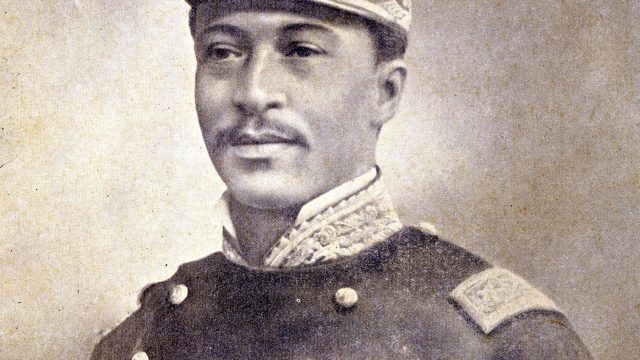
Born in Baní in 1836, Máximo Gómez Báez is, paradoxically, better remembered in Cuba than in his homeland. At 23 he emigrated to the island and, far from fading into anonymity, he became the military mastermind behind the Cuban wars of independence. His strategic genius, iron discipline, and personal selflessness positioned him as head of the Liberation Army, fighting side by side with figures like José Martí and Antonio Maceo.
Máximo Gómez: A statue and a single ideal
This statue, imposing in scale and sober in design, embodies the spirit of a man who chose to fight for a homeland he adopted as his own. Despite his Dominican origin, Gómez never returned to settle in the Dominican Republic; however, the country pays homage to him as one of its most illustrious sons. Not for what he did here, but for what he represented for the region: total surrender to freedom without stopping in the face of adversity.
The pedestal displays two dates: 1836 – 1905, the birth and death of a man who spent most of his life in trenches, jungles, and military camps. But also, in the pages of shared history between two islands marked by colonization, miscegenation, and the search for sovereignty.
That duality between origin and destiny turns Máximo Gómez into a regional symbol, whose figure transcends geographical boundaries and becomes part of the greater narrative of the Caribbean. His life and legacy represent the historical crossroad between Dominican Republic and Cuba, two nations guided by men who understood that true freedom demanded sacrifices beyond personal borders.
From the center of Santo Domingo, the figure of Máximo Gómez reminds us that the homeland can be a decision rather than a geography. That heroism knows no borders when it comes to human dignity. And that there are men whose legacy is engraved not only in bronze, but in the collective memory of entire peoples who learned, thanks to them, to resist and build freedom.