









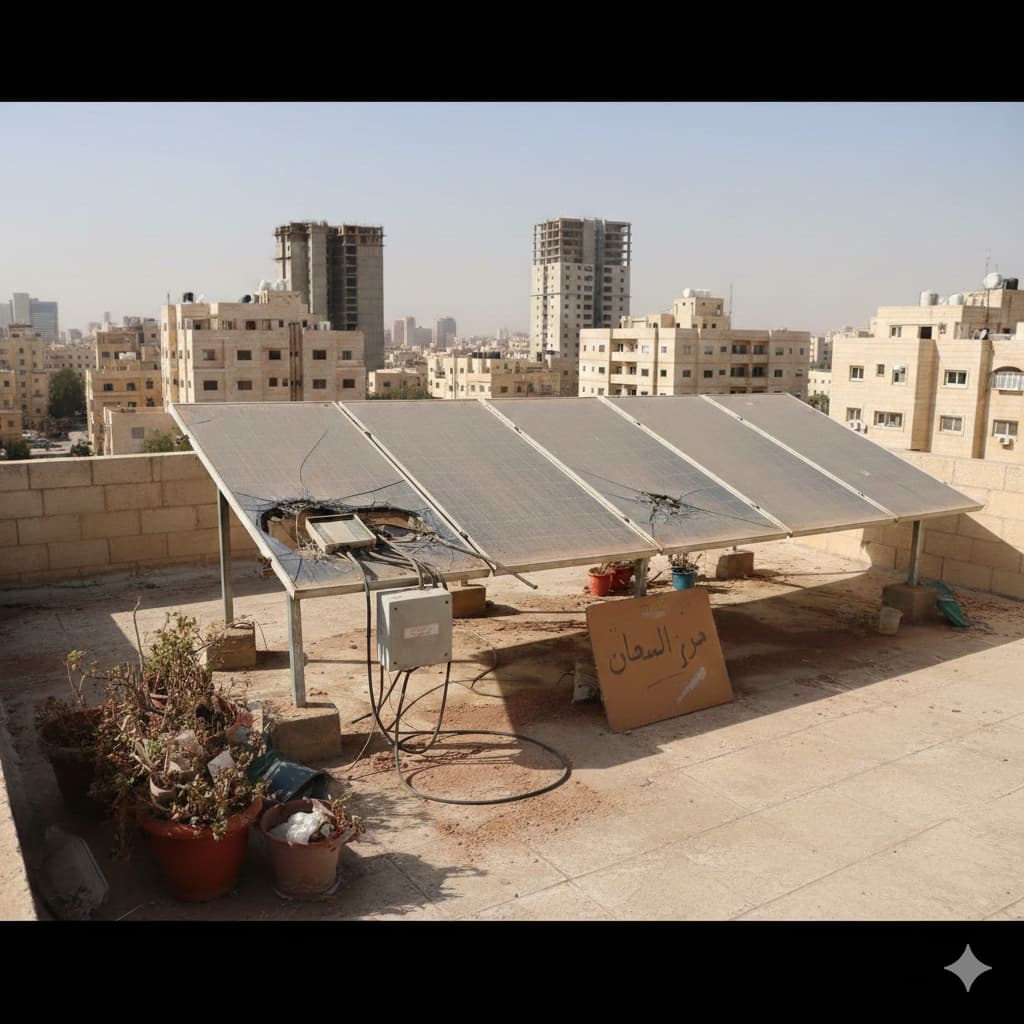
Solar energy in Jordan has ceased to be a viable investment for many homes and businesses following changes to electricity tariffs implemented in 2024. These adjustments, designed as compensation mechanisms to promote daytime consumption, have tripled the cost of nighttime electricity purchased by solar panel users, far exceeding the price at which they sell their daytime surpluses to the electrical grid.
Impact on consumers and experts
Energy researcher Omar al Shobaki explains that these modifications reduce the viability of individual investment in solar energy in Jordan, particularly affecting commerce and industry. Users like Ayman al Al Dawari denounce excessive bureaucracy to install panels, cuts in surplus benefits, and a fixed tariff even without extra consumption. “The goal was to incentivize solar energy in Jordan, but the new decisions are not fair,” states Ibrahim Nahar, another affected party.
Daytime surpluses without batteries: the bottleneck
Solar energy in Jordan generates sufficient surpluses during the day to cover household needs, but the lack of storage infrastructure, such as batteries, overloads the grid at sunset. Jordan imports 93% of its energy from gas and oil, making this transition strategic. Historically, the country has advanced with massive solar projects, such as the Quweira park, one of the largest in the Middle East with 200 megawatts since 2019, but residential adoption is slowing down due to these technical limitations.
Official position and international commitments
Ministry of Energy spokesperson Linda al Abady defends the tariffs for adapting to consumption and allowing systems to cover own or third-party needs. She announces reviews if necessary. On January 8, Jordan joined the Global Energy Transition Forum alongside the EU, with European support for renewable infrastructure and green hydrogen production. King Abdullah II highlighted this step at a summit with leaders such as António Costa and Ursula von der Leyen.
- Residential solar production exceeds daytime demand in most homes.
- Nighttime tariffs: up to three times the daytime selling price.
- Fossil dependency: 93% energy imports.
Solar energy in Jordan faces a dilemma: enormous potential versus practical obstacles. Recent research confirms that without affordable batteries, the current model discourages private investment, despite national goals to reduce fossil fuel imports by 30% by 2030.