




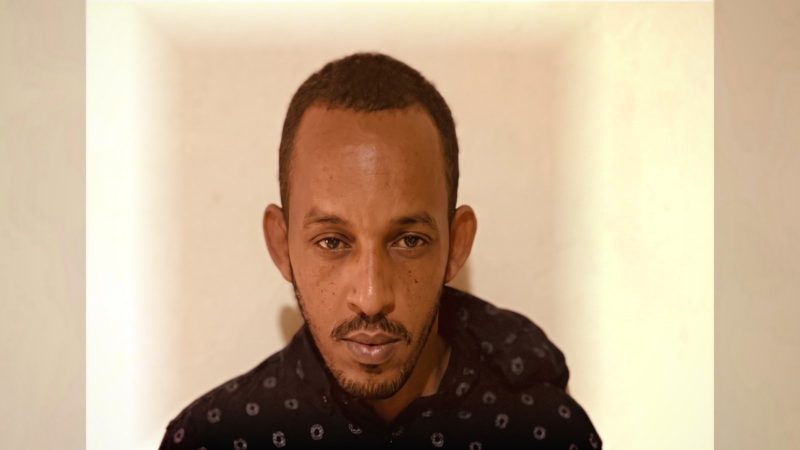

Adriano Espaillat enters a decisive primary in New York’s 13th district, a race that goes beyond a single candidacy and directly touches upon Dominican representation in the United States Congress.
The debate surrounding Adriano Espaillat is not limited to his reelection. It also puts on the table his weight as the first Dominican to reach the House of Representatives, his connection to Washington Heights, and his influence in a district that has historically been Democratic. According to the U.S. Congress, he has represented that seat since 2017, and the district includes areas of Harlem, East Harlem, Manhattanville, and parts of the Bronx.
Adriano Espaillat and the 13th District
The 13th district has been a key stronghold for the Democratic Party for decades. Because of this, the internal primary usually determines with high probability who will ultimately occupy the seat in November. In this context, Adriano Espaillat is competing not just for an office, but to maintain a Dominican voice within one of the most visible zones of New York politics.
Espaillat was born in Santiago de los Caballeros in 1954, and his political trajectory in New York led him first to the State Assembly, then to the State Senate, and later to federal Congress. This background explains why his figure generates attention both in the diaspora and in the Dominican Republic.
Adriano Espaillat and the Dominican vote
The election also has a symbolic component. For Dominican sectors in New York and on the island, Adriano Espaillat represents an institutional presence that connects community, immigration, and consular demands with the federal agenda. This interpretation appears strongly every time his seat comes into dispute.
On the political front, the congressman has maintained firm positions on immigration, housing, and the cost of living—sensitive issues in upper Manhattan and the Bronx. His office has been described by allies and observers as a liaison point for issues of Dominican national interest.
What is at stake with Adriano Espaillat
The race arrives at a time when the Latino vote and the migrant vote continue to be decisive in New York. In this scenario, Adriano Espaillat faces a competition where his national profile, his alliances within the Democratic Party, and the mobilization capacity of his electoral base carry significant weight.
The fight for the 13th district does not just define a name on the ballot: it also measures the Dominican community’s ability to sustain influence in Congress.
If he retains the seat, Adriano Espaillat will reinforce his role as a central figure of Dominican representation in the United States. If he loses, the impact will be greater than that of a personal defeat: one of the few Dominican voices with direct access to federal legislative power will also be weakened.
Therefore, the outcome of this primary will be watched closely in New York and in the Dominican Republic, where Adriano Espaillat has become a political reference of transnational reach.