





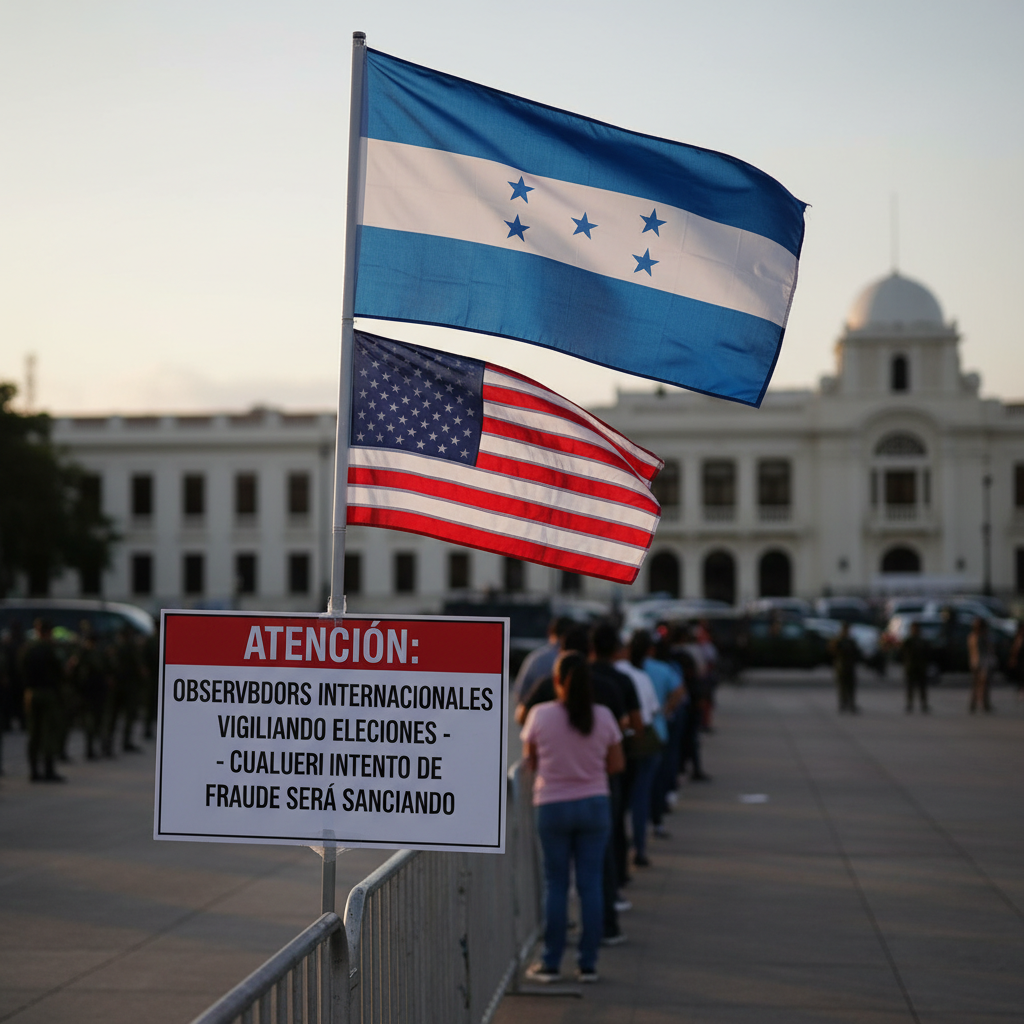
Severe Consequences was the expression used by the Government of United States to warn Honduras about attempts to reverse the presidential election that gave winner to Nasry “Tito” Asfura, of the conservative National Party and ally of former President Donald Trump.
The Western Hemisphere Affairs Bureau of the Department of State noted that the votes of 3.8 million Hondurans have already been counted and that the National Electoral Council certified the results officially. According to the statement, any attempt to “illegally reverse” the election in Honduras could bring severe consequences for the authorities who promote or support that change.
In practice, this type of warning usually translates into possible personal sanctions, visa restrictions, freezing of assets abroad, and limitations on bilateral cooperation, as has happened in other cases of democratic order breakdown in the region.
Political Crisis in Honduras after New Scrutiny
Tension escalated after the Honduran Parliament approved in an extraordinary session, and without the participation of more than 70 opposition deputies, the holding of a new scrutiny of the general elections of November 30. Critical sectors denounce that this maneuver seeks to open the door to questioning the victory of Tito Asfura and alter the correlation of forces in the country.
The climate worsened with a violent fact: opposition deputy Gladis Aurora López, of the National Party, was injured after the explosion of a device launched from a nearby street to the Congress. In this scenario, the Department of State emphasized that “political violence has no place in the democratic process” and stressed that Hondurans deserve a peaceful transition of power.
Trump, Tito Asfura, and the Relationship with Washington
The figure of Tito Asfura has been consolidated as a key piece for Washington, which has already announced that “it looks forward to working with the elected president” to advance shared goals. The leader, close to former President Trump, plans to travel to the United States to meet with executives of the Inter-American Development Bank and, possibly, with officials from the US capital.
In other electoral processes in the region, such as in Venezuela or Nicaragua, the US government has resorted to diplomatic pressure and sanctions to respond to what it considers institutional breakdowns, which reinforces the weight of the warning of severe consequences directed at Honduras.
Collision with Xiomara Castro and the Extradition Issue
The warning from Washington arrives in the midst of a new political collision with President Xiomara Castro. The head of state announced that she withdraws the suspension of the Extradition Treaty with the United States, a measure she herself had ordered in August 2024, in response to the case of former President Juan Orlando Hernández.
Castro described as a “grave contradiction” that United States pardoned and released Hernández, convicted of drug trafficking and a militant of the National Party, the same party of Asfura. This precedent feeds the distrust between the Honduran Executive and Washington, while the opposition insists on reviewing the electoral result.
Severe Consequences and the Immediate Future of Honduras
Analysts consulted in regional media agree that the mention of severe consequences puts Honduras under strong international scrutiny just when the country faces high levels of poverty, migration, and citizen distrust in institutions. Any sanction or rupture with Washington could hit the already fragile Honduran economy and complicate cooperation in security and the fight against drug trafficking.
In this context, the warning of severe consequences seeks to pressure the political actors to respect the certification of the results, reduce violence, and guarantee an orderly transition, while Tito Asfura prepares to assume the presidency under the watchful eye of the international community.