


The purpose of the first Democratic Culture Survey is to offer tools for monitoring the democratic quality criteria formulated in the National Development Strategy, covering aspects such as attitudes toward democracy, political involvement, tolerance, interpersonal and institutional trust, corruption, and clientelism.
Santo Domingo, Dominican Republic.– With the presentation of the findings of the 2022-2023 Democratic Culture Survey in the Dominican Republic (ECD) by the Ministry of Economy, Planning and Development, an analysis is brought to light that includes a set of fundamental indicators to evaluate the facets of the quality of democracy and the interaction between citizens and the State, as well as to monitor its progress over time.
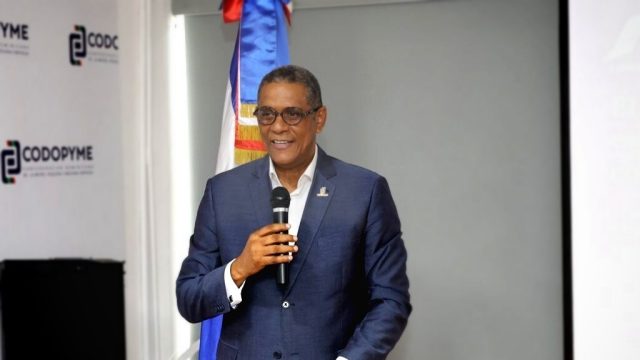
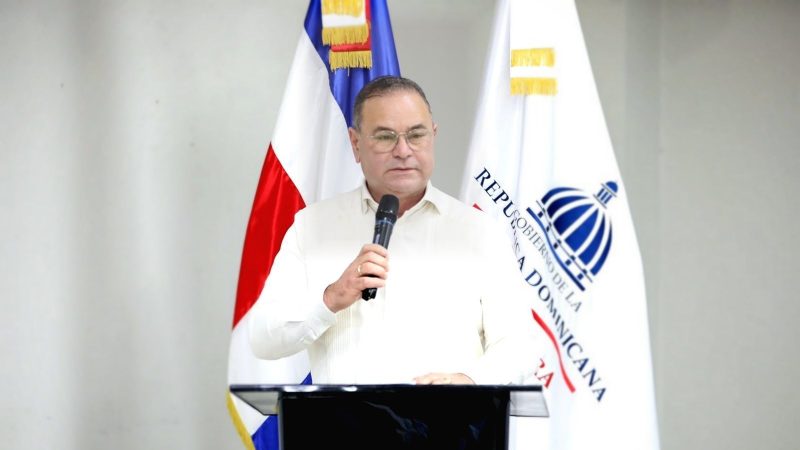
The ceremony was chaired by Pável Isa Contreras, Minister of Economy, Planning and Development; Antonio Ciriaco Cruz, dean of the Faculty of Economic and Social Sciences of the Autonomous University of Santo Domingo (UASD); Héctor Pereyra Espaillat, dean of the Faculty of Legal and Political Sciences, and Rosa Cañete Alonso, author of the report and director of Poverty, Inequality, and Democratic Culture Analysis of the Vice Ministry of Economic and Social Analysis.
Dominican economy registered a 5.0% year-on-year growth in the first seven months of this year
In his inaugural speech, Isa Contreras highlighted that the 2022-2023 ECD, carried out in collaboration with the UASD, aims to center the discussion on development in the Dominican Republic around democratic culture.
“The initiative, promoted by the Dominican government, marks a milestone by focusing research efforts on democratic culture. Today we unveil the first fruits of this work, with the intention of carrying out annual evaluations to measure the evolution of our society toward a political culture focused on rights,” emphasized the economist and researcher.
Isa Contreras stressed the importance of changing political culture to address the social, institutional, economic, and environmental deficits facing the Dominican nation, in addition to preparing for future global challenges related to technology, climate, and international relations.
Furthermore, he assured that transforming political culture is essential to foster greater democracy, development, and equality in the Dominican Republic. He affirmed that his ministry is committed to assuming the responsibility of driving the transformation of values and practices that reinforce democracy.
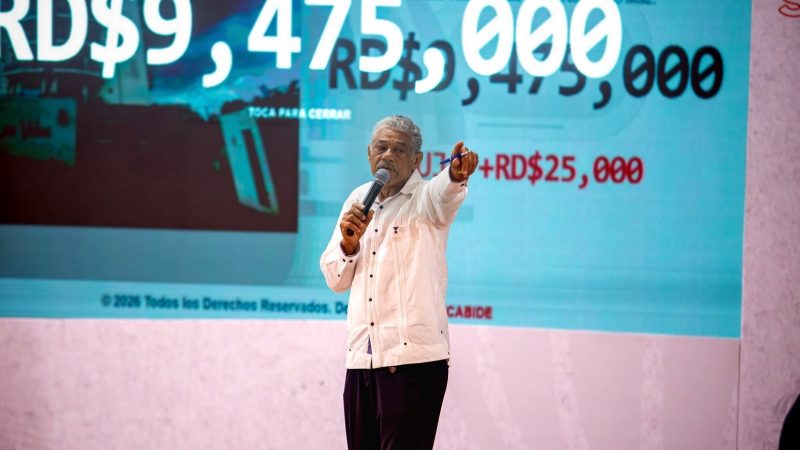
Rosa Cañete Alonso was in charge of revealing the results during the event held at the Doctor Ricardo Michel Paraninfo of the UASD, with participants from different sectors including academics, media, civil society, political leadership, and party authorities.
The results obtained in the three surveys carried out (April and October 2022 and April 2023) reflect the perceptions and democratic values among Dominican citizens, affected by both the historical and current performance of public institutions and political parties.
In a debate moderated by journalist Millizen Uribe and with the participation of academic panelists Rosario Espinal and Elvin Calcaño, as well as Aníbal de Castro, president of the Grupo Diario Libre representing the media, the study’s findings were discussed.
Results of the 2022-2023 ECD
The Democratic Culture Survey indicates that, although the majority of the Dominican population prefers democracy over other regimes, commitment to democratic values has weakened over the last ten years. This has led to growing apathy toward democracy, particularly among younger generations and those without university education.
The report suggests that active participation in politics and civic activities is crucial for the sustainability of democracy. The survey shows that, contrary to the global trend of declining party participation, more than 20% of Dominicans are members of a political party. Participation is higher among men, people aged 45 or older, and those with a low or very low educational level. Unconventional forms of political participation, such as protests, have gained ground, especially among youth disenchanted with traditional politics.
According to the report, democracy is founded on the recognition of equal rights and duties for all, which implies the same right to political participation and respect for the preferences and values of each individual. However, the survey reveals that more than 50% of the population harbors gender prejudices, against sexual, ethnic, or religious minorities, which represents a significant challenge for Dominican society.
The ECD shows that key institutions such as the National Police, government officials, Congress and the Senate, or political parties barely generate trust in two out of every ten people.
“The evaluation of ten political institutions through the ECD reveals marked distrust toward national democratic entities,” the document states. It points out that those bodies enjoying the greatest credibility among citizens, with more than a third trusting their work “very much” or “somewhat,” are the president (39.5%), the Central Electoral Board (39.1%), and the Armed Forces (34.5%).
On a second level are the institutions toward which more than a fifth of Dominicans show high or moderate trust, among them city halls (31.7%), the Attorney General’s Office (28.5%), and the Courts of Justice (27.2%).
The institutions that raise the most doubts among the population include Congress and the Senate (21.2%), the National Police (21.0%), senior government officials (20.5%), and political parties (20.4%).
Latinobarómetro data from 2020 marked a shift in citizen perception regarding the government’s ability to handle corruption compared to 2018, showing 25 percentage points fewer citizens thinking that corruption had increased, which placed the country below the regional average for the first time.
According to the ECD in April 2022, 39.5% of Dominicans considered that corruption in public institutions was lower or the same as the previous year. However, measurements from April 2023 indicate a shift in perception, with an increase in citizens who believe that state corruption levels have increased compared to the previous twelve months.
Political clientelism, deeply rooted in Dominican culture for decades, puts the quality of democracy at risk and deteriorates the relationship between the State and the citizenry, weakening the rule of law, according to the report. The ECD reveals that 80.4% of the surveyed population agrees with granting public jobs and contracts to those who actively supported the winning candidate’s campaign.
“It is possible to change political culture to achieve greater democracy, development, and equality. The data collected show that, although cultural changes take time, there are indicators of improvement thanks to citizen participation and political decisions,” concluded researcher and director Rosa Cañete Alonso.
image credits for this post: Deultimominuto.net