







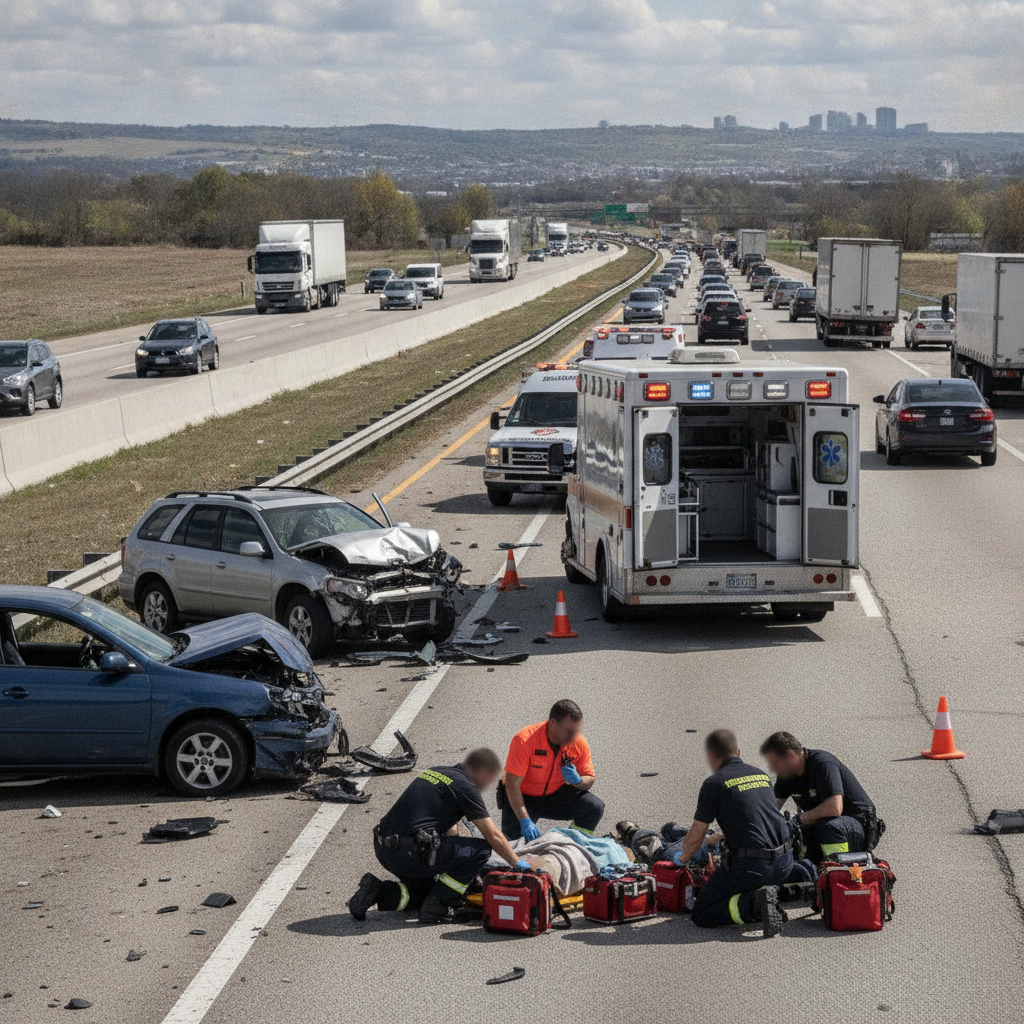
Trauma network, trauma network, trauma network: The Ministry of Public Health stated that it is reinforcing this system to provide a faster response to traffic accident victims and reduce preventable deaths in the Dominican Republic.
Minister Víctor Atallah stated that the Government is working on strengthening the trauma network as part of a strategy to improve the transfer, reception, and treatment of polytraumatized patients. The goal is for care to arrive more quickly in the most severe cases, where every minute influences survival and subsequent sequelae.
The logic of this measure aligns with international recommendations: the World Health Organization maintains that improving post-crash care is one of the key interventions to reduce the burden of road traffic injuries.
What the trauma network aims to achieve
The trauma network is not limited to opening more hospital spaces. It also involves coordination between emergency services, ambulances, hospitals, and specialized personnel so that the patient receives care at the appropriate facility and in the shortest possible time.
- Reduce transfer time.
- Avoid overcrowding in centers without resolving capacity.
- Improve the referral of severe cases.
- Decrease complications and disability.
Traffic accidents: a public health problem
Traffic accidents remain one of the leading causes of death and disability worldwide. The WHO indicates that road traffic injuries represent a health burden that demands prevention, effective pre-hospital response, and well-organized trauma services.
In this context, the trauma network functions as a central piece: it not only attends to the emergency, but also organizes the system to respond better. In countries with high pressure on emergency services, this type of coordination often makes the difference between life and death.
Trauma network, coordination, and prevention
The strengthening of the trauma network also aims to improve the system’s capacity in the face of demand peaks, especially during hours and in areas where accidents are most frequent. Although the official statement did not provide new figures, the Ministry’s message focuses on a faster and more orderly response.
Víctor Atallah insisted that the strategy is part of the actions to decrease mortality and sequelae caused by traffic accidents. This goal also depends on prevention, road control, and specialized clinical care.
Trauma network: the critical point
International experience demonstrates that the trauma network must be accompanied by equipped ambulances, triage protocols, trained personnel, and hospitals with surgical and intensive care capabilities. Without this chain, the response to the accident loses effectiveness.
In the Dominican Republic, the reinforcement of the trauma network is presented as an urgent response to a persistent public health problem. If it succeeds in better coordinating the system, the impact could be seen in fewer deaths, fewer sequelae, and faster care for victims throughout the country.


