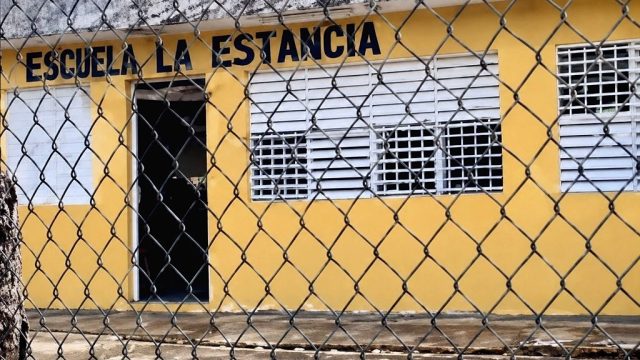
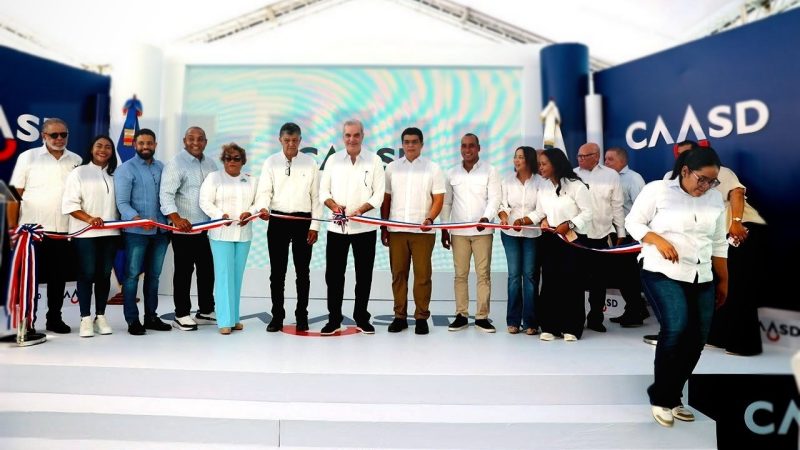



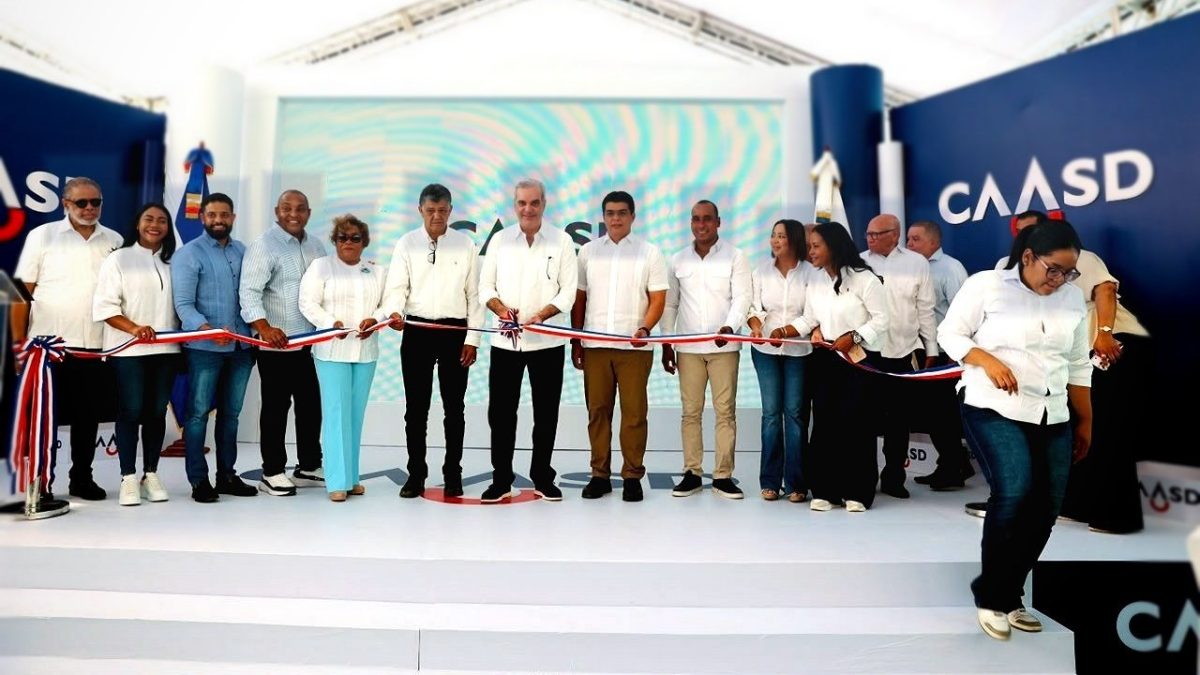
President Luis Abinader and the director of the Corporation of Aqueduct and Sewerage of Santo Domingo (CAASD), Fellito Suberví, delivered this Saturday the stormwater and sanitary drainage of the El Indio and Buenos Aires gullies, an intervention of RD$188.6 million that impacts more than 25,000 residents in the Herrera area.
The work covers 850 linear meters and, in addition to regularizing water flow, incorporated streets, sidewalks, trash containers, public lighting, basketball courts, children’s play areas and a central park, transforming spaces that were previously associated with pollution, flooding and insecurity into useful places for the communities.
Part of a larger project
This delivery is part of the sanitation project of 5.4 kilometers of the Guajimía gully, considered the longest in the Greater Santo Domingo. With this work, CAASD reaches 20 kilometers of sanitized gullies out of the first 63 kilometers it has under intervention.
Social and community objective
Suberví explained that the intervention responds to a demand that area residents had raised for years, especially due to the fear generated by rains and the material losses caused by flooding. “Because engineering allows us to build the works, but listening to people helps us build the right solution,” the official said, highlighting the collaboration of community members during the execution process.
The CAASD director stated that the transformation also has a social dimension, by restoring public spaces for families to gather. Areas that previously generated fear and insecurity now have conditions for recreation and coexistence.
Upcoming interventions
CAASD announced that, in approximately one month, the 150 linear meters of the Flor de Lis gully and the Ciudad Agraria stretch, 1.9 kilometers, will be delivered. Next week work begins on the stretch known as La Gallera, with about 70 meters of intervention. It is also projected to deliver in about 45 days the El Abanico stretch of Herrera‑Loyola, one kilometer, while for the first quarter of 2027 the Las Caobas stretch, 1.6 kilometers, is expected to be completed, which will include the recreational space Caoba Park.
These interventions add to the work on the Malanga gully and the placement of nets in the former Guajimía gully to prevent litter dumping. The institution also announced the upcoming tender for a treatment plant with a submarine outfall and complementary sanitation works in Guajimía and La Ureña.
Sustainability challenge
Beyond the investment figures and the kilometers intervened, the challenge for authorities will be to keep these spaces in proper condition and prevent them from becoming points of pollution or risk again. The recovery of the gullies poses a second task for communities and institutions: preserving what has been built.
“Good management is not measured only by the works it inaugurates, but also by the capacity it builds to continue solving problems,” Suberví said.
Source credits: n.com.do
Note generated automatically from the sources cited in the text. Found an error? Email us at [email protected] and we'll fix it.