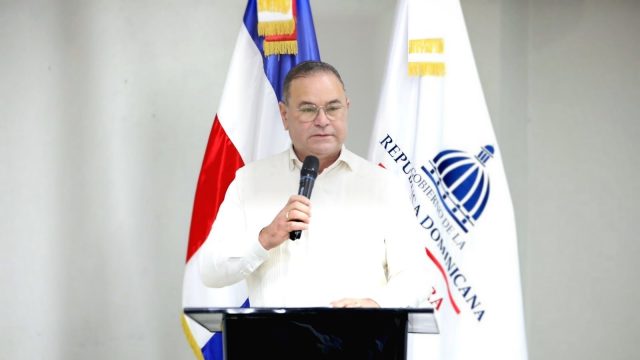







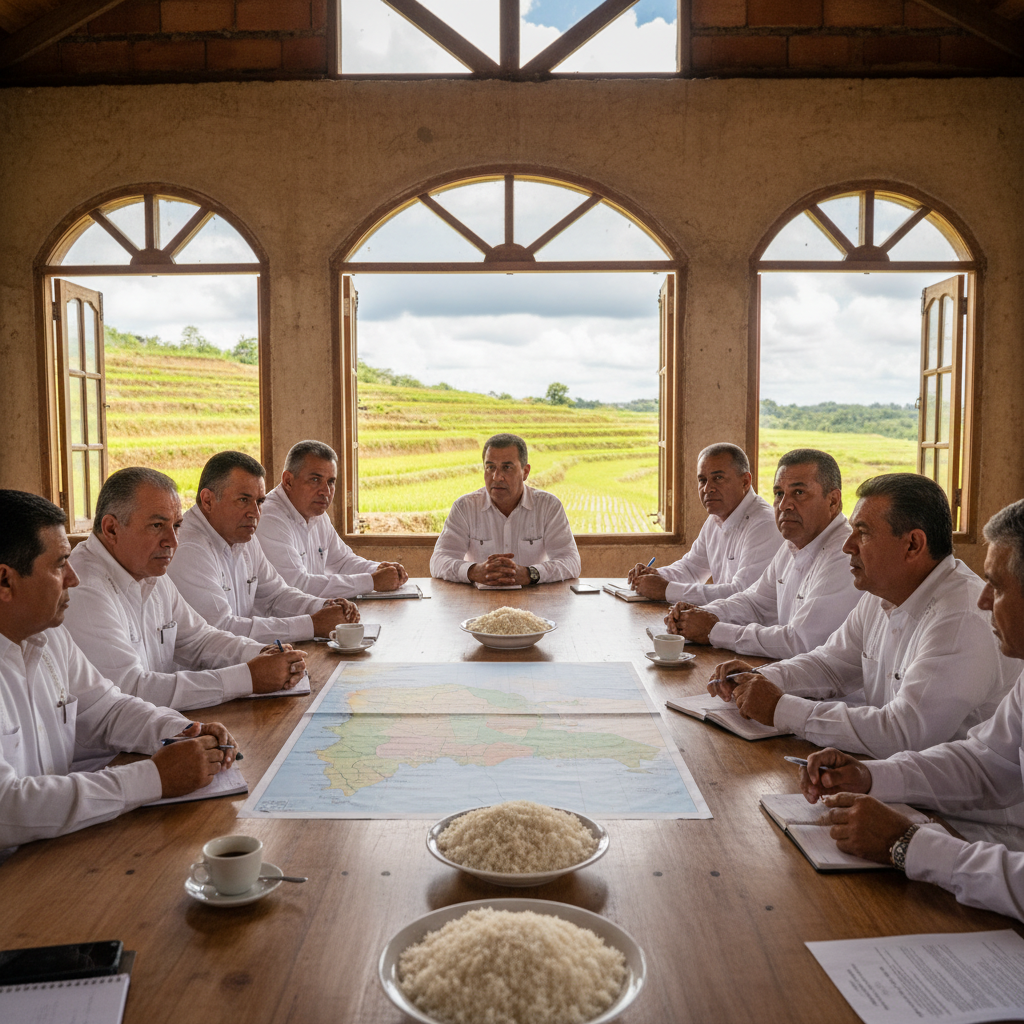
The Government seeks to modernize the rice sector structure after a strategic meeting with producers in Santo Domingo. The president Luis Abinader, along with the Minister of Agriculture Francisco Oliverio Espaillat, dialogued with leaders of the Dominican Association of Rice Factories (ADOFA), the National Federation of Rice Producers (FENARROZ), and the Association of Rice Producers of the Northwest (APRANO) to advance in development policies and food security.
Producers presented proposals to strengthen the rice sector, focused on providing a more solid and independent structure to Bio-Rice. This organization, key in rice research, seeks greater participation of producers in strategic decisions. In addition, the reinforcement of the Unit for the Execution of Pledges (UTEPI), vital for the financial stability of the agricultural pledge system, which protects rice farmers from price fluctuations.
Historical context of the rice sector
Historically, rice represents 15% of Dominican agricultural production, with over 140,000 hectares planted annually according to data from the Ministry of Agriculture. In recent years, the rice sector has grown by an average of 5%, driven by subsidies and technology, although it faces challenges such as input costs and climate change.
Update of the National Rice Commission
Another axis was the review of the 2000 decree governing the National Rice Commission, to give it greater weight in rice sector policies. Abinader reiterated his commitment to a modern agro-industry, promoting continuous dialogue. Representatives such as Negro Hernández of ADOFA, Marco Rodríguez of FENARROZ, and members of APRANO praised the meeting as a step towards a resilient and sustainable agro-industry.
Current balance of planting and production
The planting, harvesting, and national production of the rice sector were evaluated, highlighting its economic impact: it generates thousands of jobs and covers 90% of internal consumption. Experts from the Central Bank point out that rice contributes RD$25 billion annually to the economy, underscoring its role in food security.
- Key proposals: Strengthen research in Bio-Rice.
- Stabilize finances through UTEPI.
- Update the National Commission for strategic decisions.
This advance in the rice sector reflects a government effort to align production with global demands for sustainability, benefiting directly Dominican producers and consumers.