




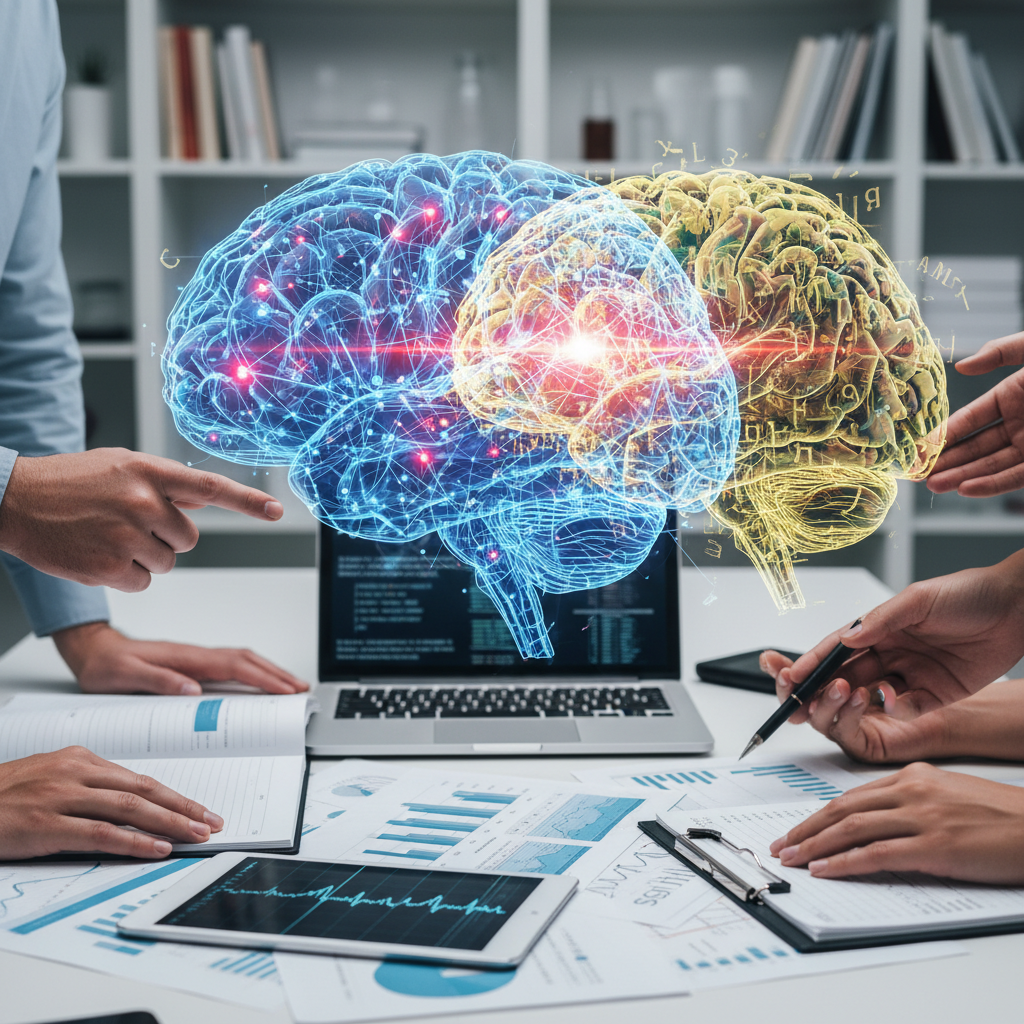
A team from the École Polytechnique Fédérale de Lausanne (EPFL) has successfully replicated the learning challenges of dyslexia in artificial intelligence. This achievement allows for an unprecedented exploration of the neural mechanisms of the disorder, opening doors to more precise treatments for those who suffer from it.
Dyslexia in artificial intelligence was simulated by altering language models to mimic phonological and visual processing flaws common in people with dyslexia. By reproducing these errors in AI, scientists observe patterns that were previously only suspected in human studies.
Global impact of the disorder
Dyslexia affects nearly 20% of the global population, according to data from the World Health Organization and studies such as those by the International Dyslexia Association. In the Dominican Republic, estimates from the Ministry of Education indicate that some 400,000 students face reading and writing difficulties linked to this disorder.
Innovative methods in dyslexia in artificial intelligence
Researchers trained neural networks with dyslexic human reading data, inducing artificial ‘defects’ such as letter inversions or syllabic confusions. This revealed that dyslexia in artificial intelligence responds positively to interventions such as multisensory training, similar to therapies tested in children.
Expert opinions
- Professor Lukasz Debowski, co-author, points out: “This simulation validates hypotheses about brain plasticity in dyslexia.”
- Doctor Maria del Carmen Pérez, a Dominican neurologist, states that it could inspire local reading remediation apps.
Historically, dyslexia was described in 1877 by Adolf Kussmaul, but neuroimaging advances in the 90s confirmed its neurological basis in the left temporal lobe. Dyslexia in artificial intelligence accelerates this knowledge by testing thousands of scenarios in hours.
Practical implications
This study, published in Nature Communications, suggests AI tools for early diagnoses. In Dominican educational contexts, where 15% of students repeat grades due to reading difficulties, it represents concrete hope.
Dyslexia in artificial intelligence not only replicates symptoms, but also predicts responses to therapies, such as phonotherapy or adaptive software. Researchers plan to expand the model to other neurodevelopmental disorders.
Ultimately, dyslexia in artificial intelligence marks a milestone at the intersection of neuroscience and technology, promising inclusive advances for millions affected.