







The migration crisis in Spain has once again placed Ceuta at the center of the European debate on borders, security, and humanitarian response. The most recent episode, featuring thousands of crossing attempts from Morocco, exposed the fragility of control along one of the most sensitive routes in the Mediterranean.
Source texts stem from a harsh yet verifiable idea: when a border is overwhelmed, the problem ceases to be merely migratory and becomes institutional. In recent years, Spain has faced growing pressure in Ceuta, Melilla, and the Canary Islands, with peaks that rekindle the discussion on reception capacity, repatriation, and cooperation with transit countries.
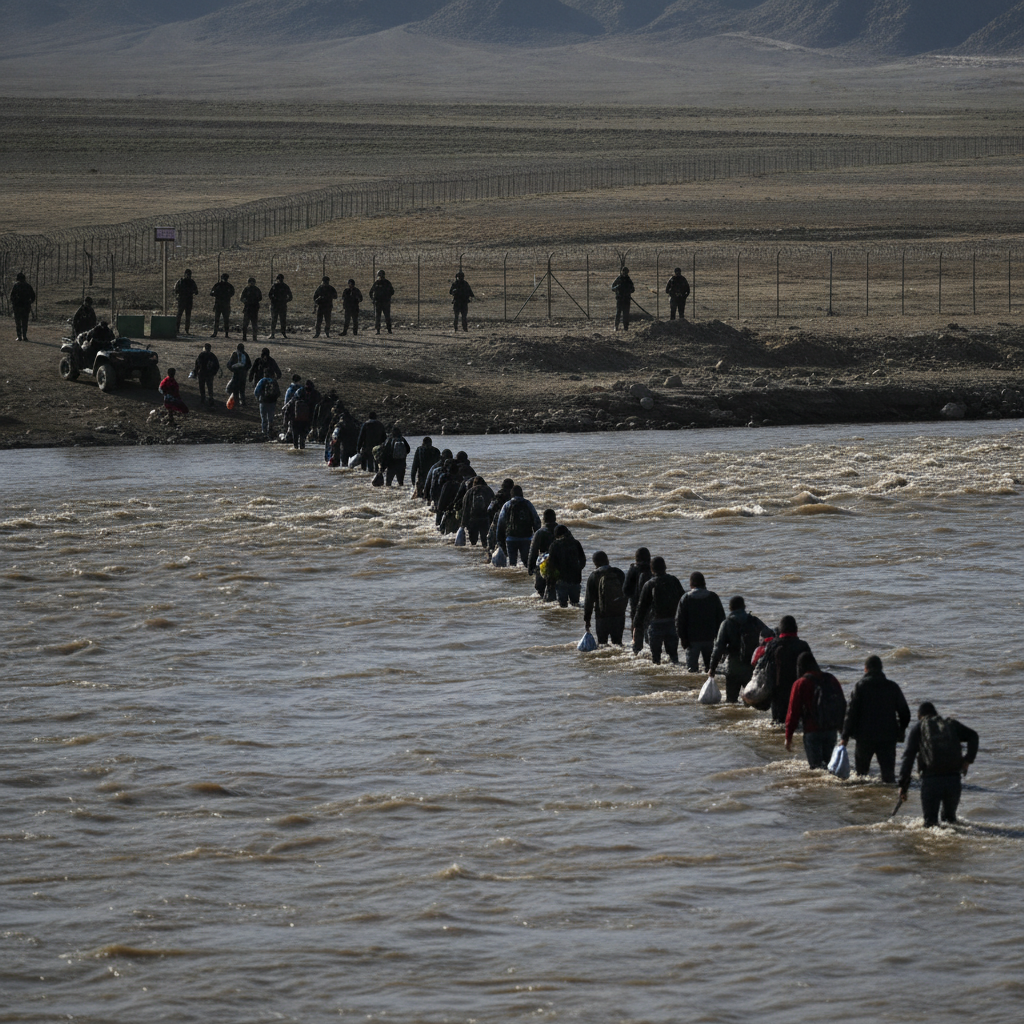
Recent journalistic sources pointed out that the latest wave in Ceuta heightened tension at the southern border and forced the reinforcement of perimeter security. Reports also mentioned deaths during the crossing and an urgent response by Spanish and Moroccan authorities to contain the flow.
This pattern is not new. In 2021, Ceuta experienced another major episode, considered one of the most severe of the past decade. Since then, the autonomous city has become a thermometer for the migration crisis in Spain, due to its geographical position and the ripple effect generated by rumors, social media, and human trafficking networks.
The migration crisis in Spain and the data that explain it
Figures help contextualize the problem. Various journalistic reports cited that in 2024 irregular arrivals grew strongly compared to the previous year, and that in recent years Spain has recorded hundreds of thousands of unauthorized entries. The most heavily pressured routes have been those of the Canary Islands, Ceuta, and Melilla.
- Increased pressure on maritime and land routes.
- Greater saturation in reception centers.
- Increase in the role of mafias and swimming crossings.
- Political response marked by urgency and improvisation.
What this migration crisis in Spain leaves behind
Debate no longer revolves solely around compassion, but rather around the balance between human dignity and sovereign control. Migration management requires legal pathways, international cooperation, and a real capacity for execution. When a border loses control, public trust deteriorates and the social and political cost is amplified.
For the Dominican Republic, the Spanish case serves as a warning about the risks of postponing structural decisions. The lesson is clear: a migration crisis in Spain cannot be resolved with slogans, but rather with state presence, planning, and law enforcement. If weaknesses are not corrected in time, the border ends up imposing its own rules.
Ceuta, sovereignty, and regional message
The episode in Ceuta also reinforces an uncomfortable idea for the entire region: migration policy loses effectiveness when managed solely through reaction. The migration crisis in Spain shows that the primary duty of any government remains protecting its territory without abandoning humanitarian assistance.
Therefore, the discussion on the migration crisis in Spain, Ceuta, and borders will remain on the agenda. And its impact transcends Europe, because it exposes a dilemma that also affects Caribbean countries like the Dominican Republic: how to maintain order, legality, and humanity simultaneously in a context of growing pressure.