
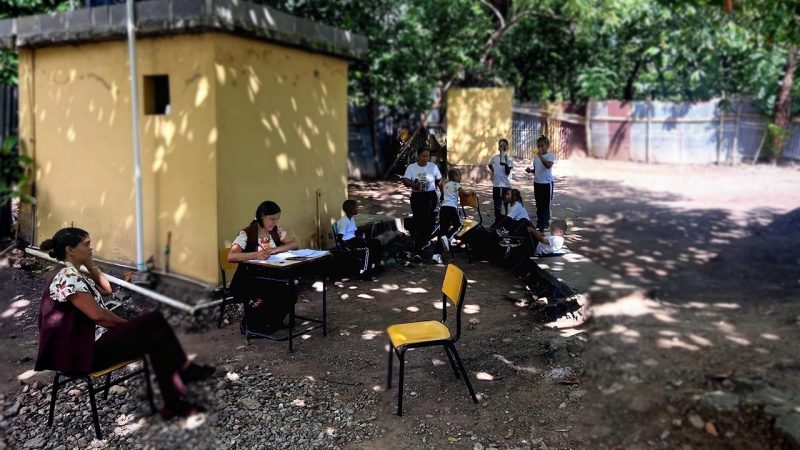


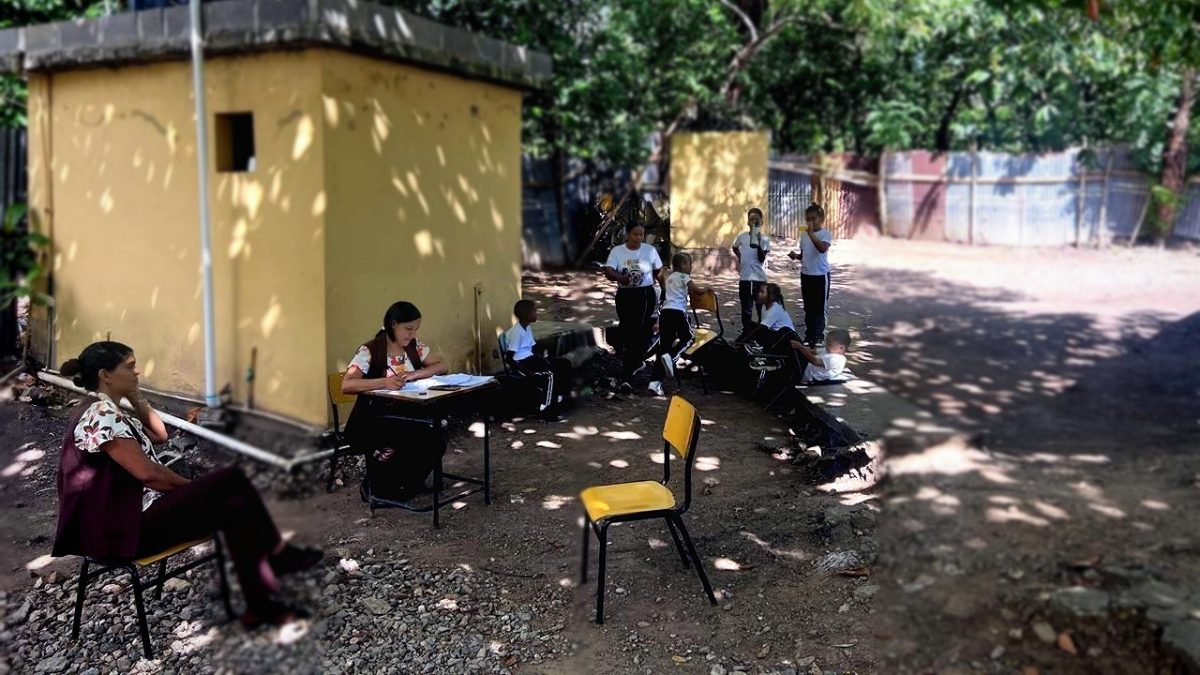
In the municipality of Fantino, Sánchez Ramírez, Caobal school faces precarious conditions that affect the health and well‑being of its students. According to complaints from school representatives, around 50 children attend classes under an improvised thatched‑style structure, exposed to high temperatures and poor sanitary conditions.
The school principal, Zeneida Peña, and teacher Rosanna Lazala de Estévez, union Education Secretary of the branch, explained that the school operates in a structure divided into four spaces, where students from the Early Childhood and Primary levels, from first to sixth grade, receive instruction. The teachers reported that the children eat next to a septic well, which makes food intake difficult because of the foul odors emanating from the facility.
Unsanitary conditions
The school areas are barely one meter high, which hampers air circulation and causes elevated temperatures, especially during the hottest hours. The fans installed in the classrooms are practically directly under the zinc roof, so instead of cooling the space, they end up dispersing hot air.
The teachers said they have repeatedly approached the Educational District and the Regional Education Office to request improvements, but so far they have not received a concrete response. They noted that about two months ago the authorities pledged to conduct a visit to the school; however, they reported that the announced intervention has still not materialized.
Call to action
The teachers reiterated their appeal to the Ministry of Education to conduct an assessment of the infrastructure and adopt measures that ensure adequate classrooms, safe sanitary conditions, and dignified spaces for students and teaching staff. The educational community even suspended classes for a week as a protest measure, and warned that they could resume demonstrations if the authorities do not provide a solution.
The situation at Caobal school in Fantino is an example of the difficulties many educational institutions face in the country, where the lack of investment in infrastructure and resources can affect the quality of education and the well‑being of students.
Source credits: n.com.do
Note generated automatically from the sources cited in the text. Found an error? Email us at [email protected] and we'll fix it.